

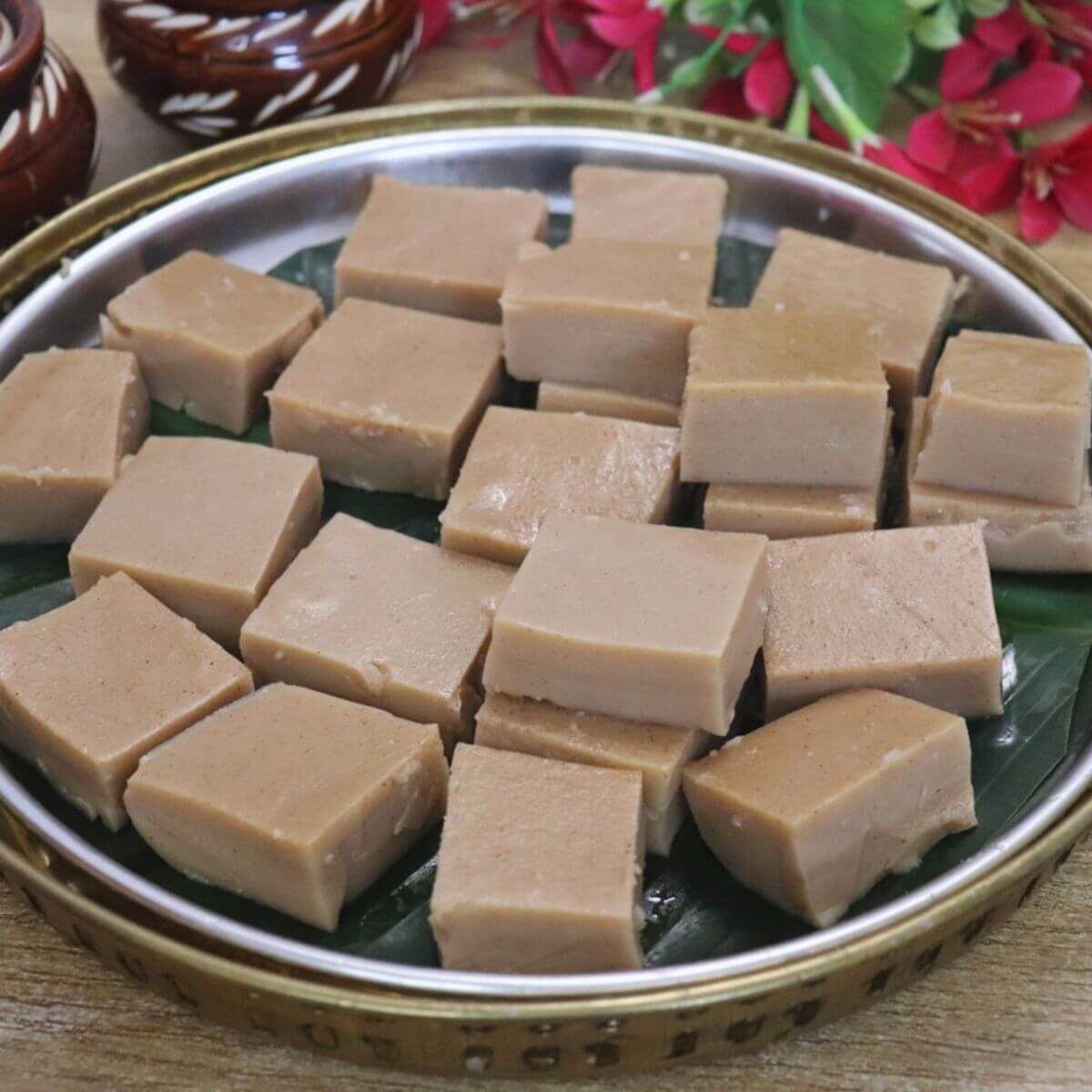
Ragi Manni, or Finger Millet Pudding, is a nutritious, delicious, and melt-in-the-mouth traditional sweet from Karnataka, prepared during Krishna Janmashtami. It is made with ragi, coconut, and jaggery. Here's my quick and easy Ragi Manni recipe with step-by-step photos and a video.
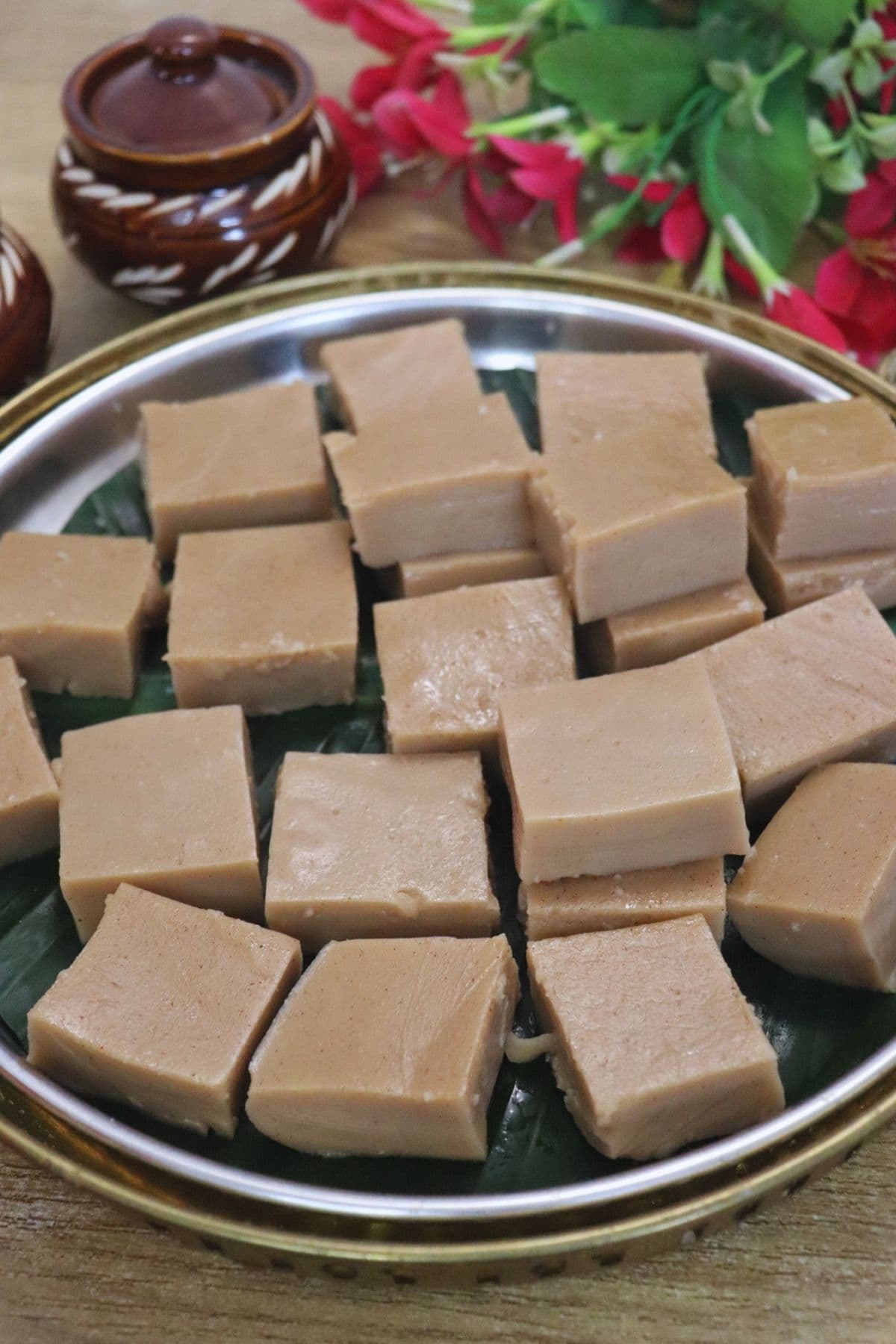
This Ragi Manni recipe is a family recipe from my Mangalorean side. It is also known as Nanchane Duddali, Ragi Halbai, or Halubai. My sister-in-law makes the best Ragi Manni (Nanchane Manni) and sends it to our home during Janmashtami. I am sharing her recipe with you all.
To make manni, I grind ragi and coconut together, then use a fine sieve to extract the milk. This makes the process easier than the traditional method. Then cook it with jaggery, cardamom powder, and ghee until thick.
I like my Ragi Manni soft and melt-in-the-mouth, just like the traditional version. You can also add nuts if you like a little crunch. If you love traditional sweets, try my Patoli recipe next.
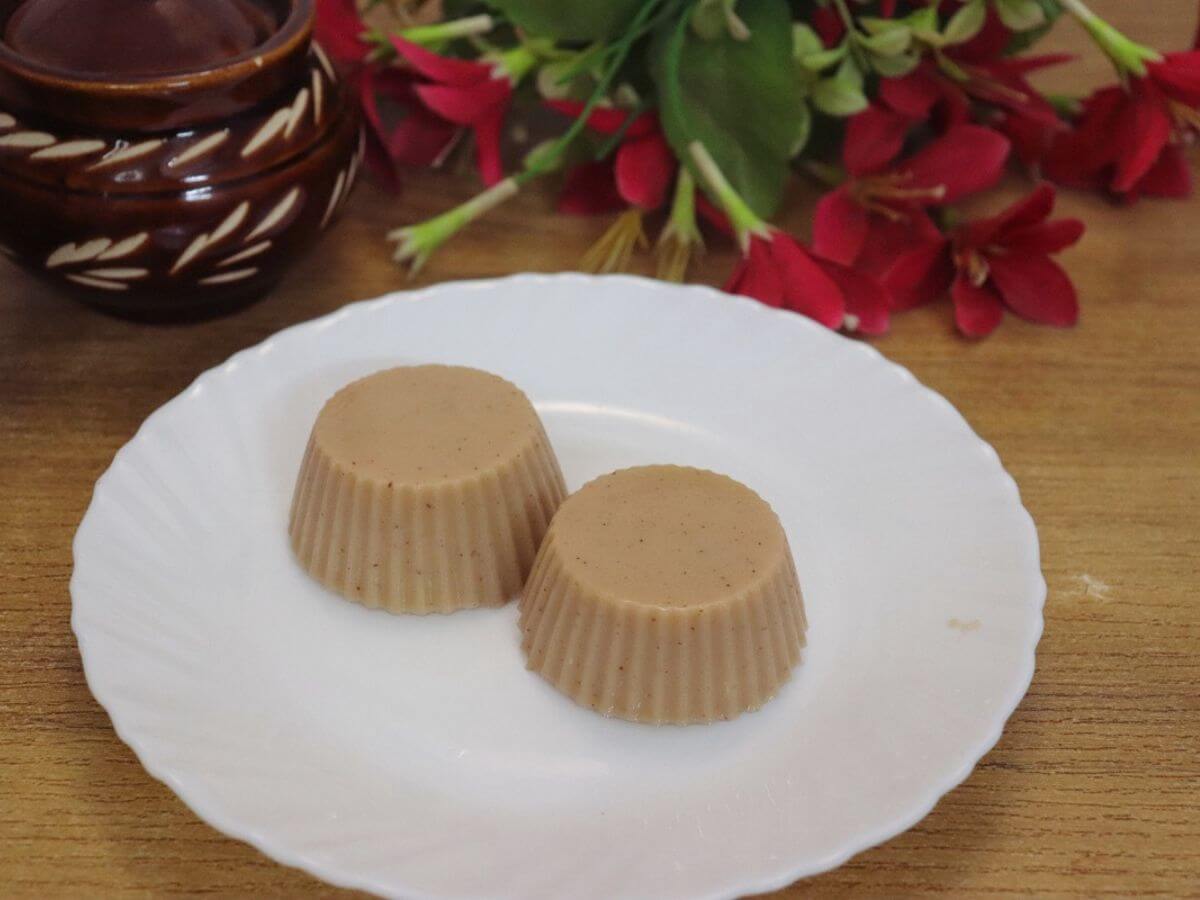
My kids don't really like Ragi Manni. But when I call it "ragi pudding" and unmould it from muffin cups to make cute little pudding shapes, they are happy.
Ingredients Notes
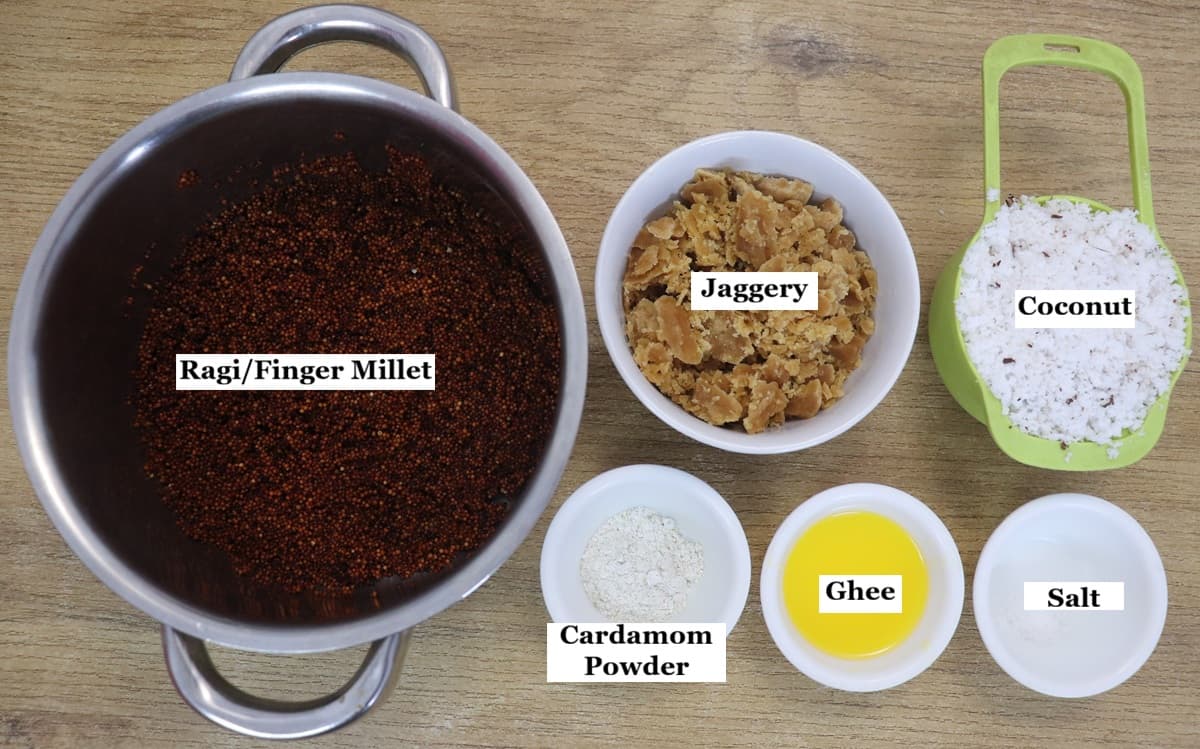
See the recipe card at the end of the post for full ingredients, quantities, and a printable version.
- Ragi (Finger Millet): Ragi (finger millet) naturally provides dietary fiber, calcium, and iron. It is the main ingredient in this traditional Ragi Manni recipe. I use whole ragi to make fresh ragi milk. You can also use ragi flour for a quicker version.
- Coconut: Fresh coconut gives the Ragi Manni its creamy texture and delicious coconut flavor. I use fresh coconut to extract coconut milk, but canned coconut milk works too.
- Jaggery: Traditionally, jaggery is used to sweeten Ragi Manni and gives it a lovely caramel-like flavor. You can use sugar if you prefer.
- Cardamom, Salt & Ghee: Cardamom adds a warm aroma, while a small pinch of salt balances the sweetness. I also add ghee for a richer taste and that glossy finish.
How to Make Ragi Manni
Step 1: Clean and rinse the ragi well. Soak it in enough water for 6 hours or preferably overnight.
Step 2: Drain the soaked ragi and transfer it to a mixer jar. Add grated coconut and 1½ cups of water. Blend to a smooth paste (images 1 & 2).
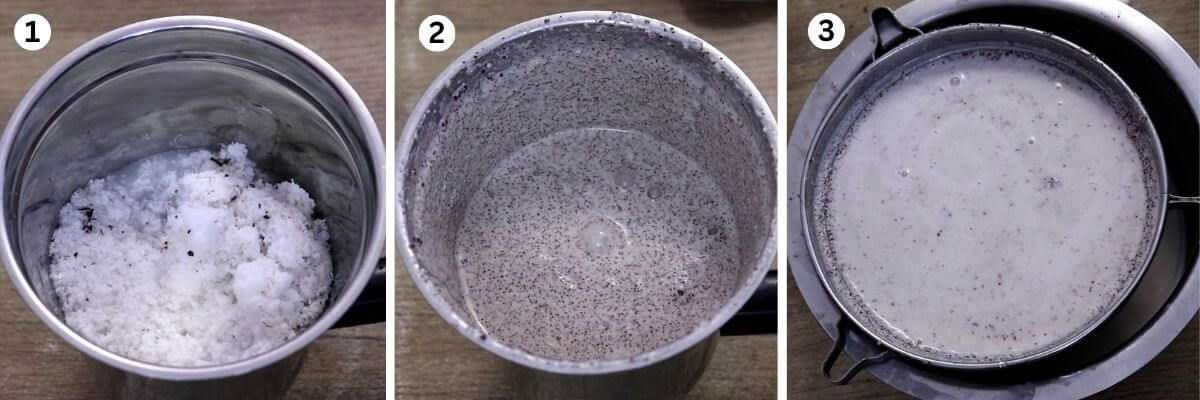
Step 3: Extract the first milk. Strain the mixture through a fine sieve or muslin cloth (image 3). Squeeze well to extract as much ragi-coconut milk as possible (image 4).
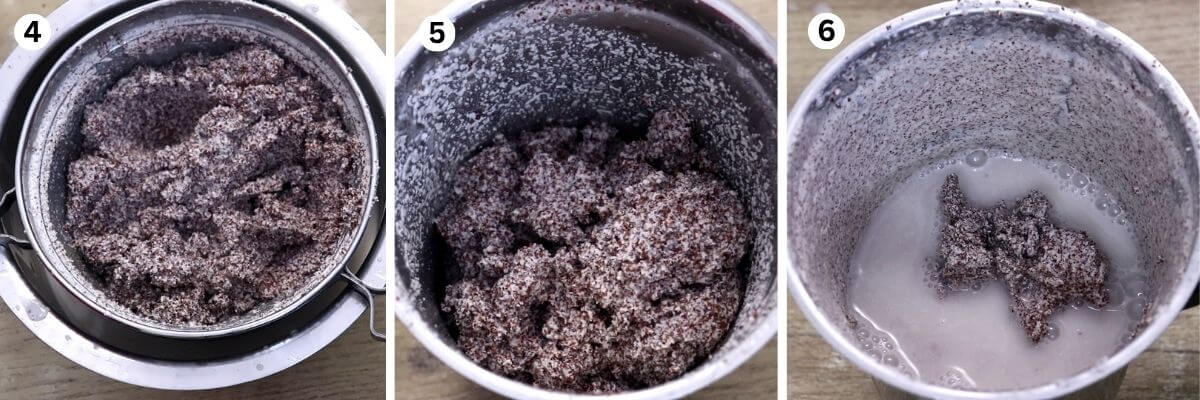
Step 4: Extract the second milk. Return the leftover ragi-coconut residue to the mixer. Add another 1½ cups of water (images 5 & 6). Blend again, and strain. Squeeze well to extract the milk.
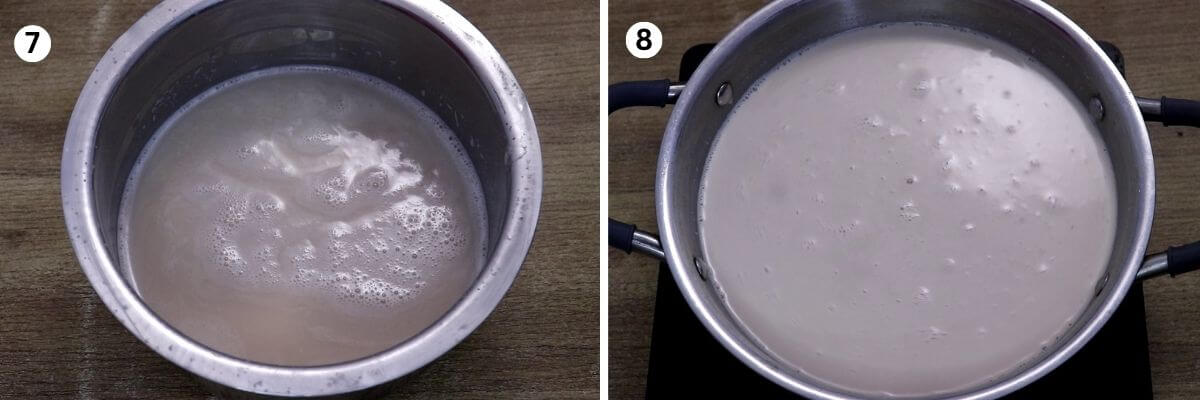
Step 5: Extract the third milk. Repeat the same process once more with 1½ cups of water. Strain and squeeze well. Keep all the extracted milk aside (image 7).
Step 6: Transfer the ragi and coconut milk to a heavy-bottomed pot (image 8). Add jaggery and a pinch of salt. Mix well and cook over medium heat, stirring continuously.
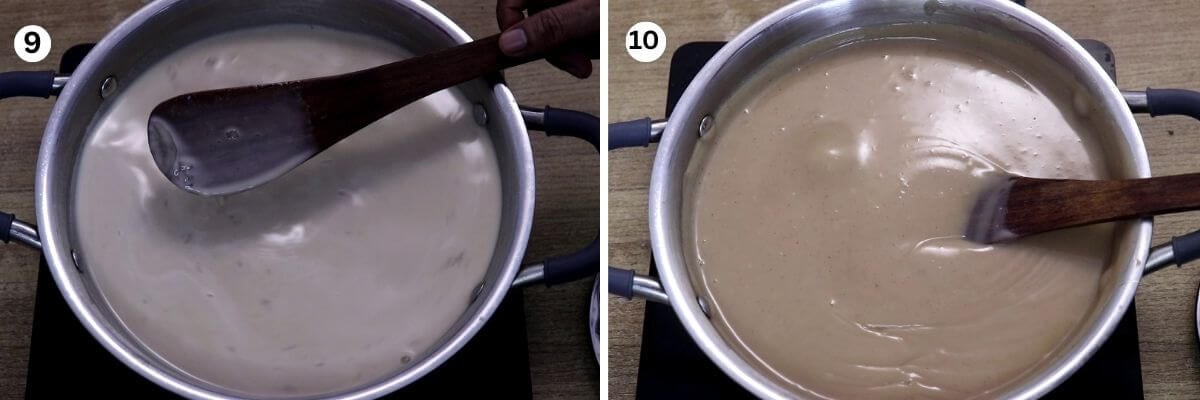
Step 7: At first, you may see small lumps forming (image 9). Don't worry. Keep stirring continuously. The lumps will disappear within a few minutes as the mixture thickens (image 10).
Step 8: Once the mixture starts thickening, reduce the heat to low. Add ghee and cardamom powder and continue stirring and cooking it for another 15 minutes (image 11). Taste and add more jaggery if needed. Be very careful at this stage, as the mixture is extremely hot.
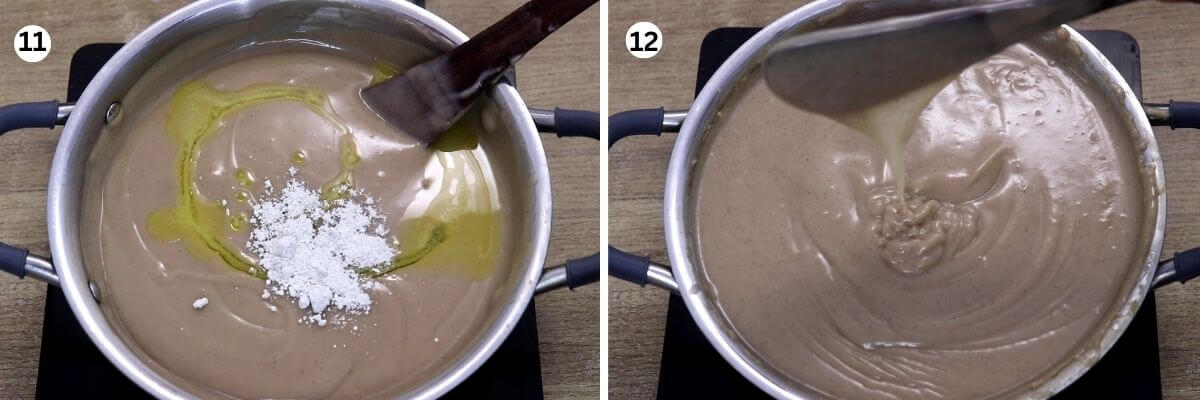
Step 9: Cook on medium-low heat, stirring continuously, until the Ragi Manni becomes thick and glossy. It should fall easily in one continuous flow from the spoon but hold its shape briefly when dropped back into the pan (image 12). You can see the video for details.
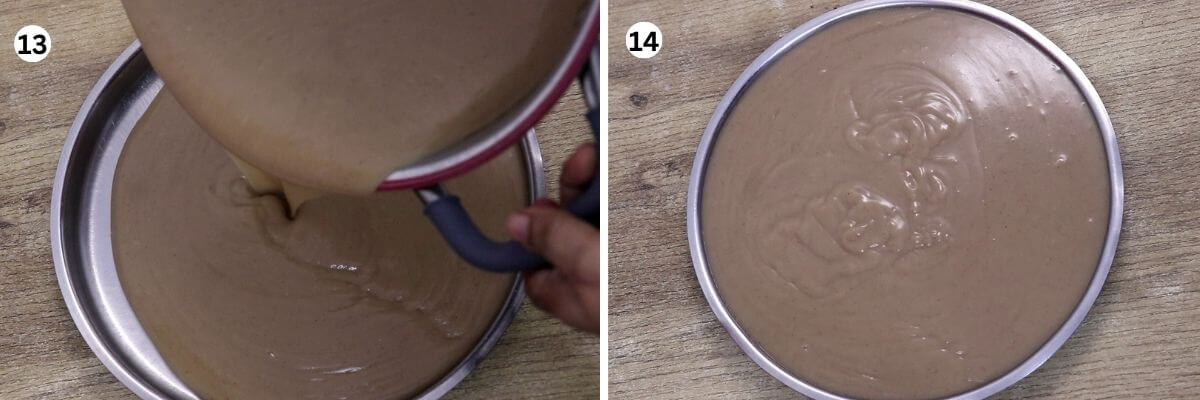
Step 10: Set the Ragi Manni. Turn off the heat. Immediately transfer the hot mixture to a greased tray or container. Tap the tray gently once to spread it evenly (images 13 & 14).
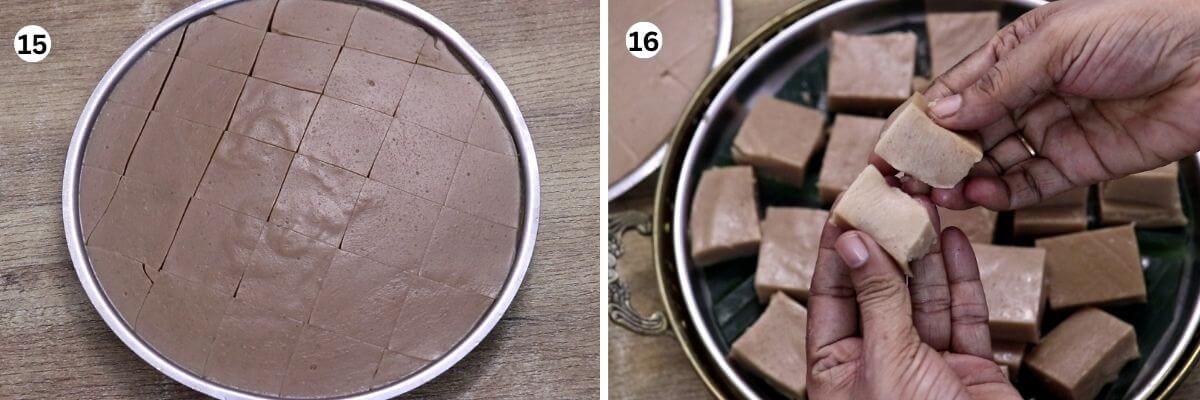
Step 11: Let it cool completely. For neat slices, I like to refrigerate it for 2 hours before cutting. Cut into your desired shapes and serve chilled (images 15 & 16). It tastes best when cold.
Tips to make the Best Ragi Manni
- Keep stirring continuously: Cook the Ragi Manni over low to medium-low heat, stirring continuously to prevent lumps. Do not leave it unattended while cooking, as lumps can form quickly.
- Cook until fully cooked: Don't stop when it starts thickening, or it may taste raw and slightly bitter. Cook until thick and glossy. It should flow in one stream from the spoon but hold its shape briefly when dropped back into the pan.
- Use a fine sieve: I find a fine sieve easier than a muslin cloth for this recipe. A cloth can get messy when you need to transfer the leftover ragi back to the mixer. Use a fine sieve, not a large-holed sieve, and squeeze well to extract the milk.
Recipe FAQs
Yes. You can use ragi flour instead of whole ragi. Combine ragi powder with coconut milk. Add it to the pan and start cooking with jaggery. Follow this recipe after adding jaggery.
This usually happens when the ragi is not cooked enough. Once the mixture starts thickening, continue cooking on low heat until it is thick and glossy.
Store it in an airtight container and refrigerate for up to 3 days. It tastes best served chilled.

Recipe Card
Ragi Manni
Video
Equipment
- 1 Heavy-bottomed pan
- Mixer/Grinder/Blender
Ingredients
- 1 cup Ragi (also called finger millet or nachani)
- 1 cup fresh grated coconut
- 1 cup jaggery, grated or chopped (Reduce the quantity if you prefer it less sweet.)
- 1 tablespoons ghee
- ½ teaspoon cardamom powder
- A small pinch salt
- 4½ cups water for blending and extracting the ragi milk
Instructions
- Clean and rinse the ragi well. Soak it in enough water for 6 hours or preferably overnight.
- Drain the soaked ragi and transfer it to a mixer jar. Add grated coconut and 1½ cups of water. Blend to a smooth paste.
- Strain the mixture through a fine sieve or muslin cloth. Squeeze well to extract as much ragi-coconut milk as possible.
- Return the leftover ragi-coconut residue to the mixer. Add another 1½ cups of water, blend again, and strain. Squeeze well to extract the milk.
- Repeat the same process once more with 1½ cups of water. Strain and squeeze well. Keep all the extracted milk aside.
- Transfer the ragi and coconut milk to a heavy-bottomed pot. Add jaggery and a pinch of salt. Mix well and cook over medium heat, stirring continuously.
- At first, you may see small lumps forming. Don't worry. Keep stirring continuously. The lumps will disappear within a few minutes as the mixture thickens.
- Once the mixture starts thickening, reduce the heat to low. Add ghee and cardamom powder, and continue stirring and cooking it for another 15 minutes. Taste and add more jaggery if needed. Be very careful at this stage, as the mixture is extremely hot.
- Cook on medium-low heat, stirring continuously, until the Ragi Manni becomes thick and glossy. It should fall easily in one continuous flow from the spoon but hold its shape briefly when dropped back into the pan. You can see the video for details.
- Turn off the heat. Immediately transfer the hot mixture to a greased tray or container. Tap the tray gently once to spread it evenly.
- Let it cool completely. For neat slices, I like to refrigerate it for 2 hours before cutting. Cut into your desired shapes and serve chilled. It tastes best when cold.
Notes
- Keep stirring: Cook over low to medium-low heat, stirring continuously to prevent lumps.
- Cook until fully cooked: Continue cooking until thick and glossy. It should fall in one stream from the spoon and briefly hold its shape.
- Use a fine sieve: A fine sieve makes straining easier. Use a fine sieve and squeeze well to extract the ragi milk.
Nutrition
Nutrition information is automatically calculated, so should only be used as an approximation.



Preeti Nayak
If you've never tried Ragi Manni, do give this recipe a try. I make it every year on Janmashtami, and my kids always look forward to it. They enjoy it so much that I often find them going back for another piece. It is a simple traditional sweet to make at home, and one I love making for my family.