

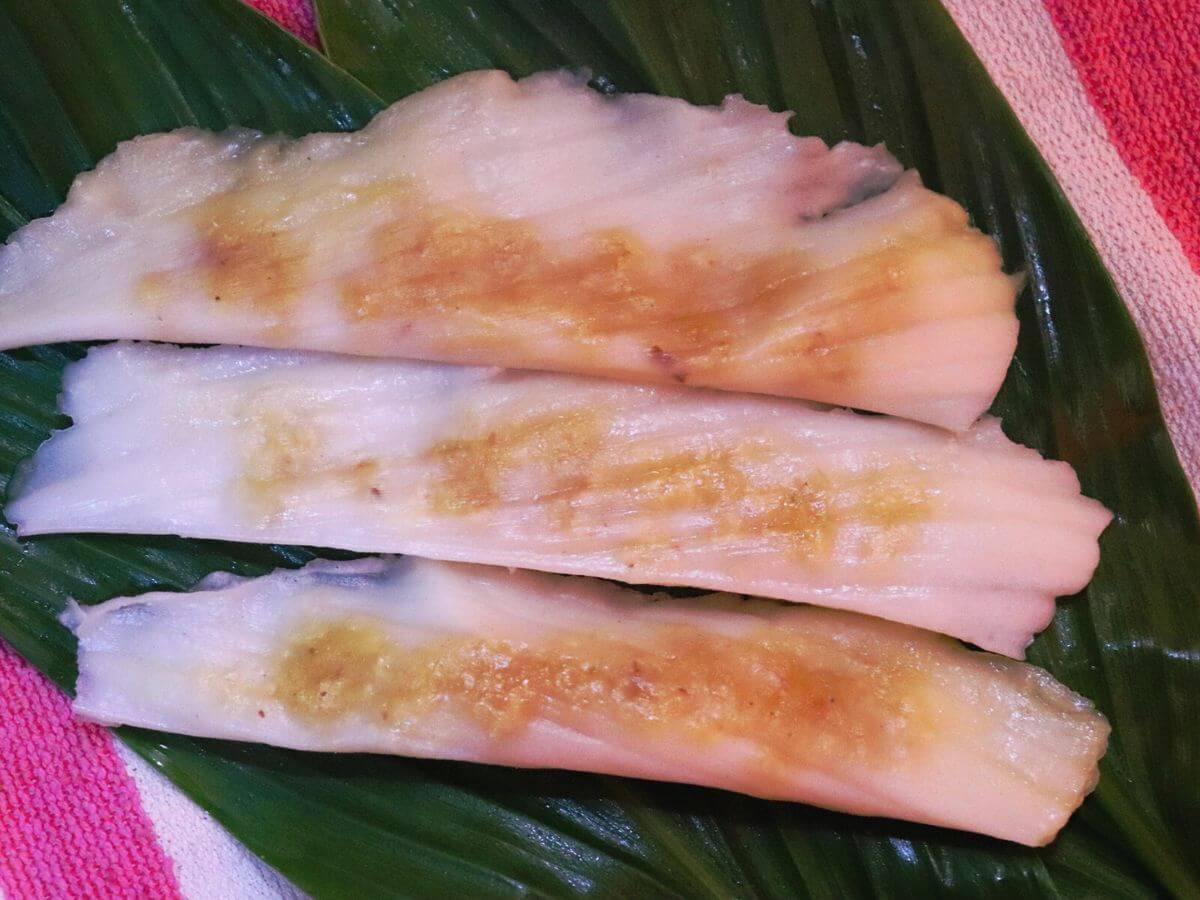
Patoli (also called Patoleo or Patholi) is a traditional Konkani sweet. These steamed rice dumplings are made by spreading rice batter on fresh turmeric leaves, filling it with a coconut and jaggery mixture, then folding and steaming patoli until soft. It is a popular festive sweet in Goa and the Konkan region, especially during Shravan, Ganesh Chaturthi, and other celebrations.
Unlike many Patoli recipes that use rice flour or partially cooked rice batter, I grind soaked rice with poha. It makes the rice batter easy to spread and gives soft, crack-free Patoli every time. Here's the easy Patoli recipe I've been making for years.
Jump to:
What is Patoli?
Patoli (plural: Patoleo) is a steamed festive sweet with a soft rice covering and a sweet coconut-jaggery filling. The rice batter is spread on fresh turmeric leaves, filled with a coconut and jaggery mixture, folded, and steamed until soft. Some families flavour the filling with cardamom or nutmeg, while others keep it simple with just coconut and jaggery.
This sweet coconut filling is similar to the one used in Nevri (Karanji), another popular Goan festive sweet.
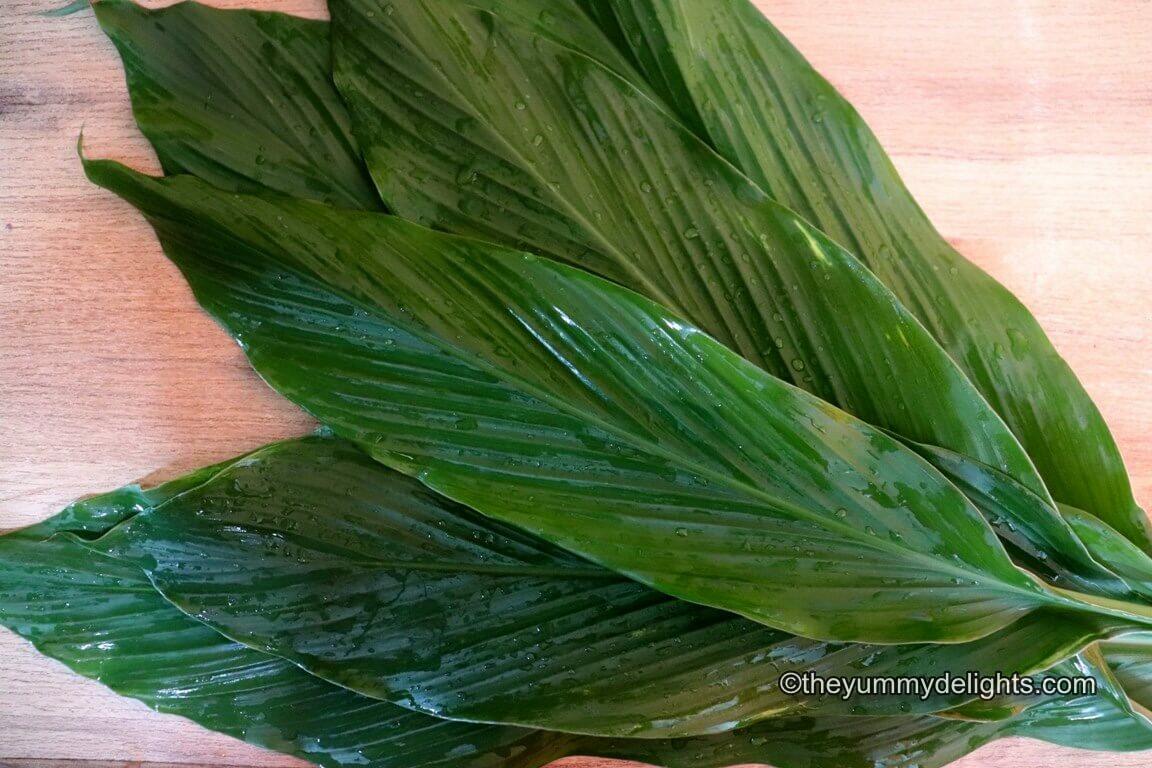
What makes Patoli truly special is the use of fresh turmeric leaves. As the Patoli steams, the leaves release a wonderful aroma that naturally flavours the soft rice covering and sweet filling. This aroma is what gives Patoli its unique taste and makes it different from other steamed sweets.
Every year, fresh turmeric leaves start growing in my backyard during the monsoon, and that's when I know it's time to make Patoli. Fresh leaves are available on the western coast of India from July to September during the Shravan month, when families across Goa, the Konkan region, Maharashtra, and Karnataka prepare this festive sweet for occasions like Nag Panchami, Hartalika, and Ganesh Chaturthi.
In Goa, the Christian community prepares Patoleo during the Feast of São João (24 June) and the Feast of the Assumption (15 August), when it is traditionally enjoyed as part of the harvest celebrations.
About this Patoli Recipe
This traditional Patoli recipe is inspired by my mother-in-law's method of soaking and grinding rice to make the Patoli from scratch. She cooks the rice batter slightly before spreading it on the fresh turmeric leaves. It helps the batter to spread easily and makes the patoli cover smooth and crack-free.
I simplified the method to make Goan Patoleo by adding soaked poha while grinding the rice. It naturally thickens the rice batter, so there's no need to cook it first, making it easy to spread and giving the Patoli a smooth, crack-free covering.
This simple, tried-and-tested tip was shared with me by my Goan neighbour, and I have been making Patoli this way ever since. Love Indian sweets? Try my Puran Poli, Gajar (Carrot) Halwa, Moong Dal Ladoo with Jaggery, or Rava Ladoo next.
Ingredients Notes
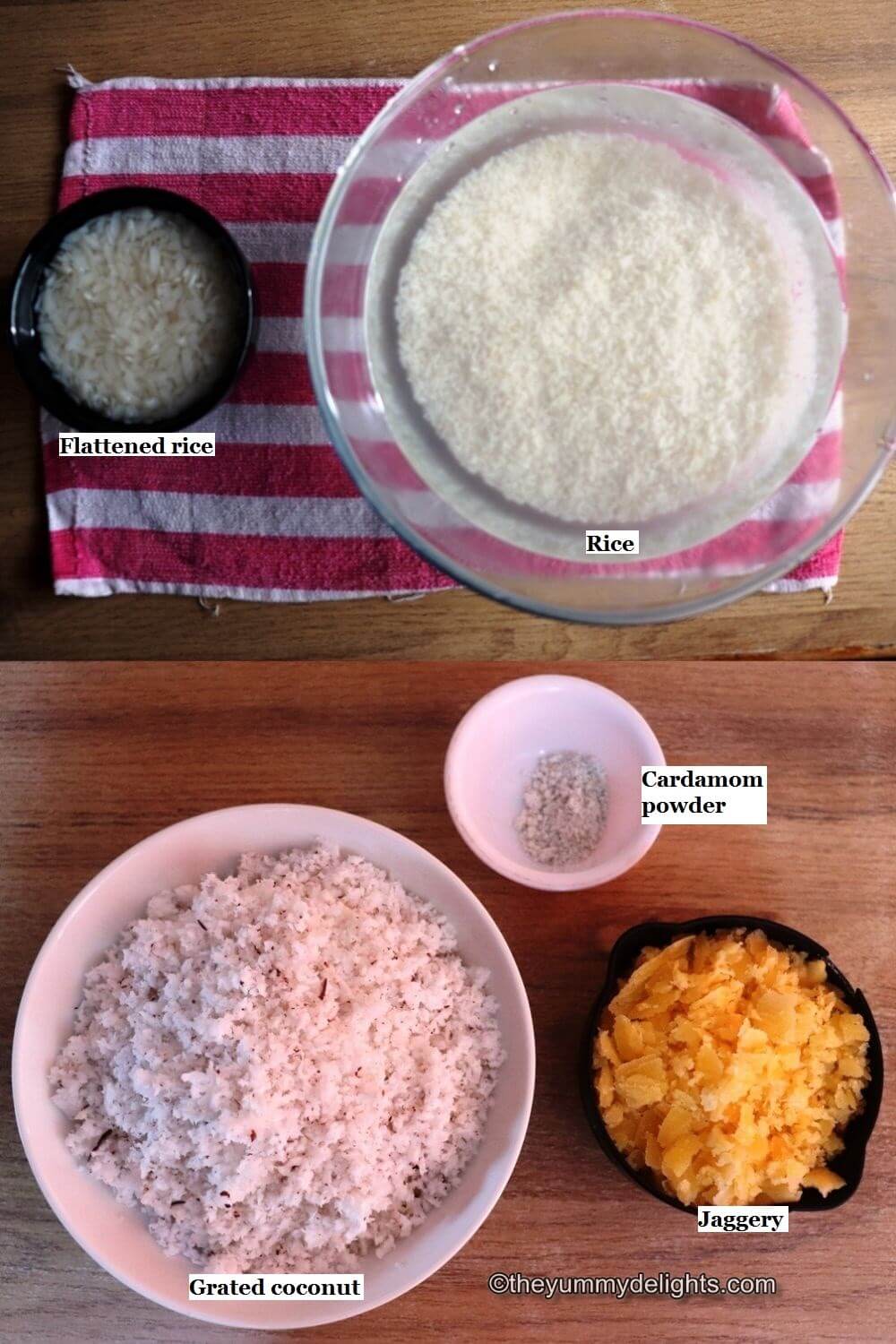
See the recipe card at the end of the post for full ingredients, quantities, and a printable version.
- Rice: I use raw rice (idli rice or dosa rice) to make the soft outer layer of Patoli. I recommend soaked raw rice for the best texture. Rice flour is a quicker option, but the texture of Patoli with rice flour will be slightly different.
- Flattened rice (Poha): This is the ingredient that makes this recipe different. It helps thicken the rice batter naturally and gives the steamed Patoli a soft texture.
- Coconut: Freshly grated coconut gives the Patoli filling its juicy texture and natural sweetness. I recommend using fresh coconut instead of frozen for the best flavour.
- Jaggery: I used sugarcane jaggery for this Patoleo recipe. Traditionally, many Goan families use palm jaggery (Maddachen Godd), which has a deeper colour and an amazing caramel-like flavour. Adjust the quantity according to your taste.
- Fresh Turmeric Leaves: Fresh turmeric leaves are available during the monsoon. I use fresh leaves from my kitchen garden, but you can also find them in local vegetable markets during the season. If fresh turmeric leaves are not available, you can use banana leaves instead. The Patoli will still taste delicious, but it won't have the authentic aroma and flavour of traditional Patoleo.
How to make Goan Patoleo with step-by-step photos
Preparations
Step 1: Soak the raw rice for 6 hours or overnight. Drain the water completely and keep it aside.
Step 2: The next day, soak the flattened rice (poha) in just enough water (about ½ inch above the poha) for 15 minutes. Squeeze out the excess water and keep it aside.
Step 3: Grate the fresh coconut and grate or finely chop the jaggery.
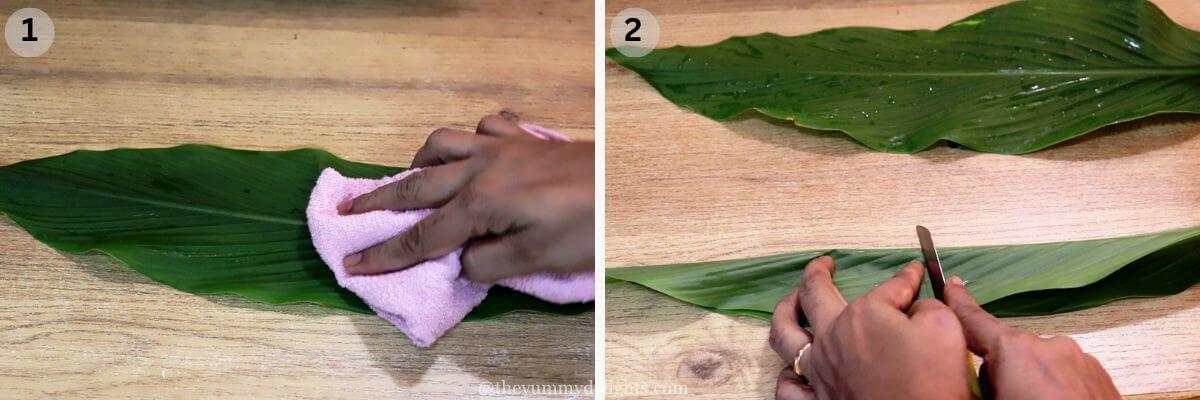
Step 4: Rinse the fresh turmeric leaves and wipe them dry with a clean kitchen towel (image 1). If the leaves are very large, cut them in half so they fit easily inside your steamer (image 2).
Making the coconut-jaggery filling
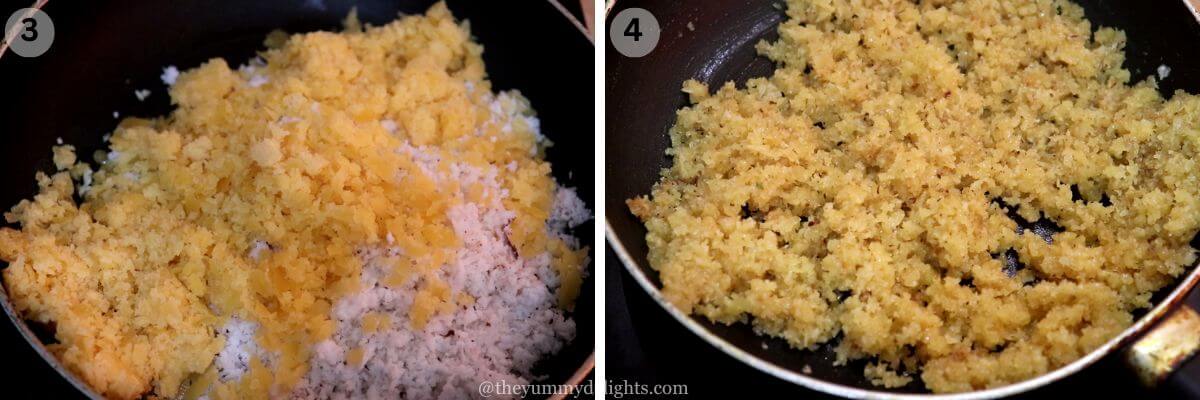
Step 5: Heat 1 teaspoon ghee in a pan over medium heat. Add the grated coconut and jaggery. Mix well (image 3).
Step 6: Cook, stirring continuously, for 3-4 minutes until the jaggery melts and the mixture becomes semi-dry (image 4). Do not overcook, or the jaggery will harden after cooling.
Step 7: Stir in the cardamom powder. Transfer the filling to a plate and let it cool completely. Coconut-jaggery filling is ready.
Batter to make the outer cover
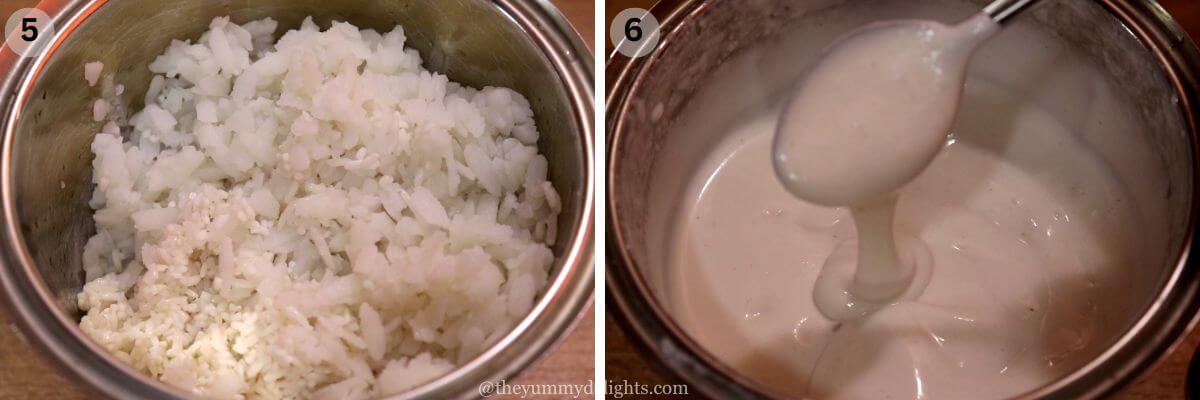
Step 8: Grind the soaked rice and soaked poha to a thick, smooth batter that spreads easily. Add water little by little while grinding. The rice batter should be thick enough to spread easily on the turmeric leaves. Stir in ¼ teaspoon of salt to the batter (images 5 & 6).
Making the Konkani Patoleo
Step 9: Add water to the Patoli steamer and heat it on low heat. It is an important step to preheat the steamer if you are following this recipe.
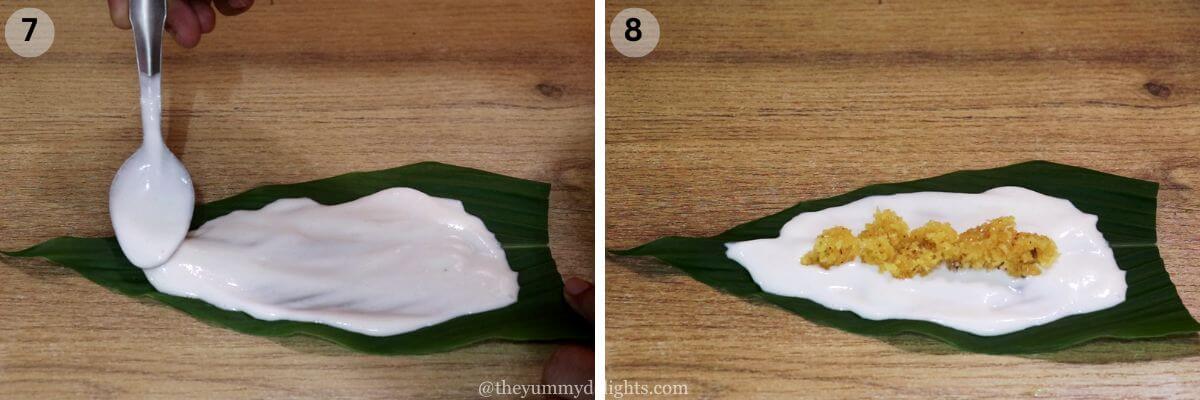
Step 10: Spread a thin layer of rice batter on the turmeric leaf with the back of a spoon. Do not spread the batter around the edges (image 7). Otherwise, while folding the turmeric leaves, the batter will come out.
Step 11: Place the filling in the centre (image 8).
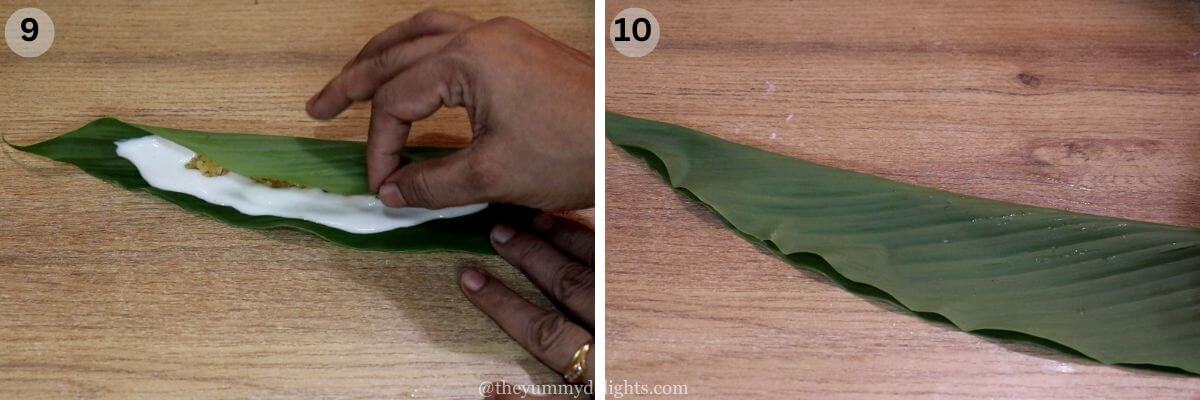
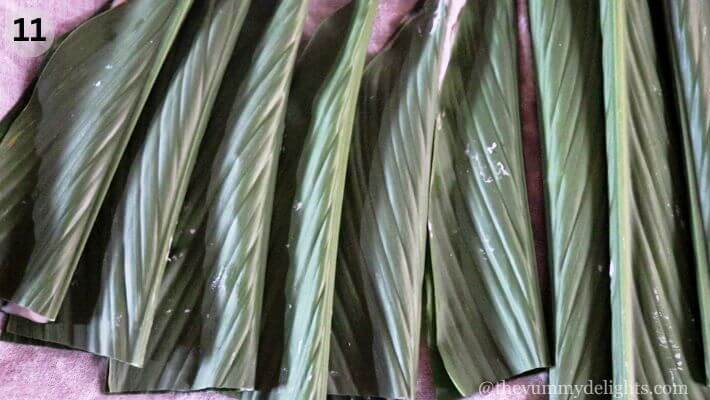
Step 12: Fold the leaf in half and gently press the edges (images 9 & 10). Place the prepared Patoli on a clean kitchen towel (image 11). Do not stack them. In the same way, prepare the other patoleo.
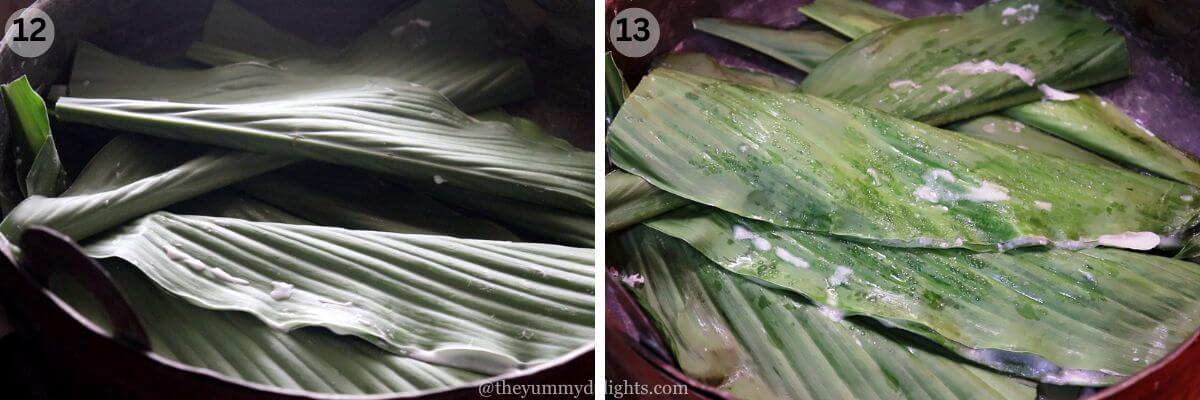
Step 13: Arrange the Patoli in a single layer in the preheated steamer. Do not stack them (image 12). I have used a traditional steamer, but you can make Patoli in an Idli steamer or any regular steamer.
Step 14: Steam over medium heat for 20 minutes or until the rice covering turns opaque and the turmeric leaves change colour (image 13). Your kitchen will be filled with the wonderful aroma of steamed Patoli.
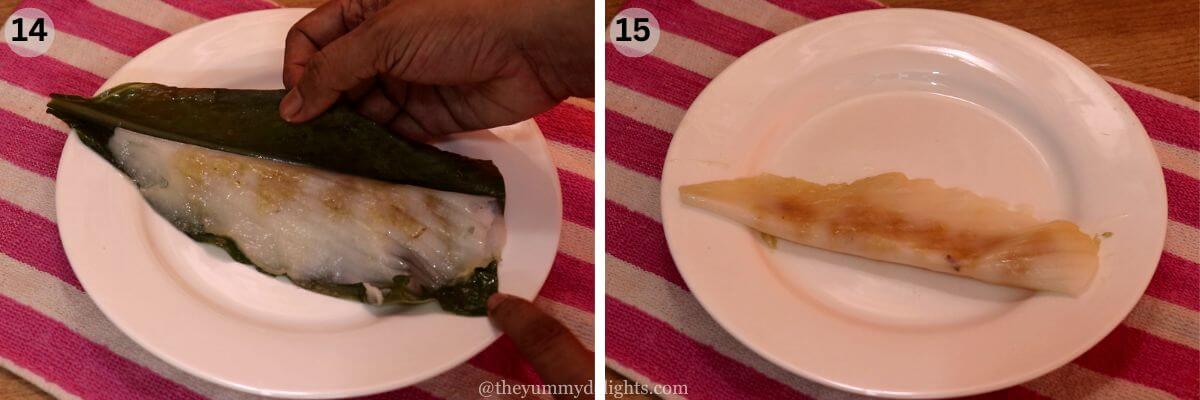
Step 15: Remove the Patoli from the steamer immediately to prevent them from becoming soggy. Peel away the turmeric leaves and serve the Patoli warm (images 14 & 15).
Patoli tastes best when served warm, with a soft rice covering, juicy coconut-jaggery filling, and the delicate aroma of fresh turmeric leaves.
How long to steam Patoli?
It depends on the type of steamer you are using. A big steamer takes 30 minutes, and small ones take 15 minutes. After 15 minutes, check the patoli. If the rice covering turns opaque and the turmeric leaves change colour (they will be dull green in colour).
Tips to make soft Patoli
- Get the rice batter consistency right. Add water gradually while grinding the soaked rice and poha. For a good Patoli, the batter should be thick and spread easily, not runny. A thin rice batter is difficult to spread and may leak while steaming.
- Leave some space around the edges of the turmeric leaf. Spread the rice batter evenly, but do not cover the edges. This makes the Patoli easier to fold and prevents the batter from spilling out.
- Place the filling only in the centre. This helps seal the Patoli properly and keeps the filling from coming out during steaming.
- Do not stack the Patoli before or after steaming. Arrange them in a single layer in the steamer for even cooking.
- Once steamed, transfer them immediately to a plate. Leaving them in the hot steamer can make the Patoli soft and soggy.
Recipe FAQs
You cannot substitute the amazing aroma of turmeric leaves with anything. Fresh turmeric leaves are the soul of this patoli recipe. However, you can make it using banana leaves.
I have used a traditional steamer to make it. It is a big steamer and easily accommodates 20-25 Patoleo. But you can make Patoli in an Idli steamer.
Yes, you can. But sometimes, if you make Patoli only with soaked and ground rice, then there is the possibility of cracks developing on the outer surface once it is cooked. Or the outer cover is hard.
Flattened rice helps to make the outer cover soft and prevents cracking.
Yes. If you don't want to soak and grind rice, you can use rice flour instead. Mix the rice flour with water to make a thick, smooth rice flour batter. Add a little salt, mix well, and use it to spread on the turmeric leaves.
Yes. I often prepare the rice batter in the morning and make Patoli after lunch. I keep the batter covered in the refrigerator.
If you're following this recipe, don't skip the soaked poha. It helps keep the rice covering soft and prevents cracks after steaming. Or you made the rice batter too thick. Add a little water and steam the Patoli.
Yes. Reheat Patoli in a steamer or on low heat until warmed through. Avoid overheating, as it can dry out the rice covering.

Recipe Card
Patoli Recipe | Konkani Patoleo
Video

Equipment
- 1 Kadhai/Pan
- 1 Steamer
Ingredients
For coconut-jaggery filling
- 1 teaspoon ghee/clarified butter optional
- 2 cups grated coconut
- 1 and ¾ cup grated jaggery
- 1 teaspoon cardamom powder
For the outer-cover of patoli
- 2 cups rice soaked in water for 6 hours /overnight
- ½ cup flattened rice soaked in water for 15 minutes
- ¼ teaspoon salt
Other ingredients
- 20 turmeric leaves
Instructions
Preparations
- Soak the raw rice for 6 hours or overnight. Drain the water completely and keep it aside.
- The next day, soak the flattened rice (poha) in just enough water (about ½ inch above the poha) for 15 minutes. Squeeze out the excess water and keep it aside.
- Grate the fresh coconut and grate or finely chop the jaggery.
- Rinse the fresh turmeric leaves and wipe them dry with a clean kitchen towel. If the leaves are very large, cut them in half so they fit easily inside your steamer.
Making the coconut-jaggery filling
- Heat 1 teaspoon ghee in a pan over medium heat. Add the grated coconut and jaggery. Mix well.
- Cook, stirring continuously, for 3-4 minutes until the jaggery melts and the mixture becomes semi-dry. Do not overcook, or the jaggery will harden after cooling.
- Stir in the cardamom powder. Transfer the filling to a plate and let it cool completely. Coconut-jaggery filling is ready.
Batter to make outer cover
- Grind the soaked rice and soaked poha to a thick, smooth, spreadable rice batter. Add water little by little while grinding. The batter should be thick enough to spread easily on the turmeric leaves. Stir in ¼ teaspoon of salt to the batter.
Making the Konkani Patoleo
- Add enough water to the Patoli steamer and heat it on low heat. If you do not have a traditional patoli steamer, any steamer can be used. It is an important step to preheat the steamer if you are following this recipe.
- Spread a thin layer of rice batter on the turmeric leaf with the back of a spoon. Do not spread the batter around the edges. Otherwise, while folding the turmeric leaves, the batter will come out.
- Place the coconut-jaggery filling in the centre.
- Fold the leaf in half and gently press the edges. Place the prepared Patoli on a clean kitchen towel. Do not stack them. In the same way, prepare the other patoleo.
- Arrange the Patoli in a single layer in the preheated steamer. Do not stack them.
- Steam over medium heat for 20 minutes. The turmeric leaves will change colour, and your kitchen will be filled with the wonderful aroma of steamed Patoli.
- Remove the Patoli from the steamer immediately to prevent them from becoming soggy. Peel away the turmeric leaves and serve the Patoli warm.
Notes
- It is important to get the consistency of the Patoli batter right. Gradually add water, one tablespoon at a time, while grinding the soaked rice batter until it becomes thick and spreadable.
- Soaked poha naturally thickens the rice batter and gives soft, crack-free Patoli.
- If the batter is thin, it will be difficult to spread.
- Spread the rice batter, leaving the edges of the leaf. It will help you fold the leaf easily. Spreading it too close to the edges can cause the batter to spill out during folding.
- Adjust the quantity of jaggery as per your taste. I have a sweet tooth. But if you prefer less sweet, reduce the quantity of jaggery.
- Put the filling only in the middle. It will be easy to fold the turmeric leaves, and the filling will not come out.
- Once cooked, remove the patoli immediately from the steamer and place them on a plate. Do not keep them inside the steamer. Continued exposure to steam can make the Patoli soggy.
Nutrition
Nutrition information is automatically calculated, so should only be used as an approximation.


Aditi
Looking for patoli recipe. Tried it. It was the best. Saving this recipe for future reference. Thanks for sharing.
Shreevidhya
Best ever soft patoli recipe. I tried it. So soft and delicious!!! Will make more.
Preeti
Glad you like it.