

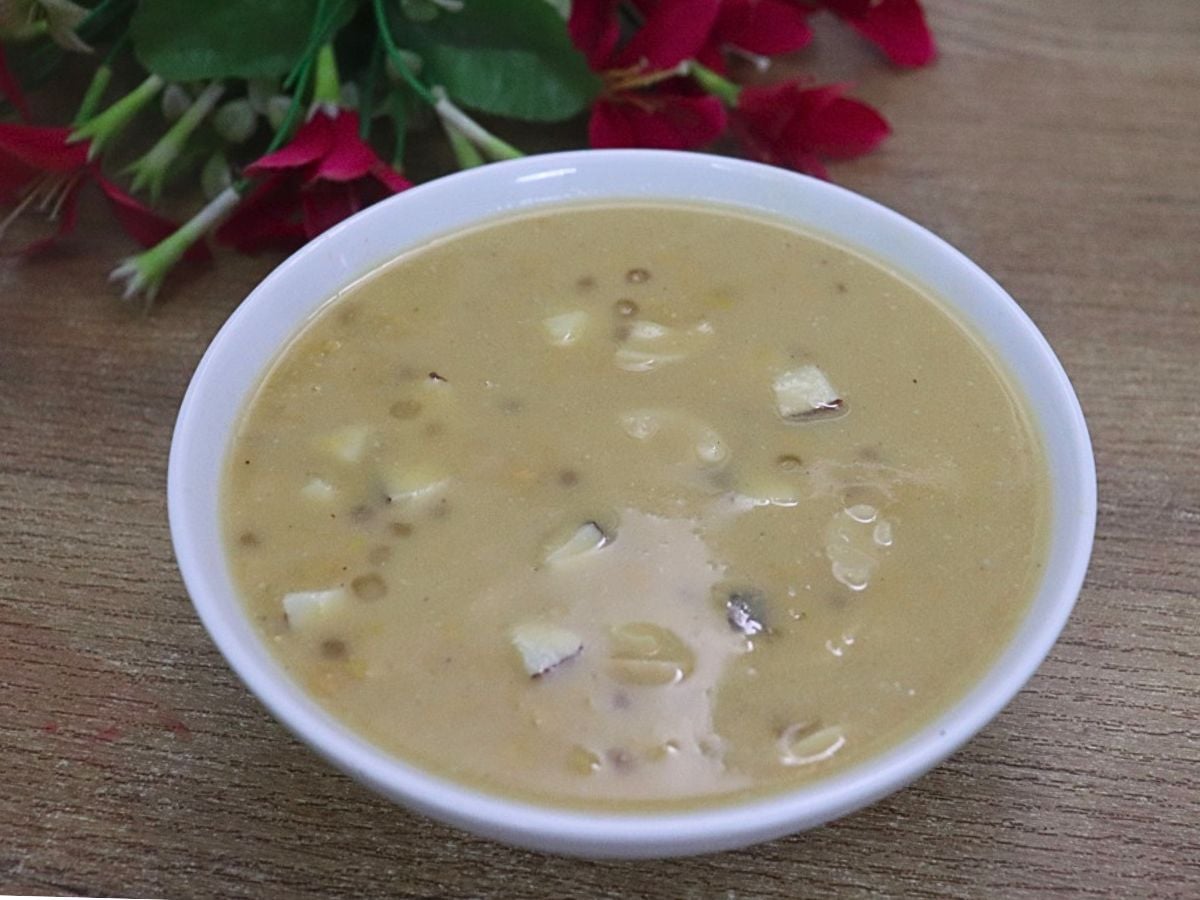
Mangane is a traditional Goan sweet dish, also called Goan chana dal kheer or payasam, made with chana dal, sabudana (sago), coconut milk, and jaggery. It is easy to make with simple ingredients and has a mildly sweet taste with delicious coconut flavor, making it a popular festive dessert in Goa.
In Goa, mangane is commonly made during Ganesh Chaturthi and special occasions and is often served as part of a traditional Goan vegetarian thali with mooga gathi and khatkhate.
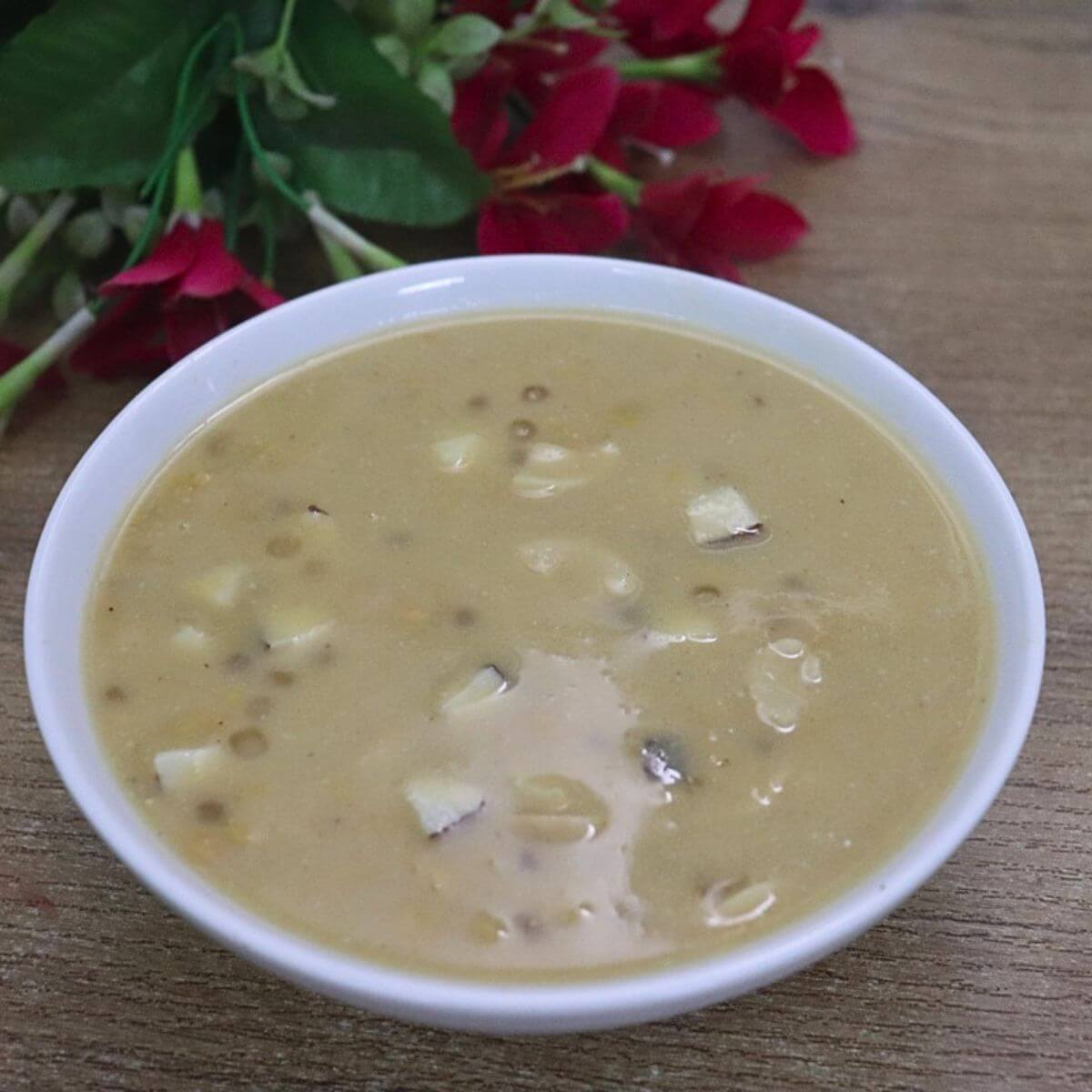
Every Konkani home may make this chana dal kheer a little differently. Some use moong dal; some add turmeric leaves for aroma; while in our home, we keep it simple with chana dal, sago, and coconut milk because it gives this Goan dessert a nice texture and flavor.
I like to add a pinch of cardamom powder for a lovely aroma to this chana dal payasam since it is always handy in my kitchen. Turmeric leaves are seasonal, so this is my easy go-to option. If you enjoy traditional festive sweets, you may also like my Patoleo recipe, which is also made using turmeric leaves during Shravan.
About This Recipe
After making this Goan mangane recipe a few times, I found that adding coconut milk in two stages gives the best result. I use thin coconut milk first while cooking and add thick coconut milk at the end so it stays creamy and does not split.
I also add jaggery before adding coconut milk, which helps everything mix smoothly. It comes together quickly but needs some preparation, like soaking chana dal and sabudana. It is perfect if you want to try an easy homemade Goan dessert.
Quick Look: Mangane Recipe
- ⏱ Prep Time: 10 minutes (+ soaking time)
- 🍳 Cook Time: 30 minutes
- 🔥 Calories: ~338 kcal per serving
- 🥥 Key Ingredients: Chana dal, sabudana (sago), fresh coconut, jaggery, cardamom powder, and cashews.
- ♨ Cook Method: Soak chana dal and sabudana → pressure cook chana dal → extract coconut milk → cook with jaggery → finish with coconut milk
- 🌴 Flavor Profile: Mildly sweet with coconut milk and jaggery.
- ⭐ Difficulty: Easy, beginner-friendly festive sweet
Why You'll Love This Recipe
- Rich coconut flavor without being overly sweet: This homemade mangane tastes mildly sweet with the goodness of fresh coconut milk and jaggery.
- Perfect for festivals and special days: Mangane is a festive Goan sweet traditionally made during Ganesh Chaturthi and served in vegetarian festive meals.
- Uses pantry ingredients commonly found in Goan kitchens: You only need chana dal, coconut, jaggery, sabudana, and a few basic ingredients easily available at home to make this Goan sweet.
What Is Mangane?
Mangane is a traditional Goan sweet dish made with chana dal, sabudana (sago), coconut milk, and jaggery. It is commonly prepared during festivals, religious functions, and special family occasions.
This Goan chana dal kheer or payasam is known for its delicious coconut flavor and light sweetness from jaggery. Mangane is usually served warm, but it also tastes delicious at room temperature.
Every family has their own version of Goan mangane. Some make it thick, some thin, and ingredients may change slightly depending on what is available at home. Here is my simple homemade version.
Ingredients You'll Need
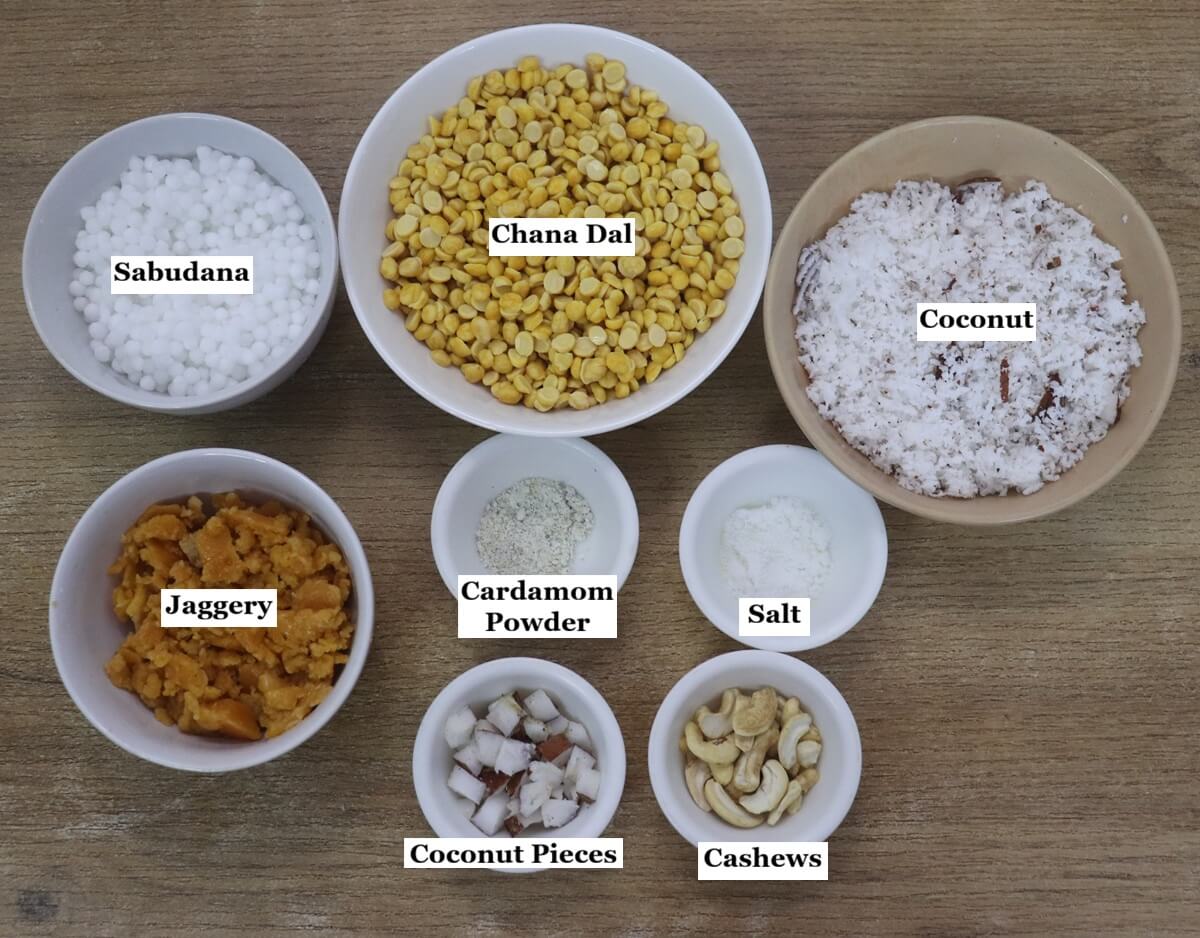
See the recipe card at the end of the post for full ingredients, quantities, and a printable version.
- Chana dal: Chana dal gives body and texture to mangane. Soaking overnight helps the chana dal cook faster and makes it easier to digest. You can also use moong dal if you prefer a lighter version. But flavors will differ.
- Sabudana (Sago): Sabudana makes the mangane slightly thick and gives a soft, chewy texture. Soak it for 2 hours so it cooks faster.
- Fresh coconut: Fresh coconut gives the best flavor for authentic Goan mangane.
- Jaggery: Jaggery gives sweetness and a deep flavor. Adjust the amount depending on how sweet you like your mangane.
- Coconut pieces and cashews: These add texture and a nice bite to the sweet Goan dish.
- Cardamom powder: A little cardamom powder adds a lovely aroma.
- Salt: Just a pinch of salt balances the sweetness and improves the taste.
Variations and Substitutions
- Use moong dal: Many Goan homes also make mangane with moong dal instead of chana dal. It tastes lighter and cooks faster.
- Add turmeric leaf: Some people add turmeric leaf for aroma to mangane. If you have one, add it while cooking and skip the cardamom powder.
- Add dry fruits: You can add raisins, almonds, or more cashews if making for festivals.
- Use canned coconut milk: If fresh coconut is not available, use canned coconut milk.
How To Make Mangane (Step-by-Step)
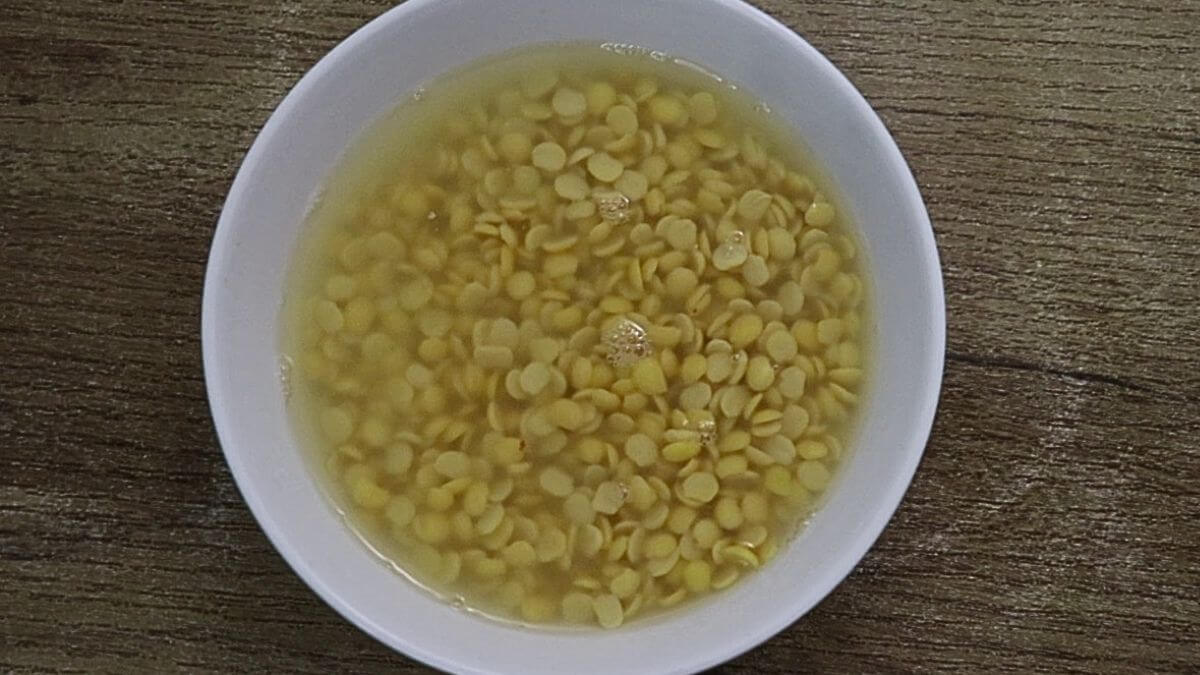
Step 1: Soak the ingredients: Rinse and soak the chana dal for 6 hours or overnight. Drain and keep it aside.
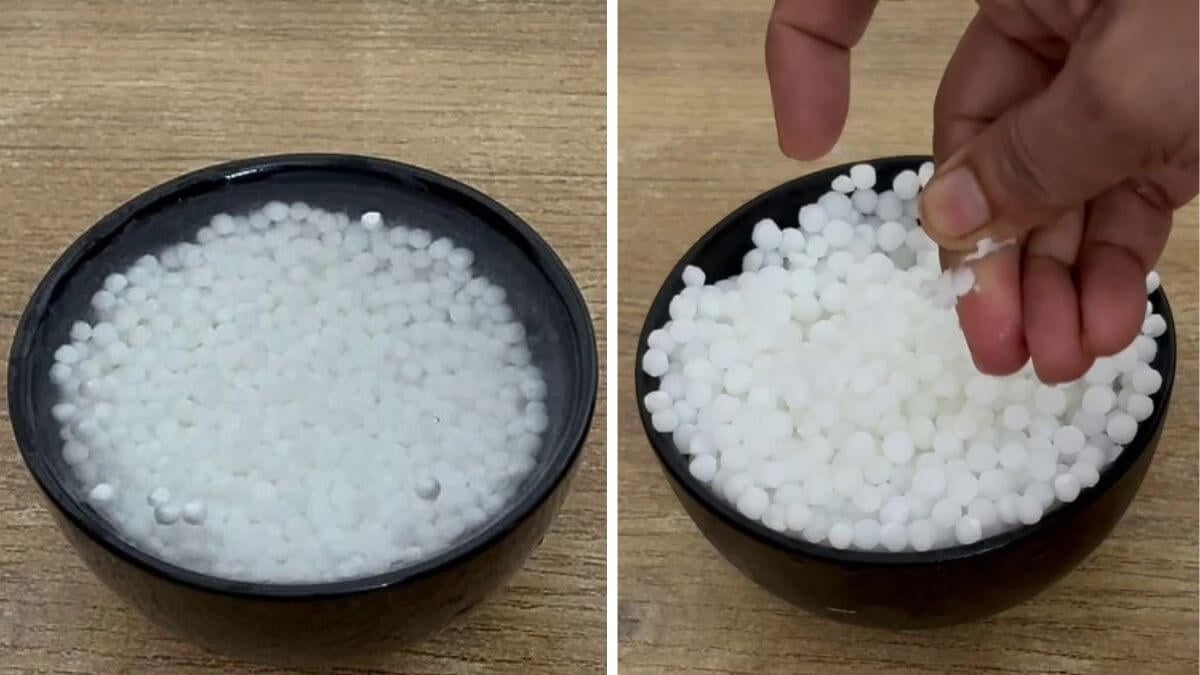
Step 2: Soak sabudana for about 2 hours. Soaking chana dal and sabudana helps them cook faster, gives a softer texture, and makes them easier to digest.
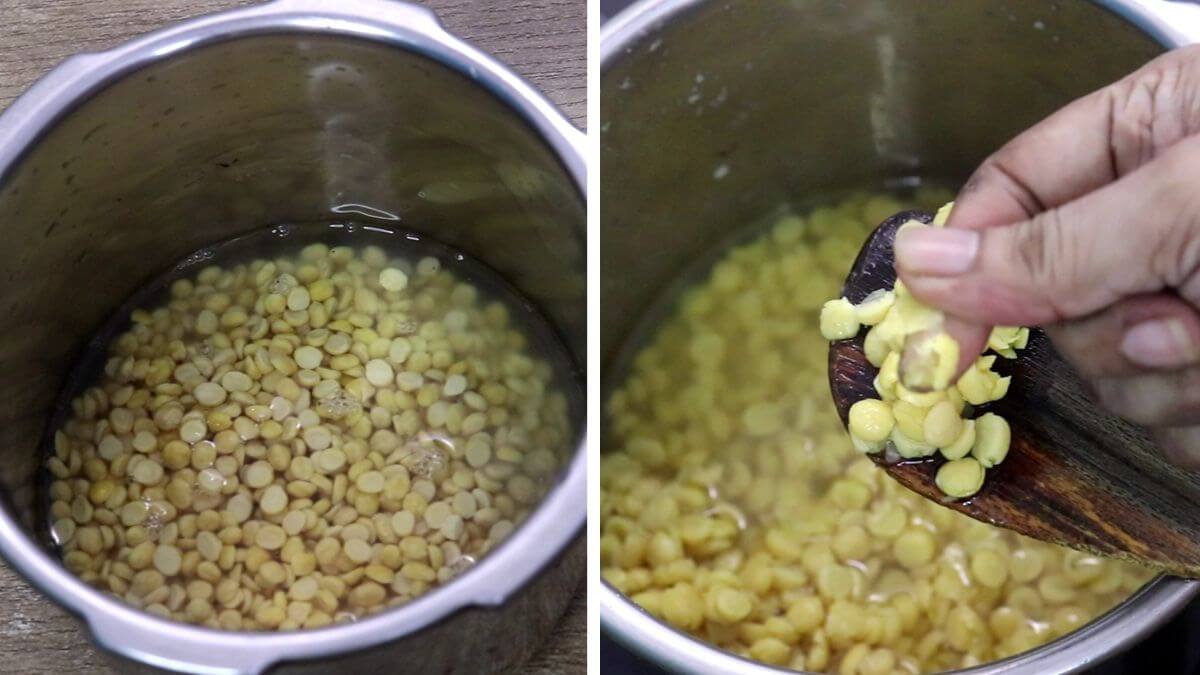
Step 3: Pressure cook the chana dal: Add soaked chana dal and water to a pressure cooker. Cook for 3 whistles until soft but not mushy. The dal should hold its shape slightly.
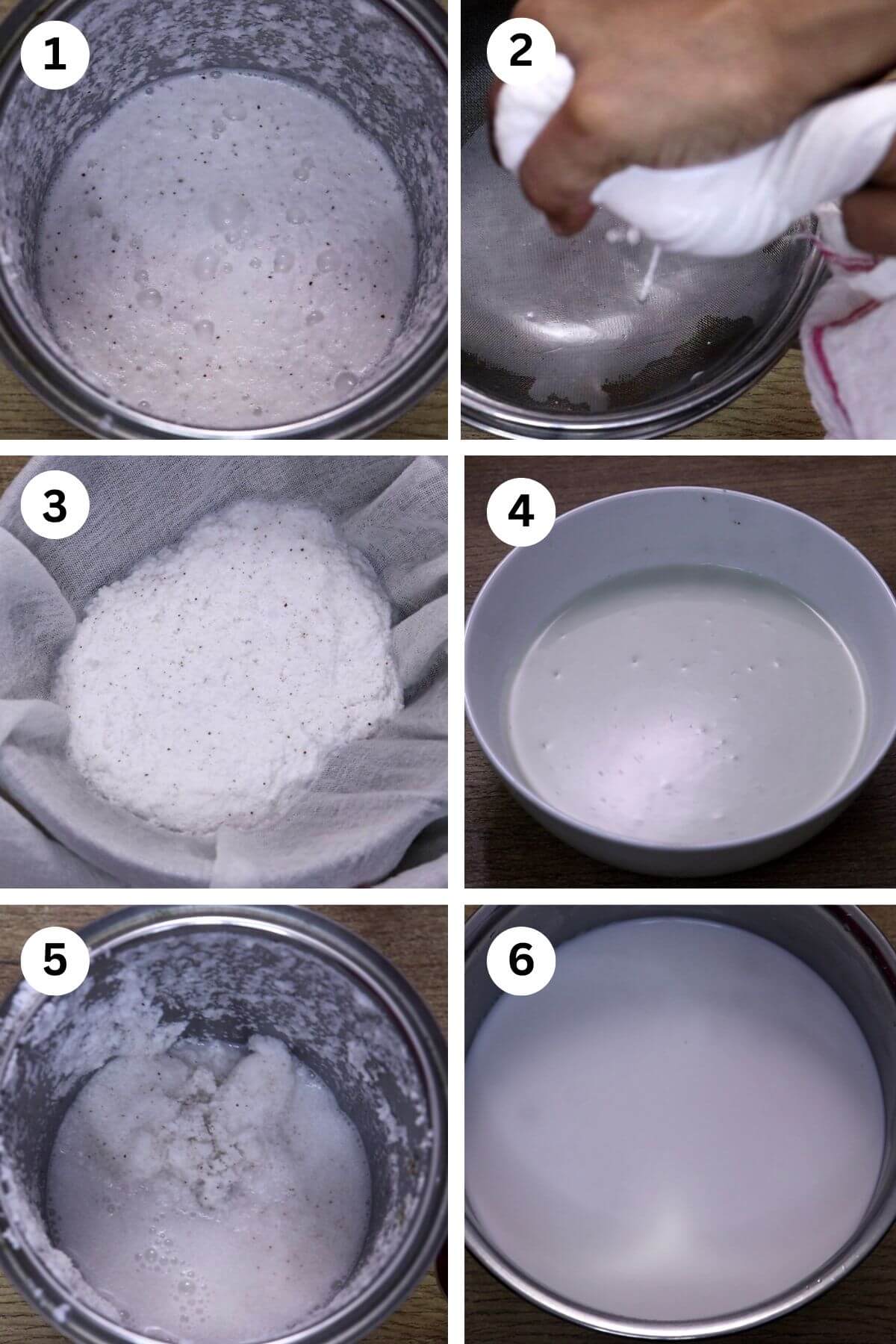
Step 4: Extract coconut milk: Meanwhile, while the chana dal is pressure cooking, blend fresh coconut with a cup of water and strain to extract the first coconut milk. Keep it aside (images 1, 2, 3 & 4). Transfer the coconut mixture back to the mixer jar, add 1.5 cups of water, and strain again to extract the second coconut milk (images 5 & 6). Keep both separately, as we will use them at different stages of cooking.
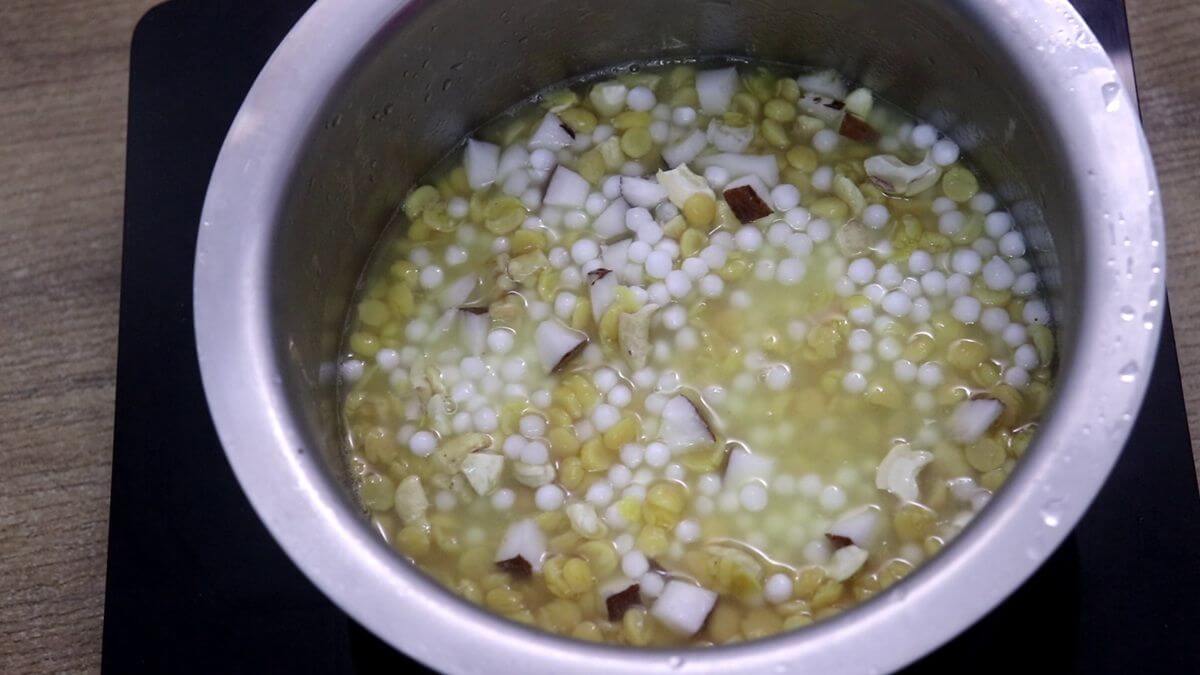
Step 5: Cook sabudana: Add soaked sabudana, coconut pieces, and cashews to the cooked dal. Cook on medium heat until sabudana turns transparent.
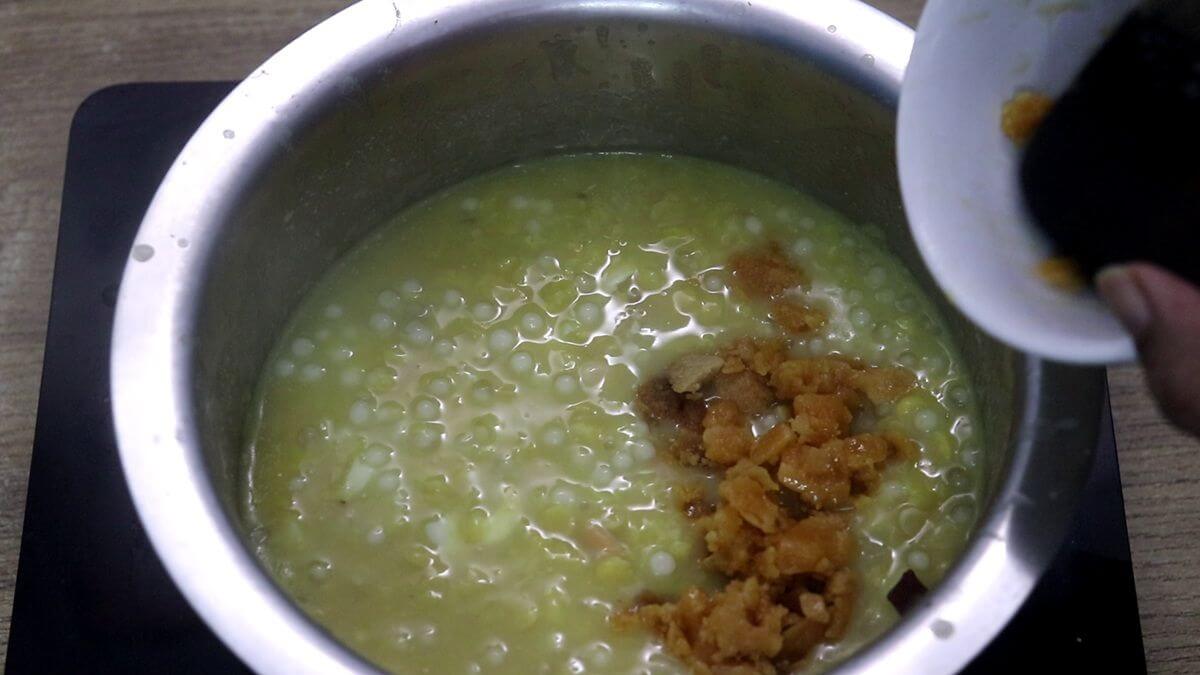
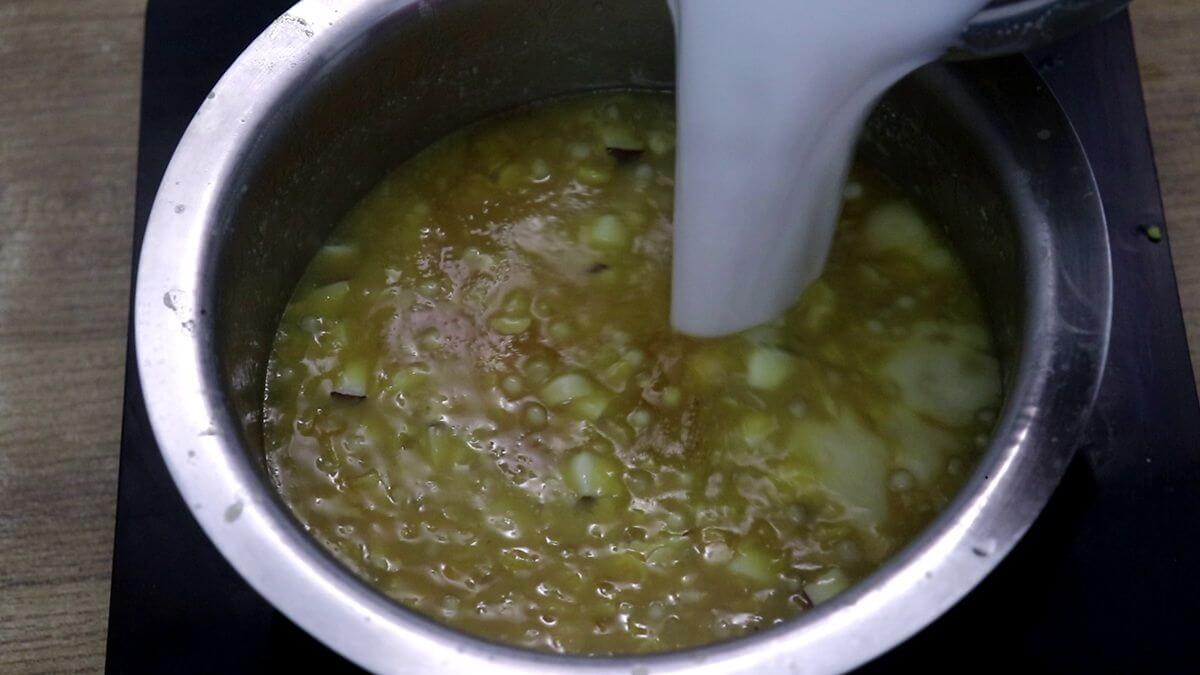
Step 6: Add jaggery: Add a pinch of salt and jaggery. Stir well and cook until the jaggery melts completely. It is important to let the jaggery melt completely before adding coconut milk, or the coconut milk may curdle.
Step 7: Add second coconut milk extract: Add the second coconut milk extract and cardamom powder. Combine and bring it to a gentle boil.
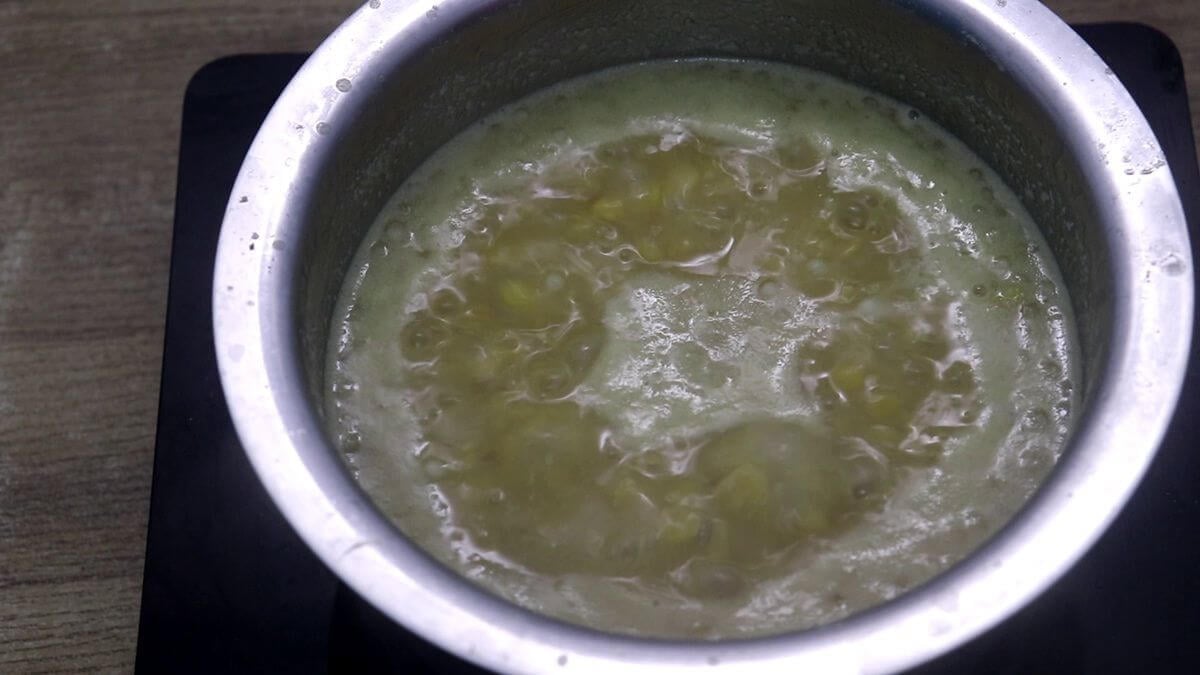
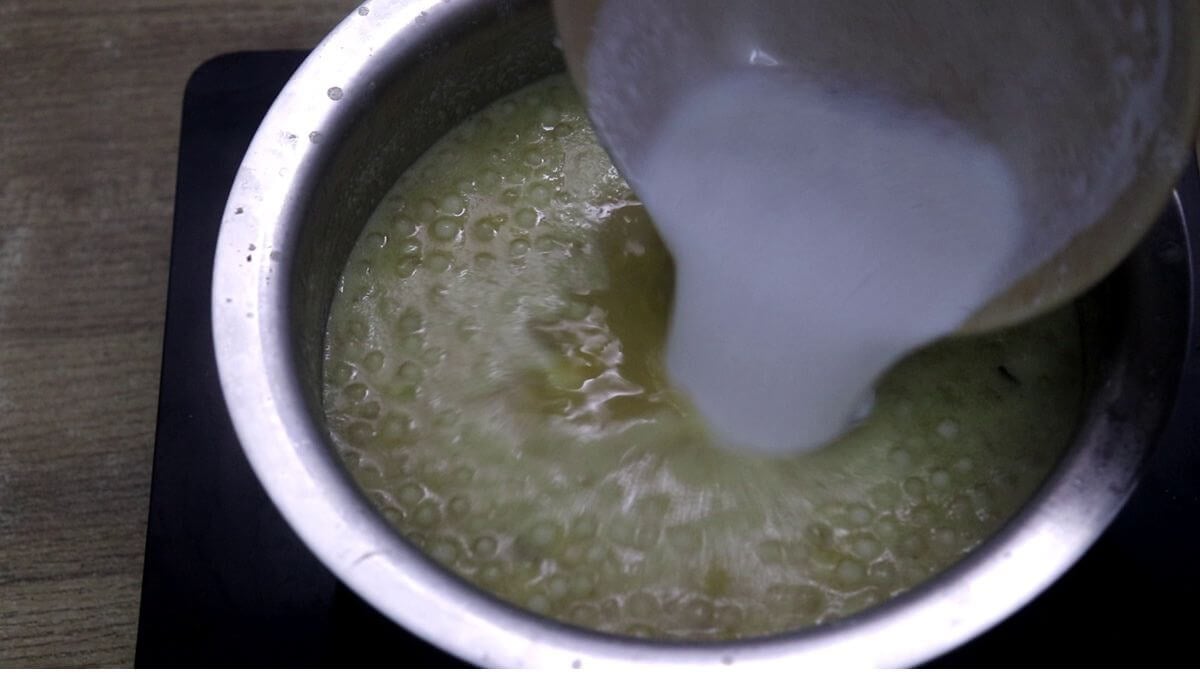
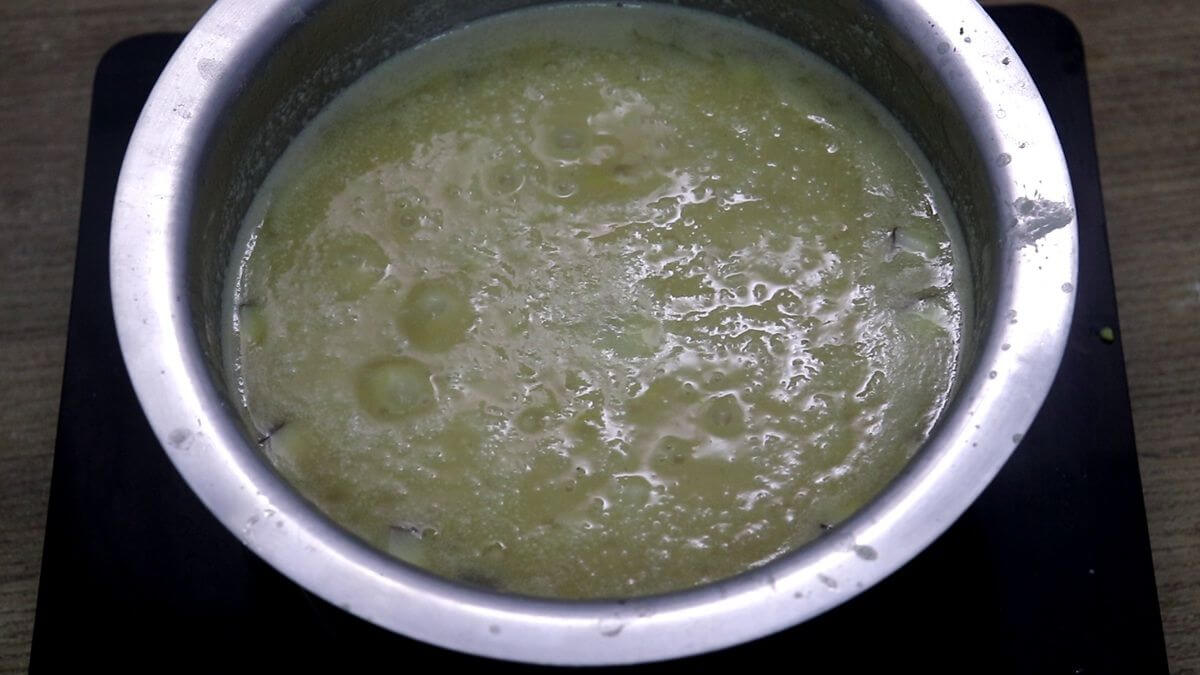
Step 8: Finish with the first coconut milk extract: Add the first coconut milk and simmer gently for a minute. Switch off the heat. Avoid boiling too much after adding first coconut milk, as the coconut milk may split.
If you love traditional Goan dishes, do try my mango sasav recipe too. This sweet and tangy ripe mango curry is another seasonal favourite enjoyed with rice.
Pro tips to make the best Goan Mangane Recipe
After making mangane many times at home, these small tips always help me get the best taste and texture.
- Soak the chana dal well: Soaking chana dal overnight helps it cook faster and gives a soft texture. If undercooked, mangane will not taste good.
- Do not overcook the dal: The dal should be soft but not mashed completely. Slight texture tastes best in mangane.
- Add coconut milk at the end: Always add the first coconut milk extract towards the end and simmer gently. Avoid boiling too much after adding this first coconut milk extract, as it may split.
Common mistakes and how to fix them
- Mangane becomes too thick: Add a little hot water or thin coconut milk and mix well.
- Sabudana stays hard: It may not have soaked properly. Soak for at least 2 hours before cooking. Also, check by pressing it between the index finger and thumb. If it mashes easily, it is perfectly soaked.
- Coconut milk curdles: This happens if boiled at high heat after adding the first coconut milk extract. Keep the heat low and switch off once it comes to a gentle boil.
- Too sweet? Start with ½ cup of jaggery and add more after tasting it. Add a little extra coconut milk or cooked dal to balance the sweetness.
How to Serve?
I personally like serving mangane slightly warm because the coconut flavor tastes better and the texture stays softer.
Mangane tastes best warm after meals. It also goes very well as a festive sweet during Ganesh Chaturthi or family gatherings. It is often served as a part of a traditional Goan thali during Ganesh Chaturthi with mooga gathi (sprouted moong curry), khatkhate, and Patoleo.
Storage & Reheating Tips
Store leftover mangane in an airtight container in the fridge for up to 2 days. It becomes thicker after cooling because sabudana absorbs liquid. Add a little warm water or coconut milk while reheating. Reheat gently on low heat and avoid boiling too much.
Recipe FAQs
Mangane is made with chana dal or moong dal, coconut milk, jaggery, and sabudana.
Yes. You can skip sabudana and make it only with chana dal and coconut milk. Skipping sabudana will make the texture less thick.
Yes, moong dal is commonly used in many homes and gives a lighter taste. Personally, I like the taste of chana dal.
This usually happens if boiled too much after adding the first coconut milk extract. Keep the heat low.

Recipe Card
Mangane Recipe
Ingredients
- 1 cup chana dal
- ½ cup sabudana sago
- 1½ cups fresh coconut
- 2 tablespoon fresh coconut pieces
- 2 tablespoon cashews
- a pinch of salt
- ¾ cup jaggery adjust to taste
- 1 teaspoon cardamom powder
Instructions
- Rinse and soak the chana dal for 6 hours or overnight. Drain and keep it aside.
- Soak sabudana for about 2 hours. Soaking helps them cook faster, gives a softer texture, and makes the sabudana and chana dal easier to digest.
- Add soaked chana dal to a pressure cooker with 2 cups of water. Cook for 3 whistles until soft but not mushy. The dal should hold its shape slightly.
- Meanwhile, while the chana dal is pressure cooking, blend fresh coconut with a cup of water and strain to extract the first coconut milk. Keep it aside. Transfer the coconut mixture back to the mixer jar, add 1.5 cups of water, and strain again to extract the second coconut milk. Keep both separately, as we will use them at different stages of cooking.
- Add soaked sabudana, coconut pieces, and cashews to the cooked dal. Cook on medium heat until sabudana turns transparent.
- Add a pinch of salt and jaggery. Stir well and cook until the jaggery melts completely. It is important to let the jaggery melt completely before adding coconut milk, or the coconut milk may curdle.
- Add the second coconut milk extract and cardamom powder. Combine and bring it to a gentle boil. Taste and adjust salt or jaggery.
- Add the first coconut milk extract and simmer gently for a minute. Switch off the heat. Avoid boiling too much after adding thick coconut milk, as it may split.
Notes
- Soak the dal well: Soaking chana dal overnight helps it cook faster and gives a soft texture. If undercooked, mangane will not taste good.
- Do not overcook the dal: The dal should be soft but not mashed completely. Slight texture tastes best in mangane.
- Add coconut milk at the end: Always add the first coconut milk extract towards the end and simmer gently. Avoid boiling too much after adding the first coconut milk extract, as it may split.
- Adjust the sweetness to your taste: Different jaggery types have different sweetness. Taste and adjust if needed.
- Use fresh coconut if possible: Fresh coconut gives an authentic flavor like traditional Goan mangane made at home.
- Store leftover mangane in an airtight container in the fridge for up to 2 days. It becomes thicker after cooling because sabudana absorbs liquid. Add a little warm water or coconut milk while reheating. Reheat gently on low heat and avoid boiling too much.
Nutrition
Nutrition information is automatically calculated, so should only be used as an approximation.


Preeti Nayak
I make mangane for almost every festive occasion at home, whether it is Ganesh Chaturthi, Satyanarayan pooja, or family gatherings. It needs a little preparation like soaking the dal and sabudana, but once that is done, it comes together quickly and tastes so comforting. My family and friends always love it, and I am sure if you try this homemade mangane, you will enjoy it too.