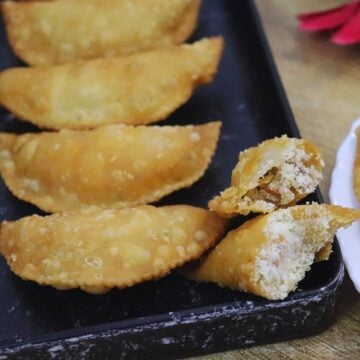
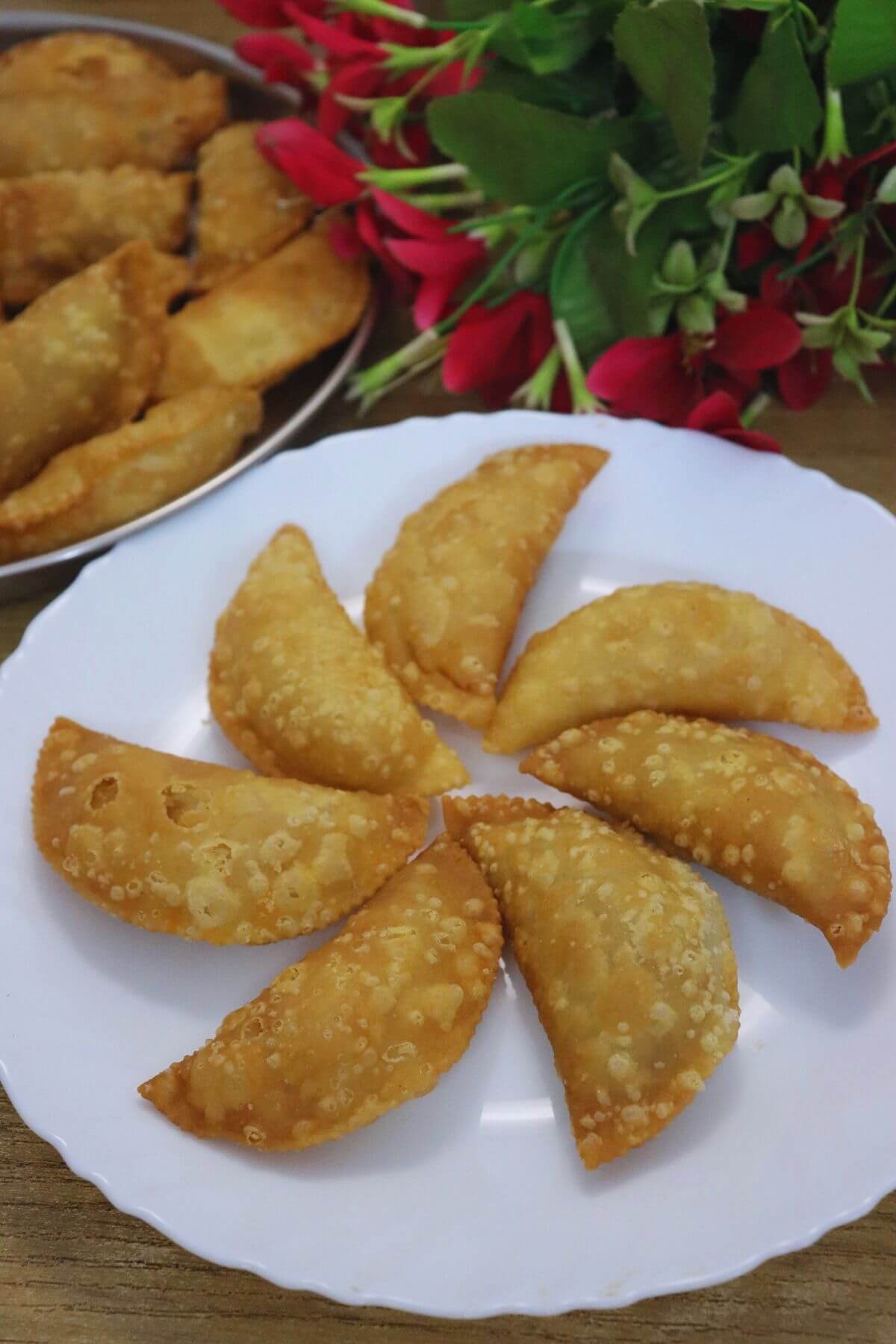
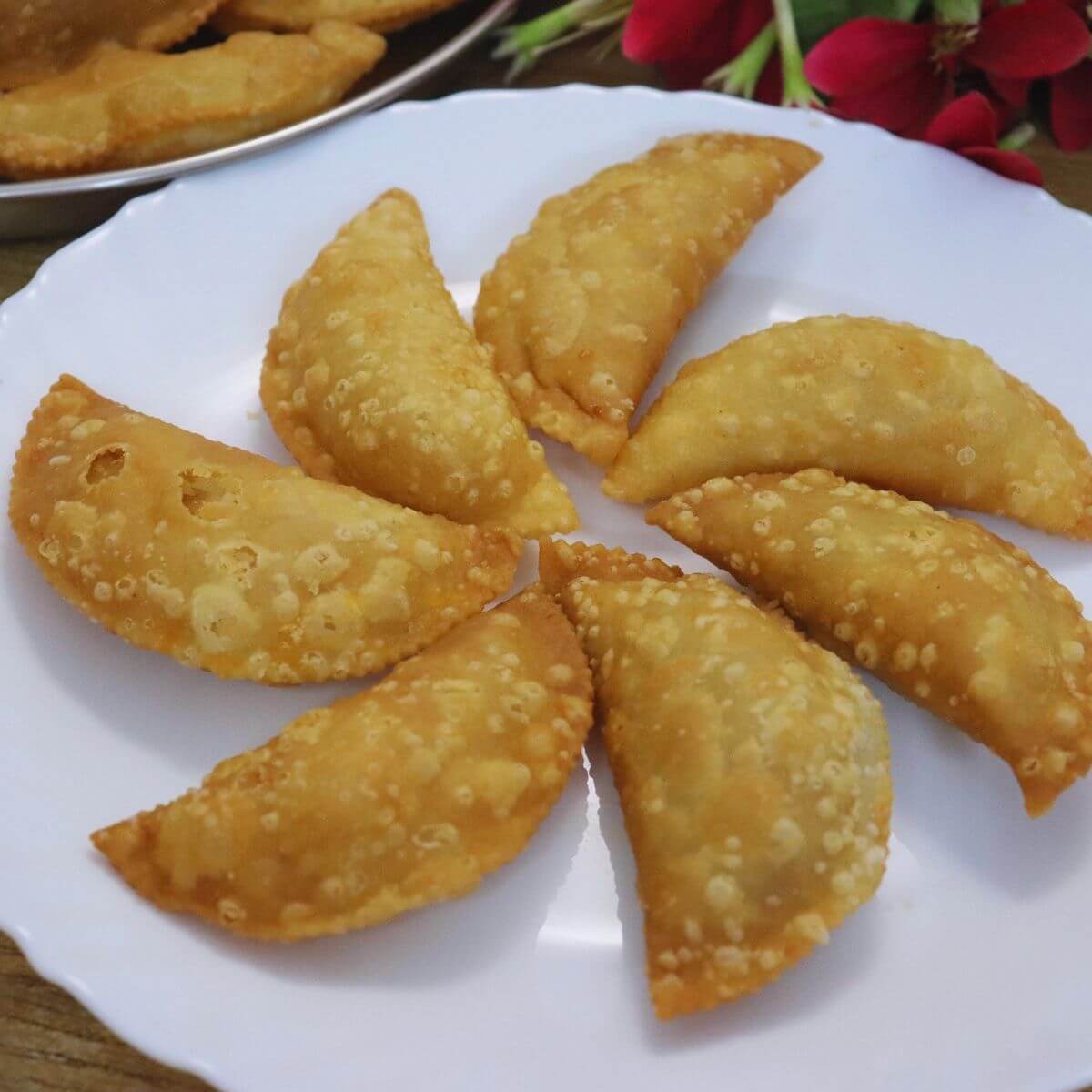
Goan Pittachyo Neureo (also known as Pitticheao Neureo, Pityacho Nevryo, or Pithachi Nevri) is a traditional Goan sweet pastry, similar to Maharashtrian Karanji or Gujiya, prepared during festivals such as Ganesh Chaturthi, Diwali, and Christmas. Here's how to make it at home with step-by-step photos & a recipe video.
What is Pittachyo Neureo?
Unlike regular Goan neureos, which are usually filled with fresh or dry coconut, Pittachyo Neureo have a sweet filling made with roasted & powdered moong or chana (kala chana/harbhara), ground into a fine powder and mixed with powdered sugar or jaggery, dry coconut, and sesame seeds.
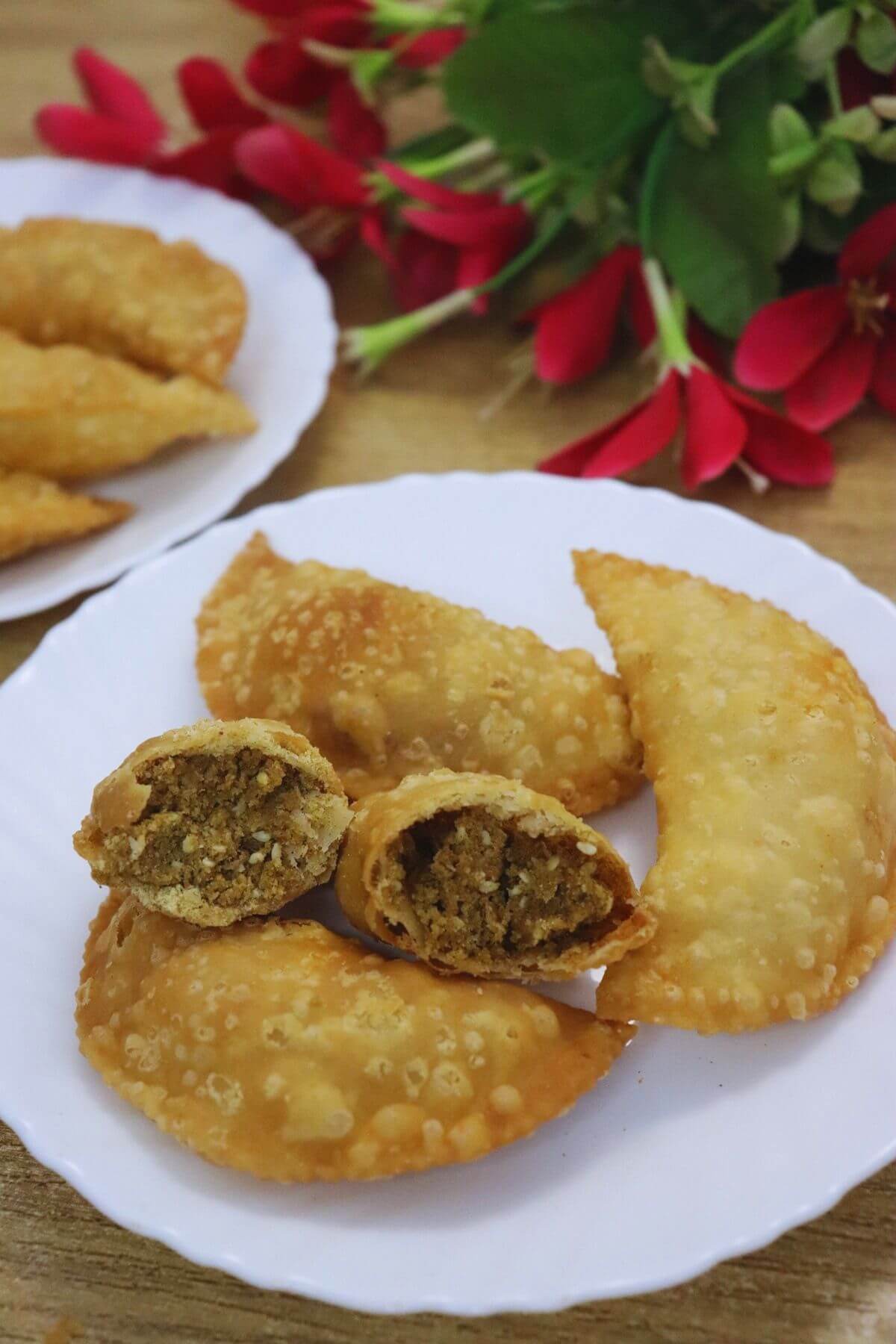
These Mooga Pittachyo Nevryo are made with roasted whole moong (green gram) flour, but you can also use roasted chana dal. Chanadal Pitachyo Nevryo is equally popular in Goa.
Neureos are a family favourite at my home, and I love making them with different fillings. You can also try my Goan Neureo Recipe with fresh coconut and jaggery filling, Karanji Recipe with dry coconut and rava filling, or Tikshyo Neureo Recipe with a spicy filling.
Jump to:
Ingredients Notes
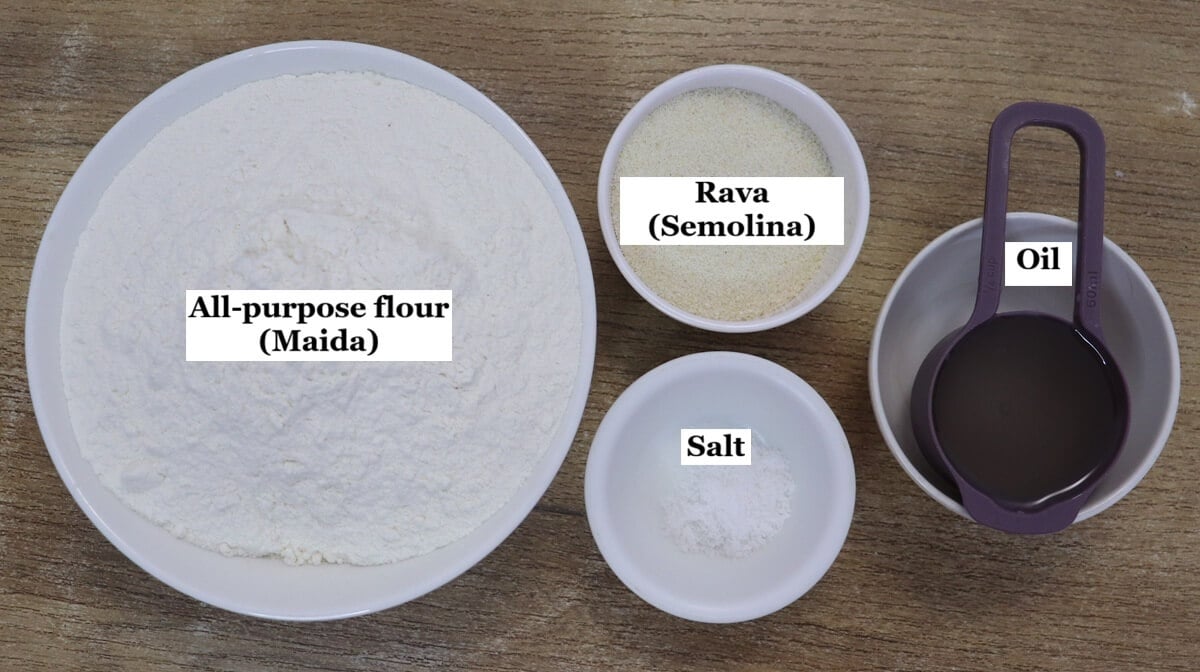
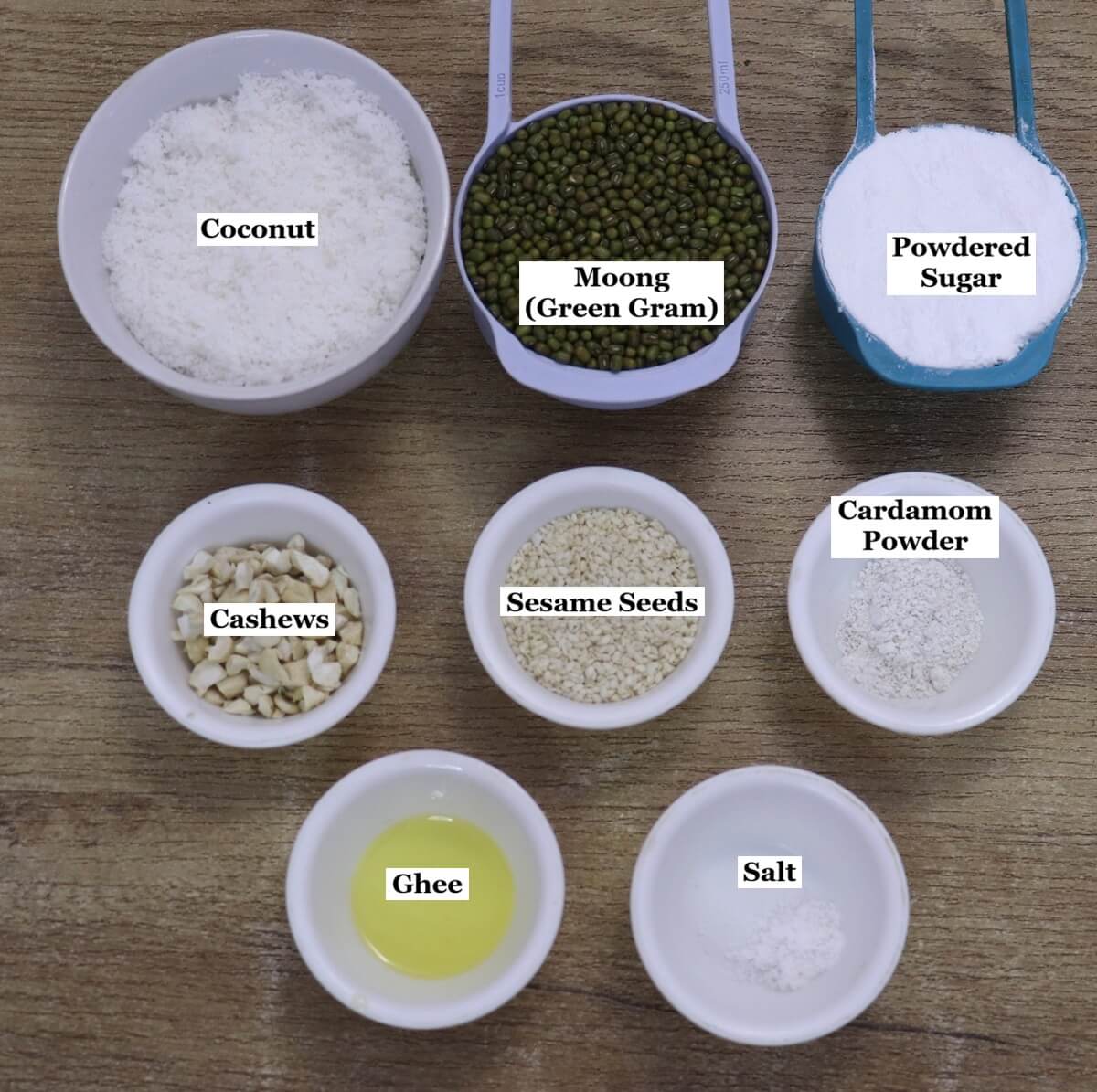
See the recipe card at the end of the post for full ingredients, quantities, and a printable version.
Moong (Green Gram): I used whole moong, which I roasted and ground into a fine powder to make the saran (filling). Another popular version uses chana instead of moong. You can roast and grind the chana in the same way. The remaining ingredients and preparation method stay the same.
Sugar: I used powdered sugar for the saran (filling). You can also use powdered jaggery instead.
How to make Pittachyo Neureo
Prepare the dough
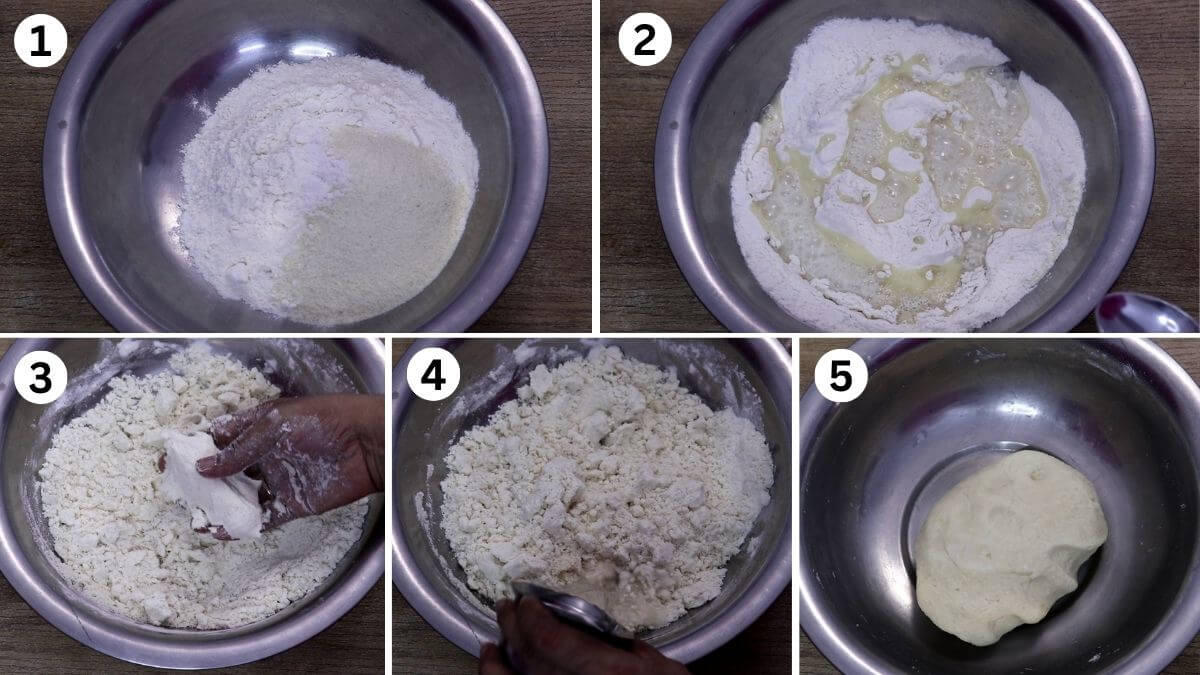
Step 1: In a large mixing bowl, combine the maida, rava, and salt (image 1).
Step 2: Add the hot oil and mix with a spoon (images 2 & 3). Once it cools slightly, rub the oil into the flour with your hands. This helps make the Neureo crispy.
Step 3: Slowly add water and knead into a smooth, semi-stiff dough (images 4 & 5). The dough should be slightly stiffer than your regular roti dough. Cover and let it rest for 30 minutes.
Prepare the filling (Pitache Saran)
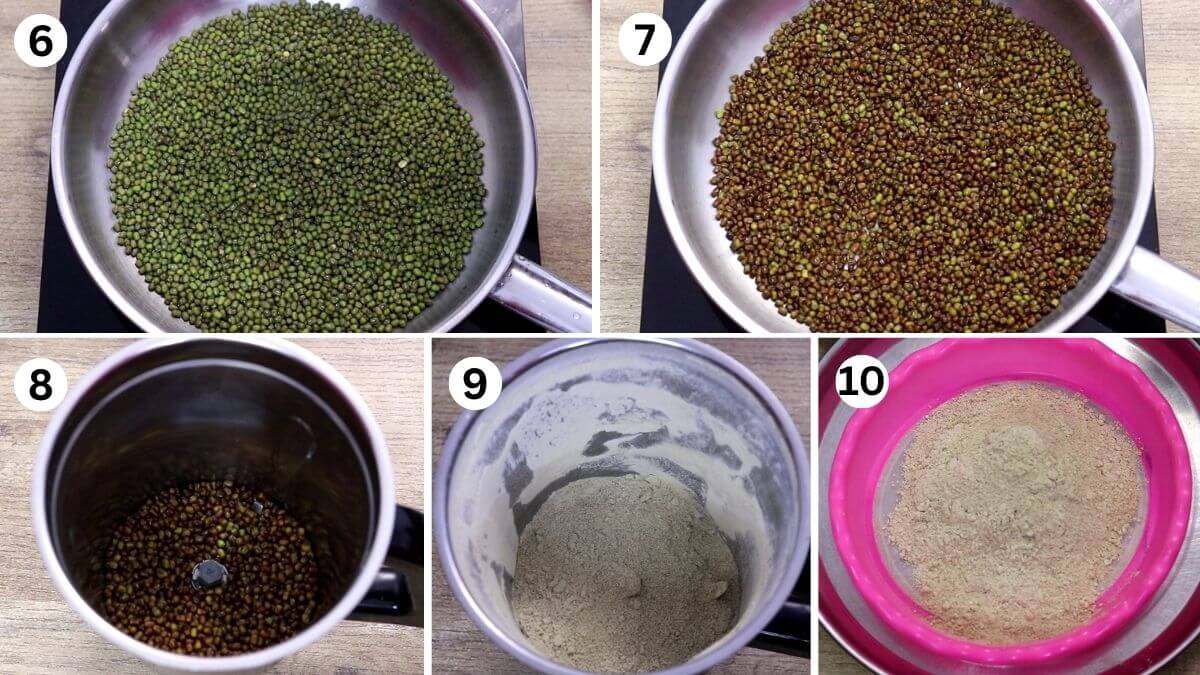
Step 4: Dry roast the whole moong in a pan on low heat until light golden, stirring continuously to prevent it from burning (images 6 & 7). Transfer to a plate and let it cool completely before grinding.
Step 5: Grind the roasted moong into a fine powder (images 8 & 9). Optional: Sift the powder through a fine-mesh sieve to remove any coarse bits. (image 10).
Step 6: In the same pan, roast the coconut and sesame seeds on low heat until light golden. Transfer to a plate and let them cool (images 11 & 12).
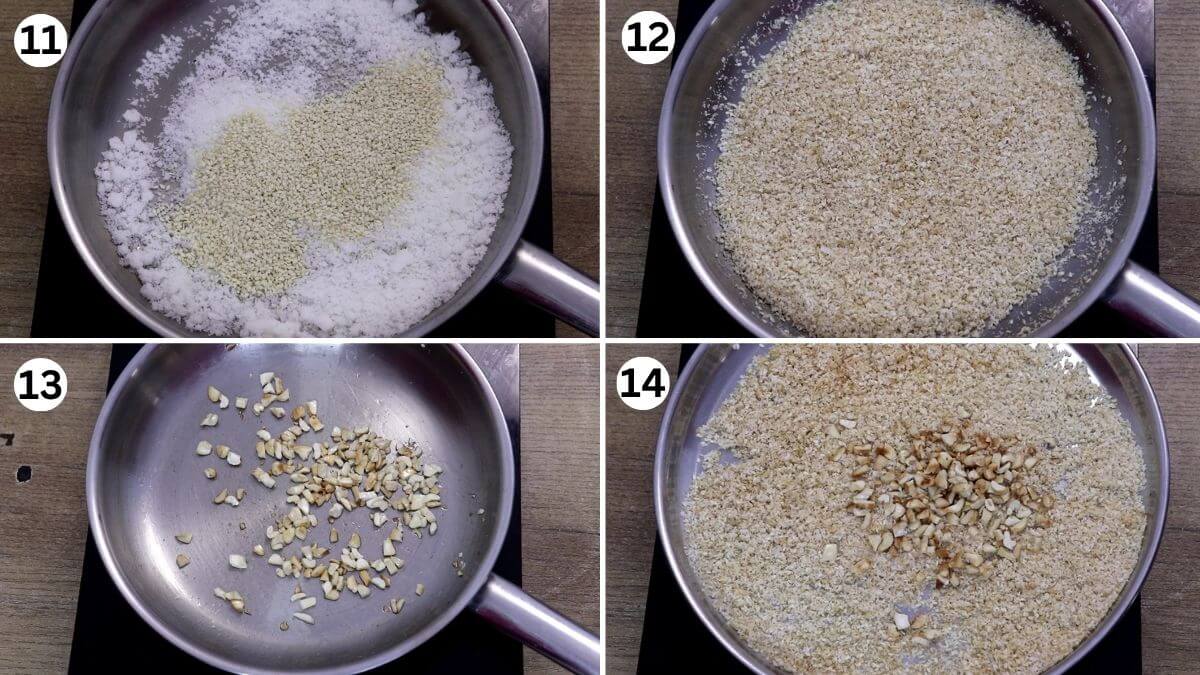
Step 7: Add the ghee to the pan and roast the chopped cashews on low heat until golden (image 13). Transfer them to the plate with the roasted coconut and sesame seeds (image 14).
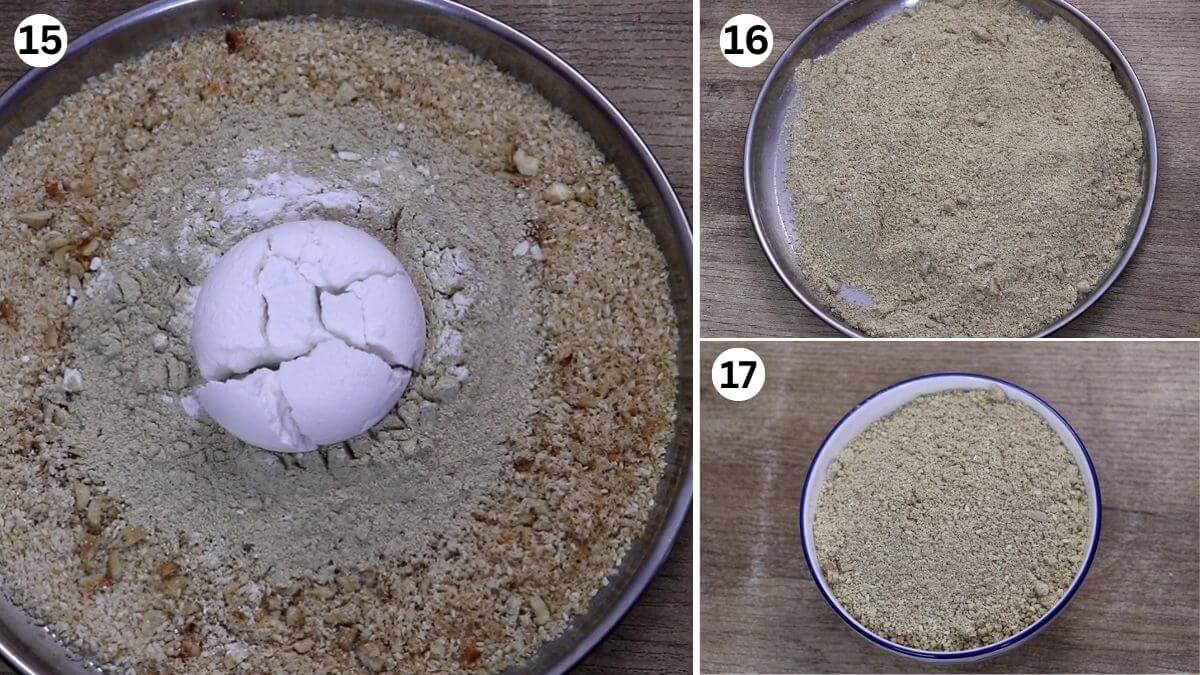
Step 8: Once all the roasted ingredients have cooled completely, add the ground moong powder, powdered sugar, cardamom powder, and salt (image 15). Mix everything well. Taste the stuffing and add more powdered sugar if you prefer it sweeter. The filling (Pitache Saran) is ready (image 16). Transfer it to a bowl (image 17).
Shape the Neureo
Step 9: Knead the rested dough briefly and divide it into 3 portions (image 18). Keep 2 portions covered while working with the first.
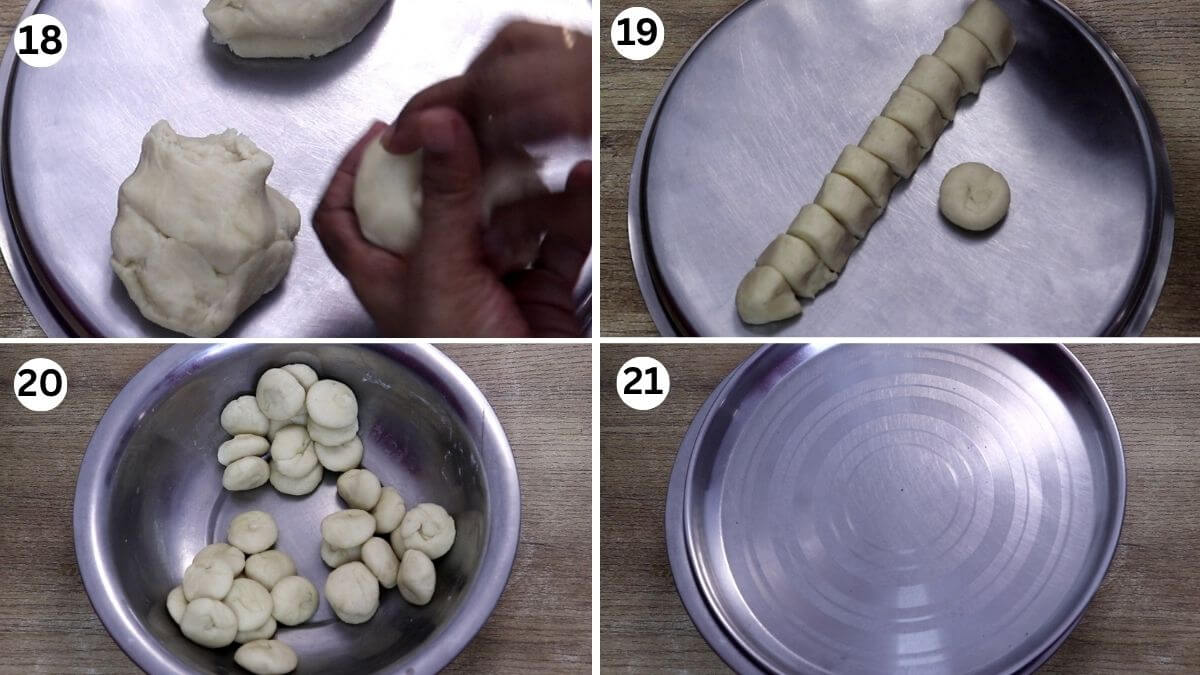
Step 10: Shape one portion into a log and cut it into 1-inch pieces (image 19). Roll each piece into a ball (image 20). Repeat with the remaining dough, keeping the balls covered (image 21).
Step 11: Lightly dust a dough ball with flour and roll it into a small circle (image 22). Do not roll it too thin, as the dough may tear while filling the neureos, or too thick, as the outer cover will be too heavy.
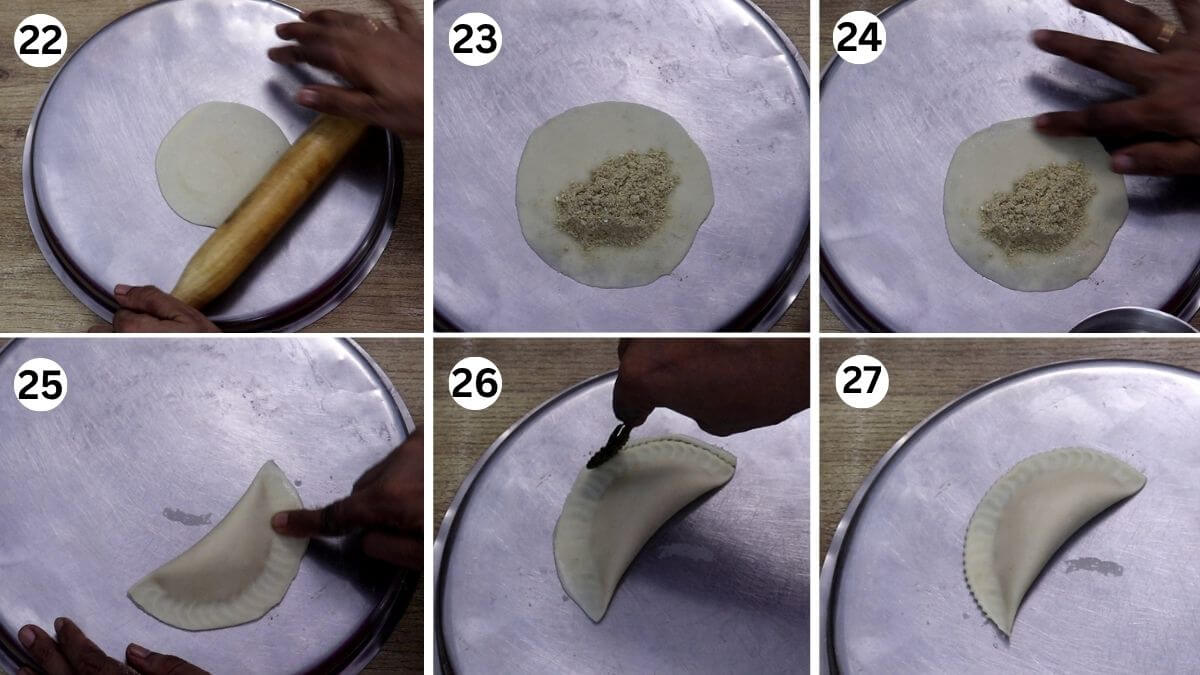
Step 12: Place a spoonful of stuffing on the lower half of the circle, leaving the edges empty (image 23). Lightly apply water along the edges (image 24).
Step 13: Fold the rolled circle over to form a half-moon shape and press the edges firmly to seal (image 25). Make sure there are no gaps or openings, or the Neureo may open during frying, and the filling may come out.
Step 14: Trim the edges using a Neureo cutter or pizza cutter (images 26 & 27). Remove the excess dough and reuse it to make other neureo. Keep the shaped Pittachyo neureo covered with a slightly damp cloth while preparing the remaining ones to prevent the dough from drying out (image 28).
Fry the Neureo
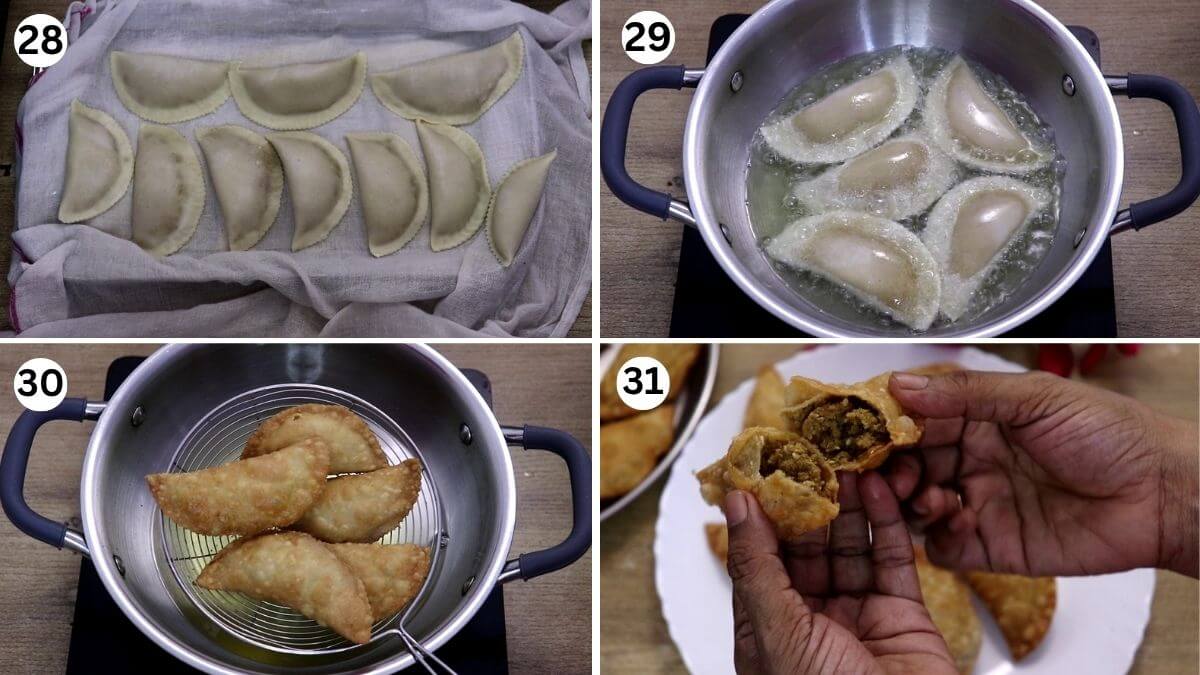
Step 15: Heat oil in a pan over medium heat. Once the oil is hot, reduce the heat to low.
Step 16: Gently slide in the Neureo and let them fry undisturbed for about a minute (image 29). Flip and fry on low heat until golden on both sides (image 30). Remove the neureos and place them on a plate. Let them cool completely before storing.
Pro Tip: After frying the first batch, increase the heat to medium to bring the oil temperature back up. Then reduce the heat to low before adding the next batch of neureos. This helps them fry evenly without browning too quickly.
Tips for Making the Best Pittachyo Nevryo
- Do not overfill the neureos: Add enough filling to close the edges easily, leaving some space around the edges for sealing.
- Seal the edges properly: Apply a little water along the edges and press firmly to seal. Any gaps can cause the neureos to open during frying, allowing the filling to escape.
- Keep the prepared neureos covered: Cover Pittachyo neureos with a slightly damp cloth while shaping the remaining ones to prevent the neureos from drying out.
- Check the oil temperature before frying: Drop a small piece of dough into the oil. If it rises slowly to the surface with small bubbles, the oil is ready. If it browns immediately, the oil is too hot. If it stays at the bottom without bubbling, the oil needs to heat up more.

Recipe Card
Pittachyo Neureo
Equipment
- 1 Heavy-bottomed pan
Ingredients
For the Neureo dough
- 2 cups maida all-purpose flour
- ¼ cup rava semolina
- Salt to taste
- ¼ cup hot oil
- Water as needed
For the Filling (Pittache Saran)
- 1 cup whole green moong mung beans/green gram
- ½ cup tightly packed desiccated coconut or finely grated dry coconut
- 2 tablespoon sesame seeds
- 1 teaspoon ghee
- 2 tablespoon chopped cashews
- ½ cup powdered sugar
- 1 teaspoon cardamom powder
- ⅛ teaspoon salt (a pinch)
Instructions
Prepare the dough
- In a large mixing bowl, combine the maida, rava, and salt.
- Add the hot oil and mix with a spoon. Once it cools slightly, rub the oil into the flour with your hands. This helps make the Neureo crispy.
- Slowly add water and knead into a smooth, semi-stiff dough. The dough should be slightly stiffer than your regular roti dough. Cover and let it rest for 30 minutes.
Prepare the filling (Pitache Saran)
- Dry roast the whole moong in a pan over low heat until light golden, stirring continuously to prevent it from burning. Transfer to a plate and let it cool completely before grinding.
- Grind the roasted moong into a fine powder. Optional: Sift the powder through a fine-mesh sieve to remove any coarse bits.
- In the same pan, roast the coconut and sesame seeds over low heat until light golden. Transfer to a plate and let them cool.
- Add ghee to the pan and roast the chopped cashews over low heat until golden. Transfer them to the plate with the roasted coconut and sesame seeds.
- Once all the roasted ingredients have cooled completely, add the ground moong powder, powdered sugar, cardamom powder, and salt.
- Mix everything well. Taste the stuffing and add more powdered sugar if you prefer it sweeter. The filling (Pitache Saran) is ready.
Shape the Neureo
- Knead the rested dough briefly and divide it into 3 portions. Keep 2 portions covered while working with the first.
- Shape one portion into a log and cut it into 1-inch pieces. Roll each piece into a ball. Repeat with the remaining dough, keeping the balls covered.
- Lightly dust a dough ball with flour and roll it into a small circle. Do not roll it too thin, as the dough may tear while filling the neureos, or too thick, as the outer cover will be too heavy.
- Place a spoonful of stuffing on the lower half of the circle, leaving the edges empty.
- Lightly apply water along the edges. Fold the rolled circle over to form a half-moon shape and press the edges firmly to seal. Make sure there are no gaps or openings, or the Neureo may open during frying and the filling may come out.
- Trim the edges using a Neureo cutter or pizza cutter. Remove the excess dough and reuse it to make other neureos.
- Keep the shaped nevryo covered with a slightly damp cloth while preparing the remaining ones to prevent the dough from drying out.
Fry the Neureo
- Heat oil in a pan over medium heat. Once the oil is hot, reduce the heat to low.
- Gently slide in the Neureo and let them fry undisturbed for about a minute.
- Flip and fry on low heat until golden on both sides.
- Remove the neureos and place them on a plate. Let them cool completely before storing.
Notes
- Roast the moong on low heat, stirring continuously, until light golden. Do not let it turn dark brown, as this can affect the taste of the filling.
- Avoid overfilling the neureos. Leave enough space around the edges to seal them properly.
- Apply a little water along the edges and press firmly to seal.
- Make sure there are no gaps, or the neureos may open during frying, and the filling may come out.
- Keep the prepared neureos covered with a slightly damp cloth while shaping the remaining ones to prevent the dough from drying out.
- To check the oil temperature, drop a small piece of dough into the oil. It should rise slowly to the surface with small bubbles. If it browns immediately, the oil is too hot. If it stays at the bottom without bubbling, the oil needs to heat up more.
Nutrition information is automatically calculated, so should only be used as an approximation.