

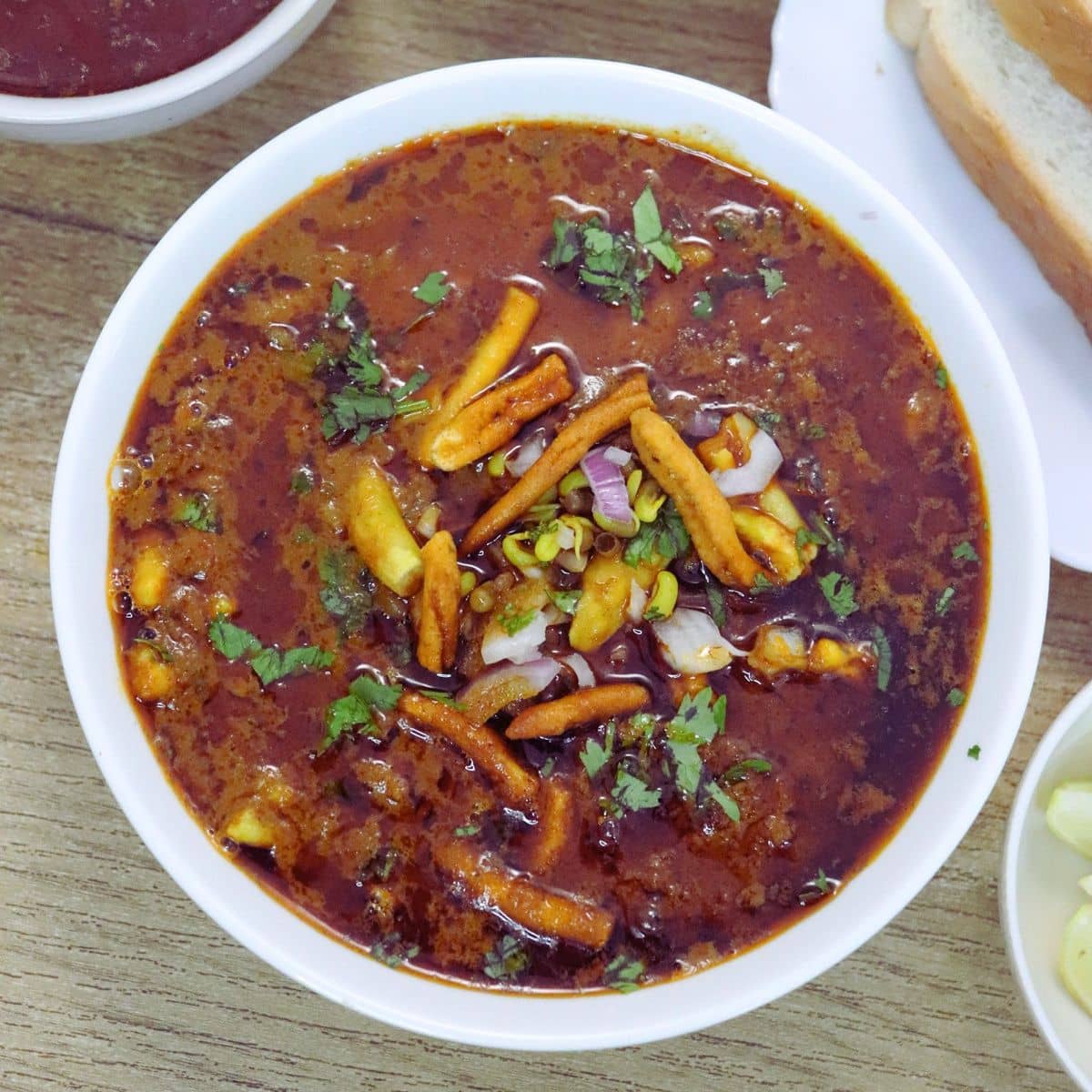
Misal Pav is a popular Maharashtrian street food made with spicy matki (moth bean) curry, called misal, topped with farsan or sev, onions, lemon, and fresh coriander. It is usually served hot for breakfast, as a snack, or as a hearty meal with buttermilk. My Kolhapuri Misal Pav recipe is extra spicy and served with batata bhaji and matki usal.
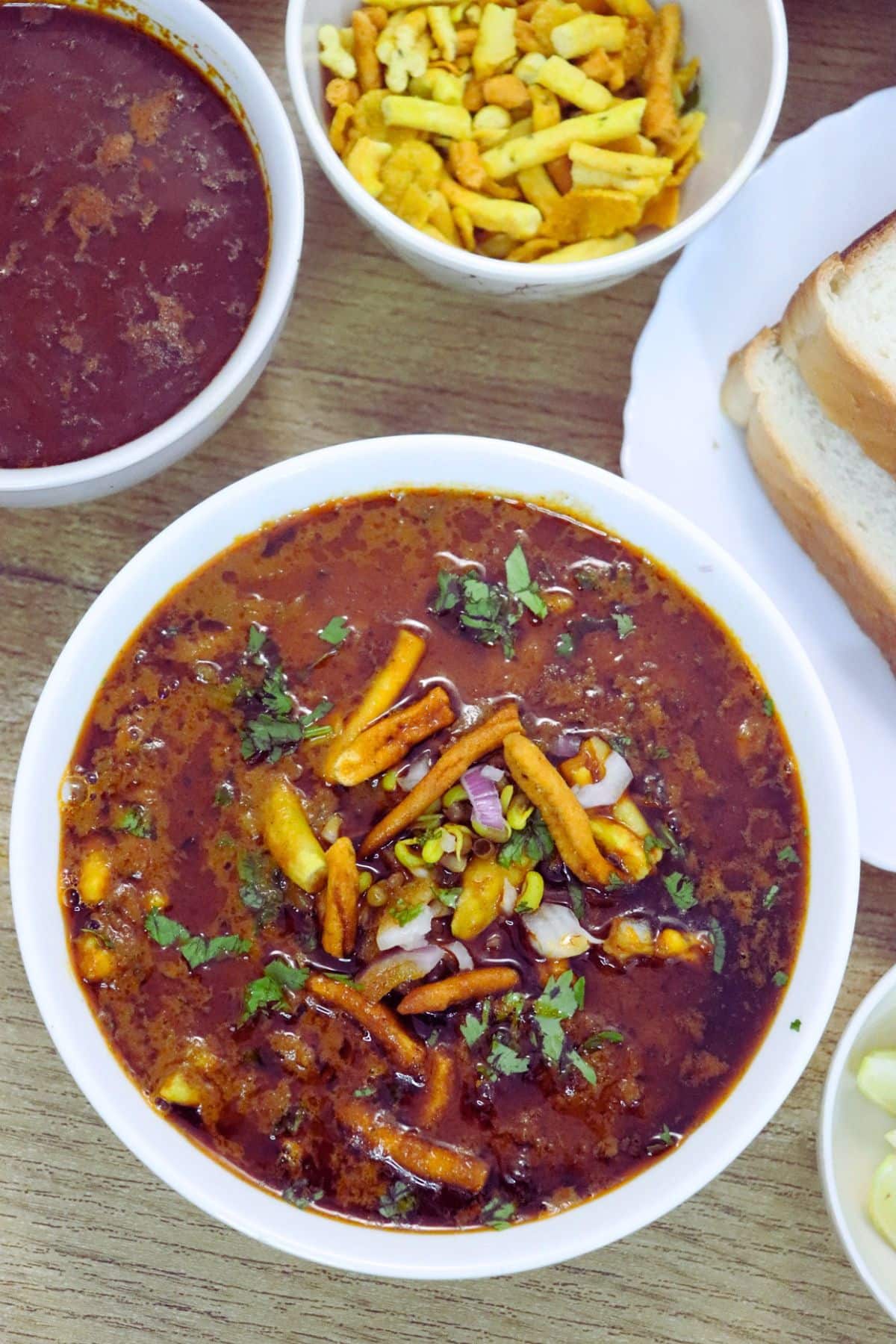
Kolhapuri Misal is known for its spicy flavour and amazing taste. Misal has two main parts: matki usal, a thicker sprouted matki (moth bean curry), and tarri (also called kat or rassa), a thin and spicy gravy. They are served together, and you can add as much tarri as you like.
I tried making Misal Pav many times, but something always felt missing. I finally realised that Kanda Lasun Masala is the secret to getting the right Kolhapuri flavour and perfect spiciness. It gives the matki usal and tarri the zanzanit kolhapuri misal taste I was looking for. If you enjoy spicy Kolhapuri flavours, you may also like my Kolhapuri Tambda Rassa and Kolhapuri Chicken Curry.
About This Kolhapuri Misal Pav Recipe
There are different ways of making Misal Pav across Maharashtra. Some versions cook the sprouts directly in the tarri, while others prepare the usal and tarri separately.
I like to give my Misal Pav a Kolhapuri street-style touch, so I make a separate spicy matki usal and batata bhaji (my kids love them), and it takes only 5 minutes to cook the usal and bhaji.
I serve the matki usal and batata bhaji with crunchy farsan, onions, coriander, spicy tarri, and lemon wedges. I like to place everything in separate bowls on the dining table, so everyone can add what they like and customise their own bowl of Misal Pav.
Did You Know?
In 2015, the Misal Pav served at Aaswad Upahar Griha in Dadar, Mumbai, was named "The World's Tastiest Vegetarian Dish" at the Foodie Hub Global Awards in London.
If you like this recipe, you will also like these spicy Maharashtrian Recipes:
Jump to:
Ingredients Notes
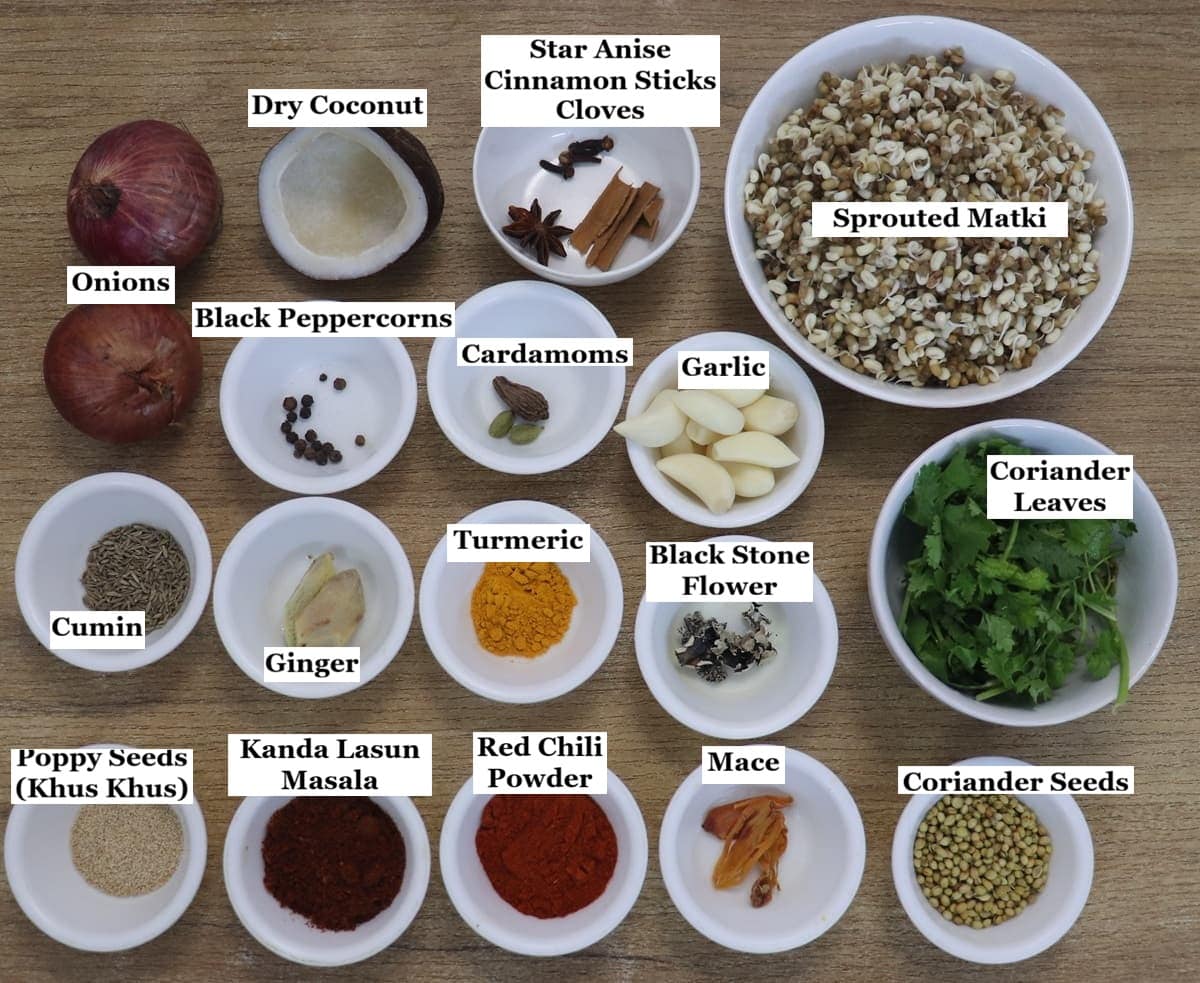
See the recipe card at the end of the post for full ingredients, quantities, and a printable version.
- Matki (Moth Beans): I use matki to make the usal. It has a slightly meaty flavour that gives the Misal its characteristic taste. If matki is not available, you can use moong beans instead, but the flavour will be slightly different.
- For the Vatan and Tarri: I have used garlic, ginger, whole spices, dry coconut, onion, Kashmiri chilli powder, and Kanda Lasun Masala. The whole spices, onions, and dry coconut are roasted and blended to make a thick, aromatic vatan.
- Kanda Lasun Masala gives the tarri its signature spicy (Jhanjhanit) Kolhapuri flavour. You can easily purchase it online or from grocery stores in Maharashtra and Goa.
- For the Matki Usal and Batata Bhaji: You'll need mustard seeds, curry leaves, green chillies, red chilli powder, garam masala, potatoes, garlic, and turmeric.
- For serving: I have used farsan, chopped onions, a lemon wedge, and coriander leaves.
How to make Kolhapuri Misal Pav
The preparation for this Kolhapuri Misal curry starts a couple of days in advance, as you need to sprout the matki (moth beans) before making the Misal.
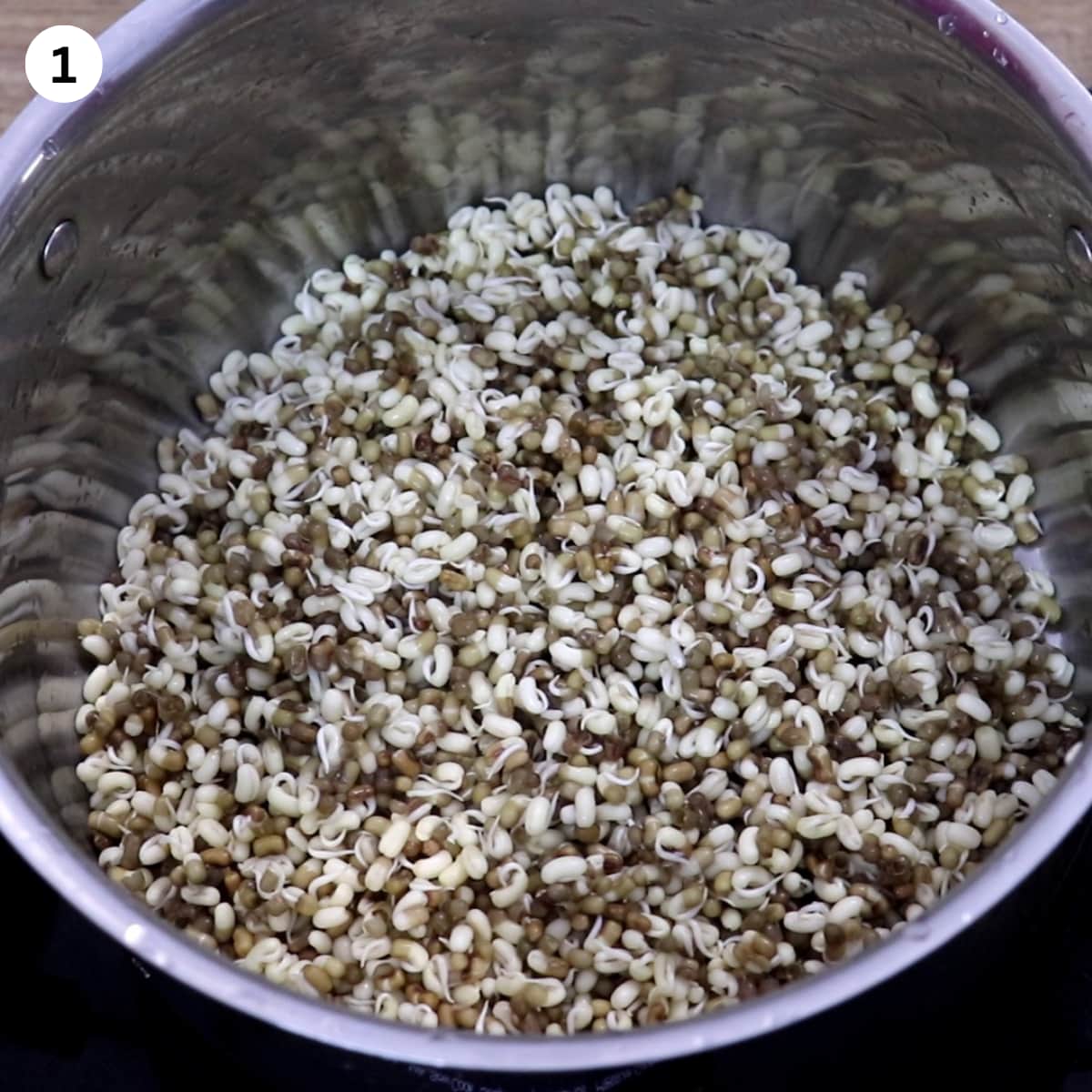
1) Sprout matki (moth beans): To sprout matki, soak it for 6 hours, drain, cover, and keep it in a warm place for 24-48 hours until sprouted. Once sprouted, soak it in water for an hour or two and gently rub to remove as much skin as possible before cooking (image 1).
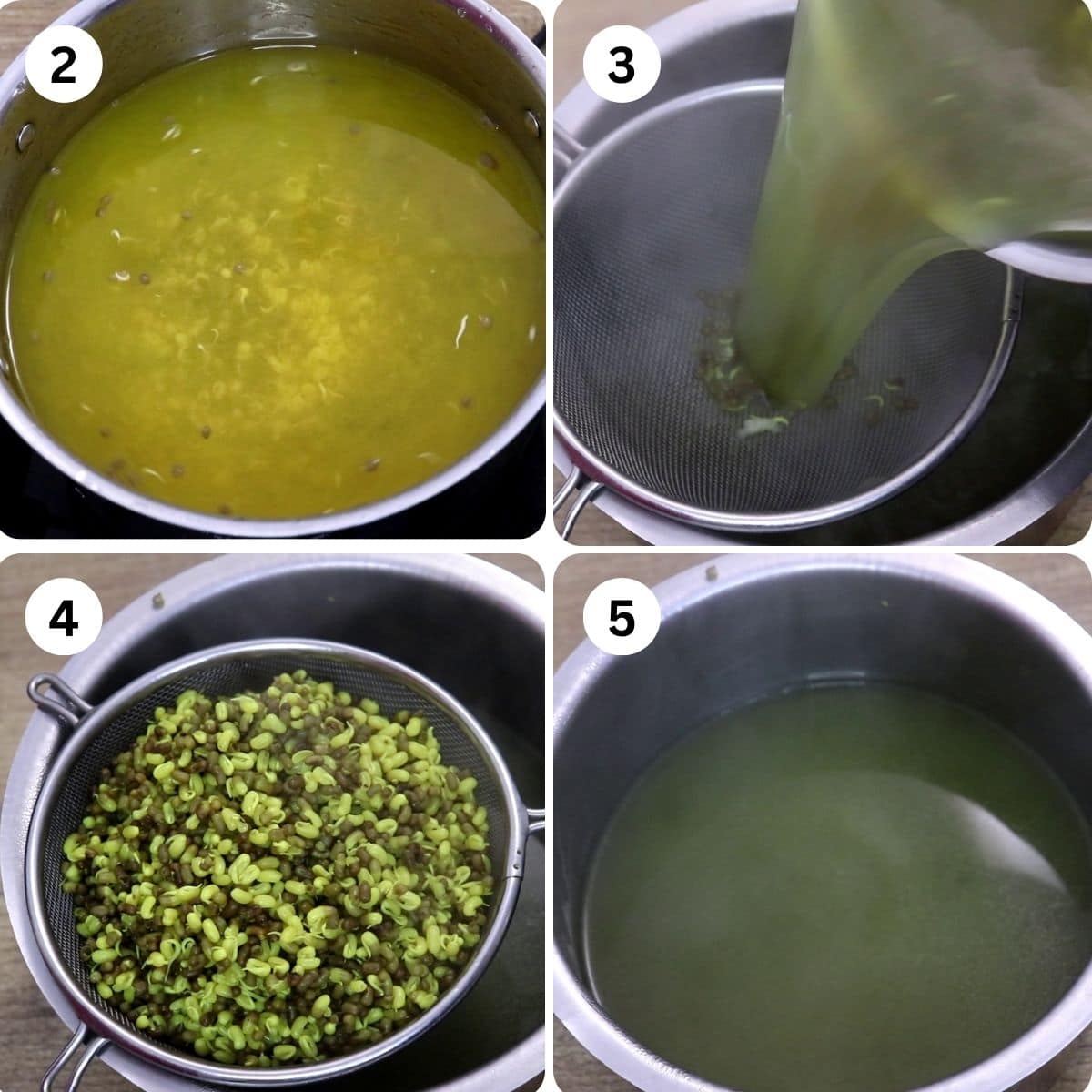
2) Cook the Matki: Cook the sprouted matki with water, salt, and turmeric until tender (image 2). Strain and reserve the cooking water for the tarri (image 3). Set the cooked matki aside (image 4 & 5).
3) Roast Misal Masala: Sauté garlic and ginger until lightly golden. Add the whole spices and roast on low heat until fragrant. Add poppy seeds, if using, and roast briefly (image 6).
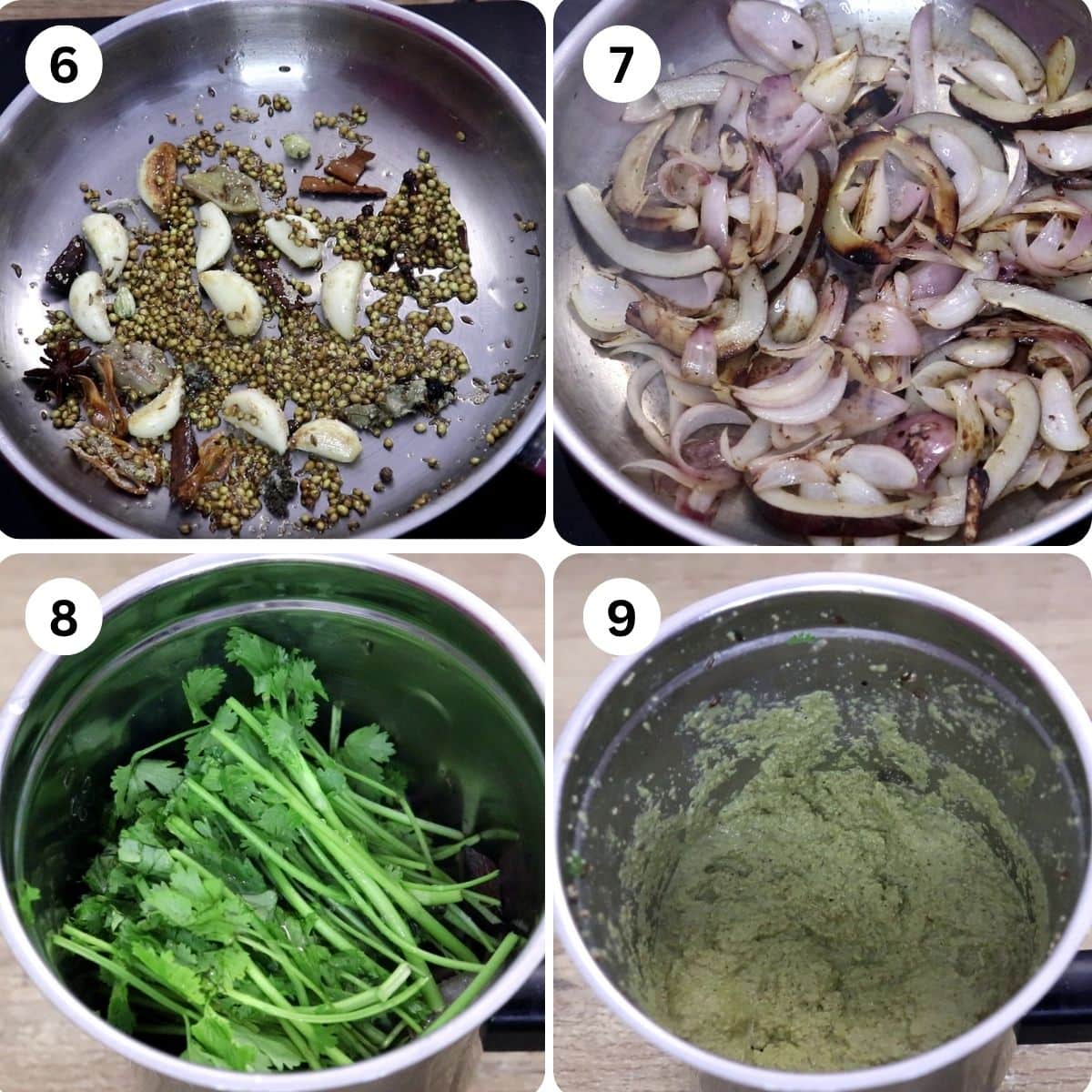
4) Prepare Vatan: In the same pan, roast sliced onions and dry coconut until golden (image 7). Cool slightly, then blend everything with a few coriander stems and a little water to make a smooth, thick paste (images 8 & 9).
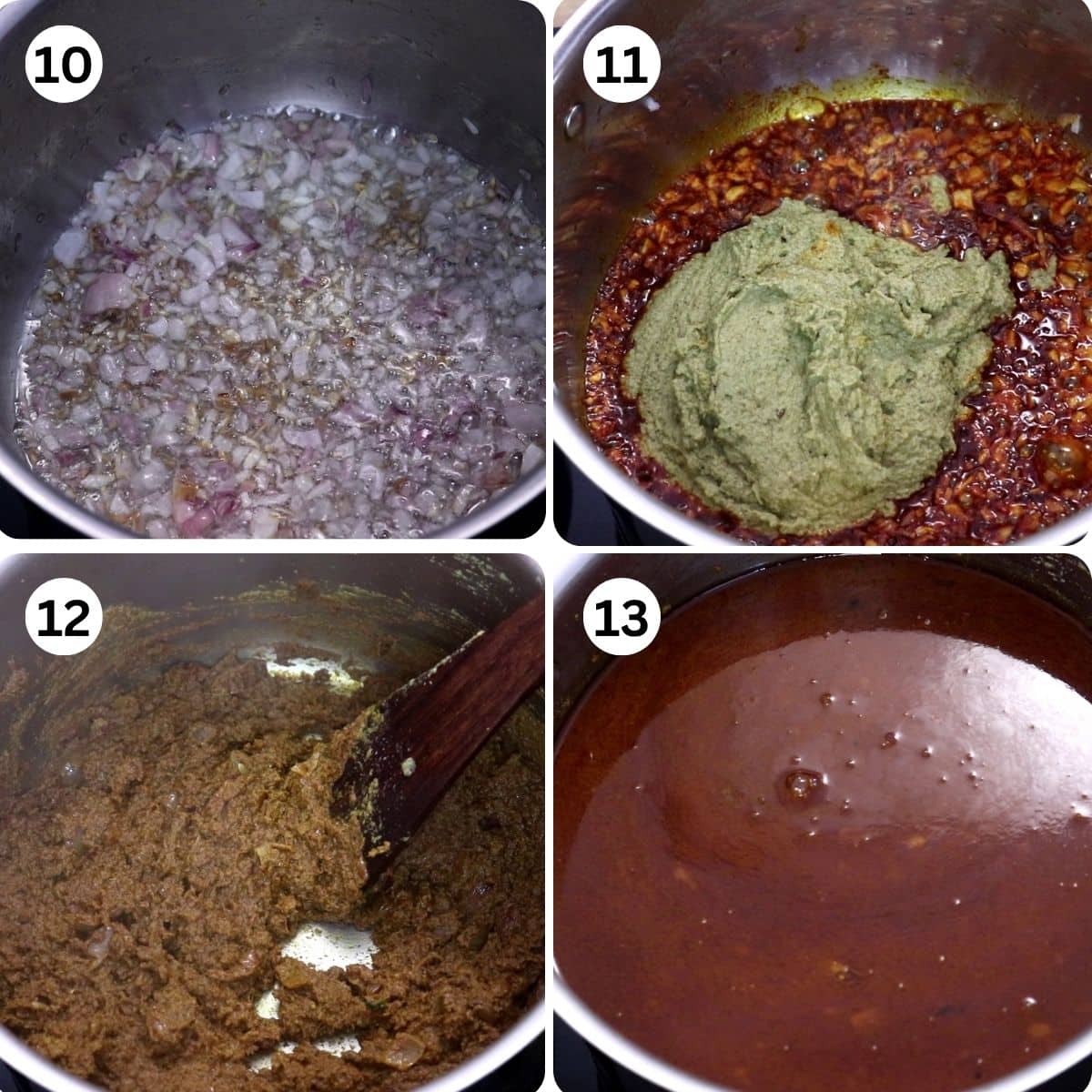
5) Make the Tarri: Heat oil in a deep pan over medium heat. Add chopped onion and sauté until golden (image 10). Add Kashmiri chilli powder, Kanda Lasun Masala, and turmeric. Cook for 1 minute. Add the prepared vatan (image 11).
6) Cook on high heat until the oil separates (image 12). Add salt and the reserved matki cooking water. Make sure the water is hot; if not, heat it again and then add. Cover and simmer on low heat for 20 minutes, until the oil floats on the surface (image 13). Garnish with coriander leaves.
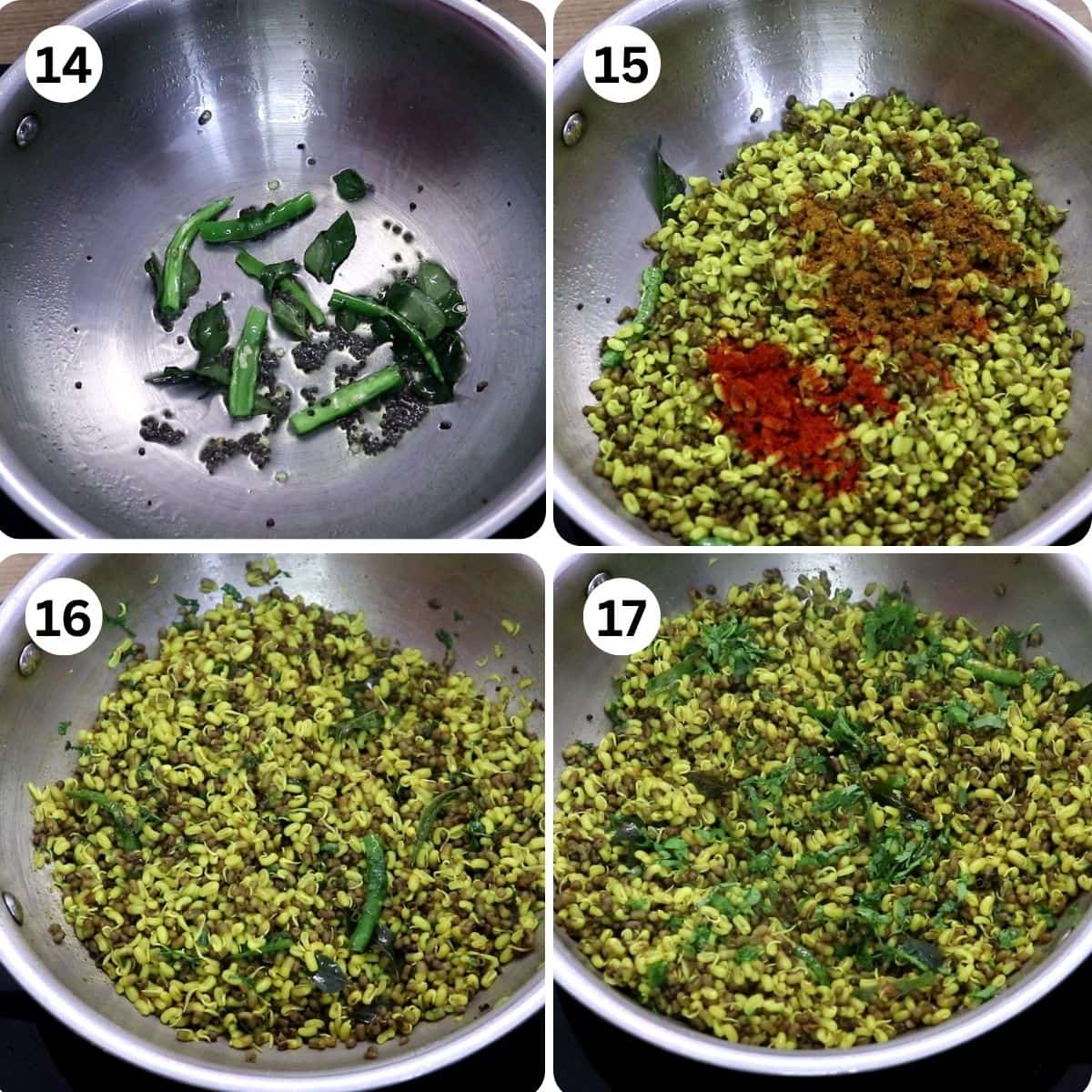
7) Make the Matki Usal: Heat oil in a pan. Add mustard seeds and let them splutter. Add curry leaves and slit green chillies and sauté briefly (image 14). Add the cooked matki, red chilli powder, and garam masala (image 15). Mix well and add salt only if needed. Garnish with coriander leaves (images 16 and 17).
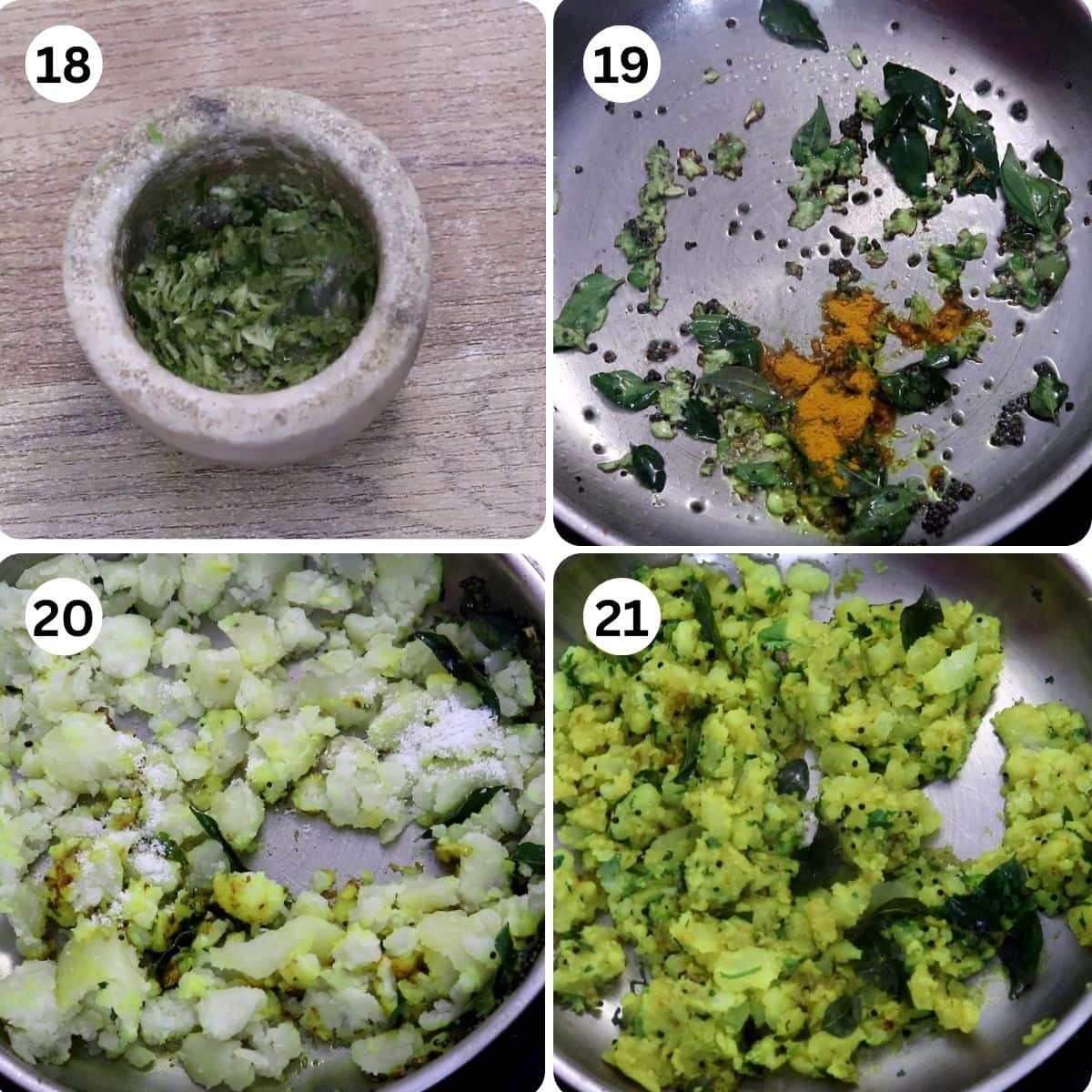
8) Make the Batata Bhaji: Crush garlic and green chili in a mortar and pestle (image 18). Temper mustard seeds and curry leaves in oil. Add crushed garlic and green chillies, followed by turmeric, lightly mashed cooked potatoes, and salt (images 19 & 20). Mix well and garnish with coriander (image 21).
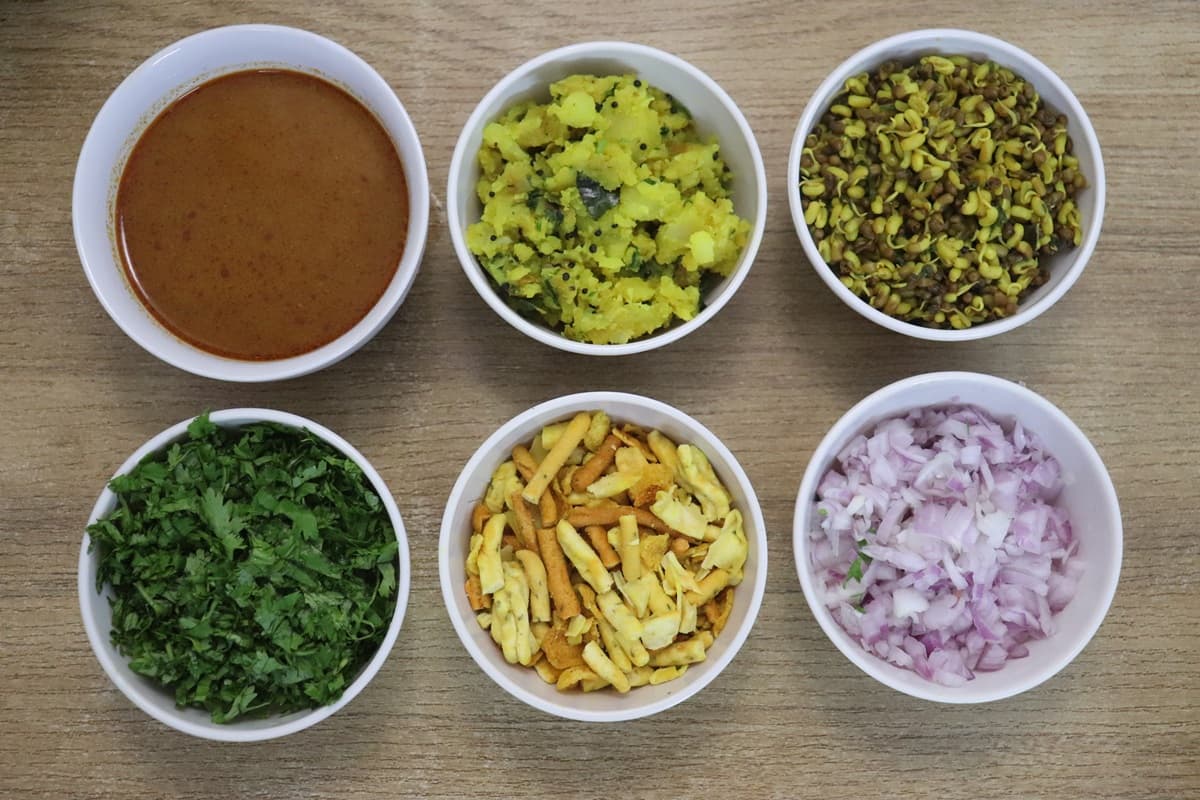
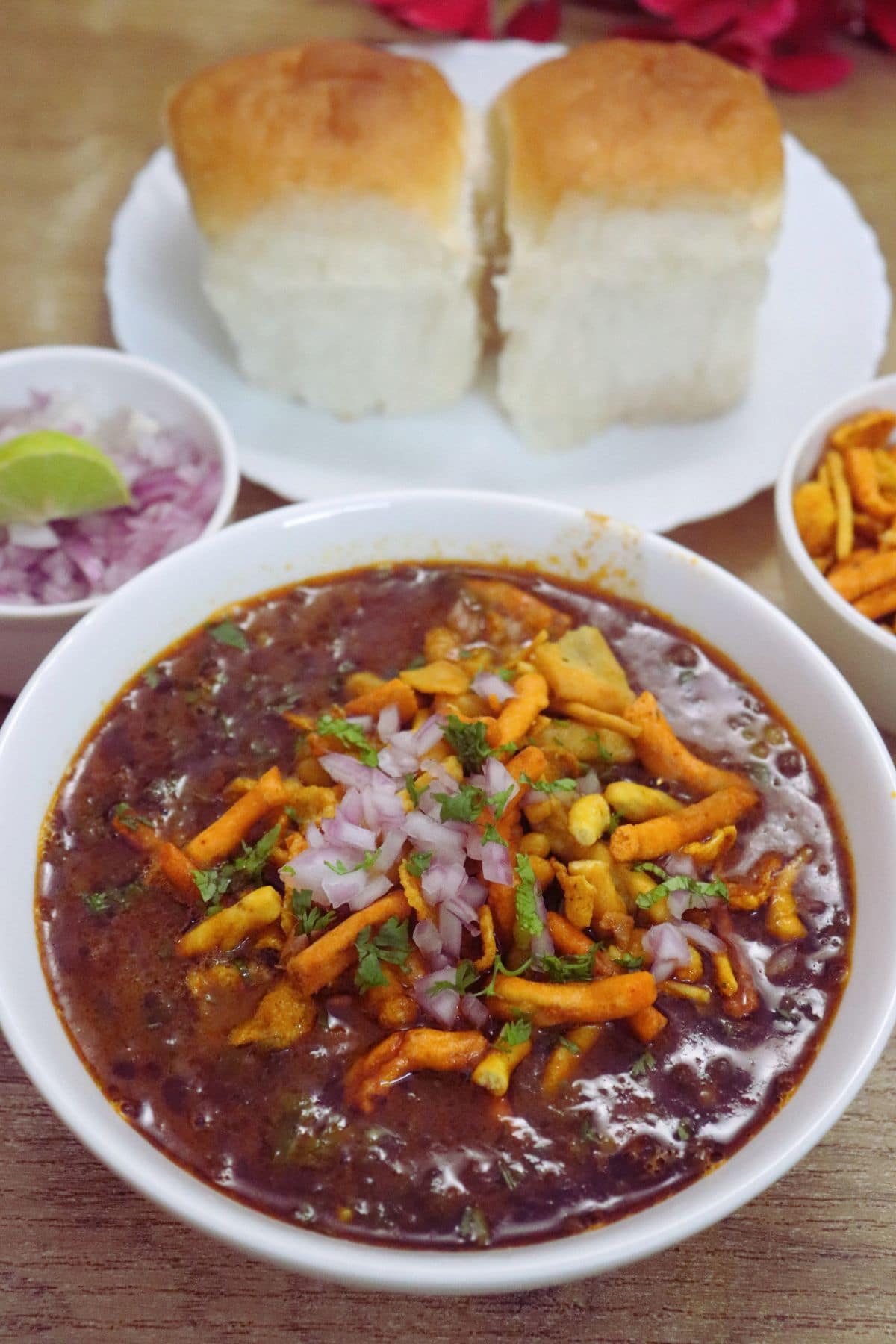
9) Assemble the Misal Pav: Layer the batata bhaji and matki usal in a bowl. Add the spicy tarri, then top with crunchy farsan, onions, coriander leaves, and a lemon wedge just before serving. Serve hot with pav.
Tips for Making Misal Pav
- Adjust the spice level: If you have never made Misal before, keep in mind that this is a spicy vegetable curry. To reduce the heat, reduce the red chilli powder, Kanda Lasun Masala, and black peppercorns.
- No Kanda Lasun Masala? You can use the garam masala you normally use for chicken or mutton curry instead. The flavour will be slightly different, but the Misal will still taste delicious.
- Cook the vatan until the oil separates: This is an important step for a good Misal. Cook the vatan until the oil separates, then add the cooked sprouts water and simmer on low for 20 minutes, or until a layer of oil floats on top. This gives the tarri its authentic look and flavour; without it, the Misal doesn't feel authentic.
Recipe Card
Kolhapuri Misal Recipe | Spicy Maharashtrian Misal Pav
Video

Equipment
- 1 Heavy bottom pot
- 1 Heavy-bottomed pan
Ingredients
To Cook Sprouted Matki (Matki Ussal)
- 3 cups sprouted matki (also called mat bean, moth bean, or dew bean)
- 2 litres water
- Salt to taste
- ½ teaspoon turmeric powder
For the Vatan (Misal Masala)
- 2 teaspoon oil
- 9 garlic cloves
- ½- inch ginger
- 1 tablespoon coriander seeds
- 1 teaspoon cumin seeds
- 2 green cardamoms
- 1 black cardamom
- 2 petals mace javitri
- 2 pieces black stone flower
- 1 star anise
- 4 cloves
- 1- inch cinnamon stick
- 15 black peppercorns
- 1 tablespoon poppy seeds
- 1 teaspoon oil
- 2 onions sliced
- ½ small dry coconut thinly sliced
- A few coriander stems
For the Misal Tarri
- 3 tablespoon oil
- 1 large onion chopped
- 1 tablespoon Kashmiri red chilli powder
- 3 tablespoon Kanda Lasun Masala spicy; reduce if you prefer a milder misal
- ¼ teaspoon turmeric powder
- Salt to taste
- Coriander leaves for garnish
For Matki Ussal
- 1 teaspoon oil
- 1 teaspoon mustard seeds
- A few curry leaves
- 2 green chillies slit
- ½ teaspoon red chilli powder
- ½ teaspoon garam masala powder
- Salt to taste
- Coriander leaves for garnish
For Batata Bhaji
- 2 garlic cloves
- 2 green chillies
- 1 teaspoon oil
- 1 teaspoon mustard seeds
- A few curry leaves
- 1 teaspoon turmeric powder
- 5 medium potatoes
- Salt to taste
- Coriander leaves for garnish
For Serving Misal Pav
- Farsan or misal mixture
- Pav
- Lemon juice
- Chopped onion optional
- Coriander leaves for garnish
Instructions
- Sprout matki (moth beans): To sprout the matki beans, soak them for 6 hours, drain, cover, and keep it in a warm place for 24-48 hours until sprouted. Once sprouted, soak it in water for an hour and gently rub to remove as much skin as possible before cooking.
- Cook the Matki: Add the sprouted matki, water, salt, and turmeric to a pot. Partially cover and cook on medium heat until the matki is tender. Strain and reserve the cooking water for making the tarri. Set the cooked matki aside.
- Roast Misala Masala: Heat oil in a pan over medium heat. Add garlic and ginger and sauté until lightly golden. Lower the heat and add coriander seeds, cumin seeds, cardamoms, mace, black stone flower, star anise, cloves, cinnamon, and black peppercorns. Roast on low heat until fragrant. Add poppy seeds, if using, and roast for 30 seconds. Transfer to a mixer jar.
- Prepare the Vatan: In the same pan, heat a little oil. Add sliced onions and thinly sliced dry coconut. Roast until golden. Cool slightly and transfer to the mixer jar. Add coriander stems and a little water. Blend to a smooth, thick paste.
- Make the Tarri: Heat oil in a deep pan. Add chopped onion and sauté until golden. Add Kashmiri chilli powder, Kanda Lasun Masala, and turmeric. Cook for 1 minute. Add the prepared vatan and cook on high heat until the oil separates. Add salt and the reserved matki cooking water. If the water has cooled, heat it before adding. Cover and simmer on low heat for 20 minutes, until the oil floats on the surface. Garnish with coriander leaves.
- Make the Matki Usal: Heat oil in a pan. Add mustard seeds and let them splutter. Add curry leaves and slit green chillies, and sauté briefly. Add the cooked matki, red chilli powder, and garam masala. Mix well and add salt only if needed. Garnish with coriander leaves.
- Make the Batata Bhaji: Crush the garlic and green chillies. Heat oil in a pan and add mustard seeds. Once they splutter, add curry leaves, crushed garlic, and green chillies. Sauté until fragrant. Add turmeric, lightly mashed cooked potatoes, and salt. Mix well and garnish with coriander leaves.
- Assemble the Misal Pav: In a serving bowl, layer the batata bhaji and matki usal. Add the spicy tarri, then top with crunchy farsan, onions, coriander leaves, and a lemon wedge just before serving.
Notes
- Adjust the spice level: Misal is a spicy dish. To reduce the heat, use less red chilli powder, Kanda Lasun Masala, and black pepper. You can keep the other whole spices as they mainly add flavour and aroma.
- No Kanda Lasun Masala? Use your regular garam masala for chicken or mutton curry instead. The flavour will be slightly different, but still delicious. You can also make Kanda Lasun Masala at home.
- Check for Misal masala online, and you can skip the addition of the whole spices added to the recipe.
- Cook the vatan until the oil separates. After adding the vatan to the tarri masala, cook until the oil separates. Then add the sprouts water and simmer until a thin layer of oil floats on top. This gives the tarri its authentic look and flavour.
- Use hot water for the tarri: The matki cooking water should be hot when you add it to the tarri. If it has cooled down, heat it before adding. Hot water helps the oil rise to the top, giving the tarri its authentic appearance.
Nutrition
Nutrition information is automatically calculated, so should only be used as an approximation.


Preeti Nayak
Misal Pav is something my family really enjoys. The aroma, the spicy masala, all those crunchy toppings - we love everything about it. If you're a spicy food lover like us, you have to try this one. It's also perfect for parties and get-togethers because you can make the misal ahead, keep all the toppings ready, and let everyone put together their own bowl just the way they like it. Do try it.