

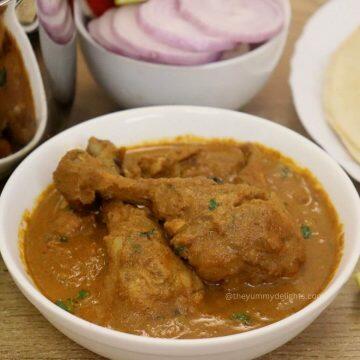
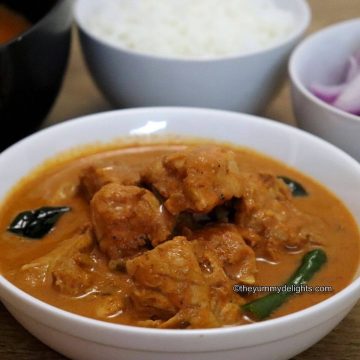
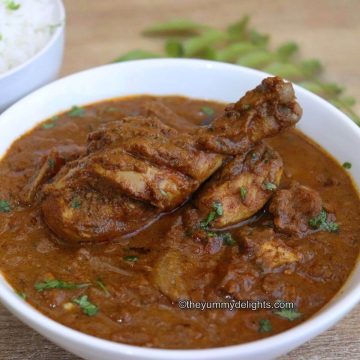
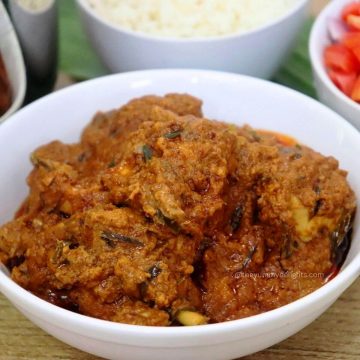
Madras Chicken Curry, also known as Chicken Madras, is a spicy and tangy curry inspired by the Chicken Madras served in British Indian curry houses. This recipe is easy to make at home with chicken, tomatoes, tamarind, coconut milk, and homemade Madras curry powder.
This Madras chicken curry recipe is ready in about 30 minutes, making it a quick and easy weeknight curry. Follow my step-by-step photos and video, then serve it with steamed rice, naan, roti, or your favourite Indian bread.
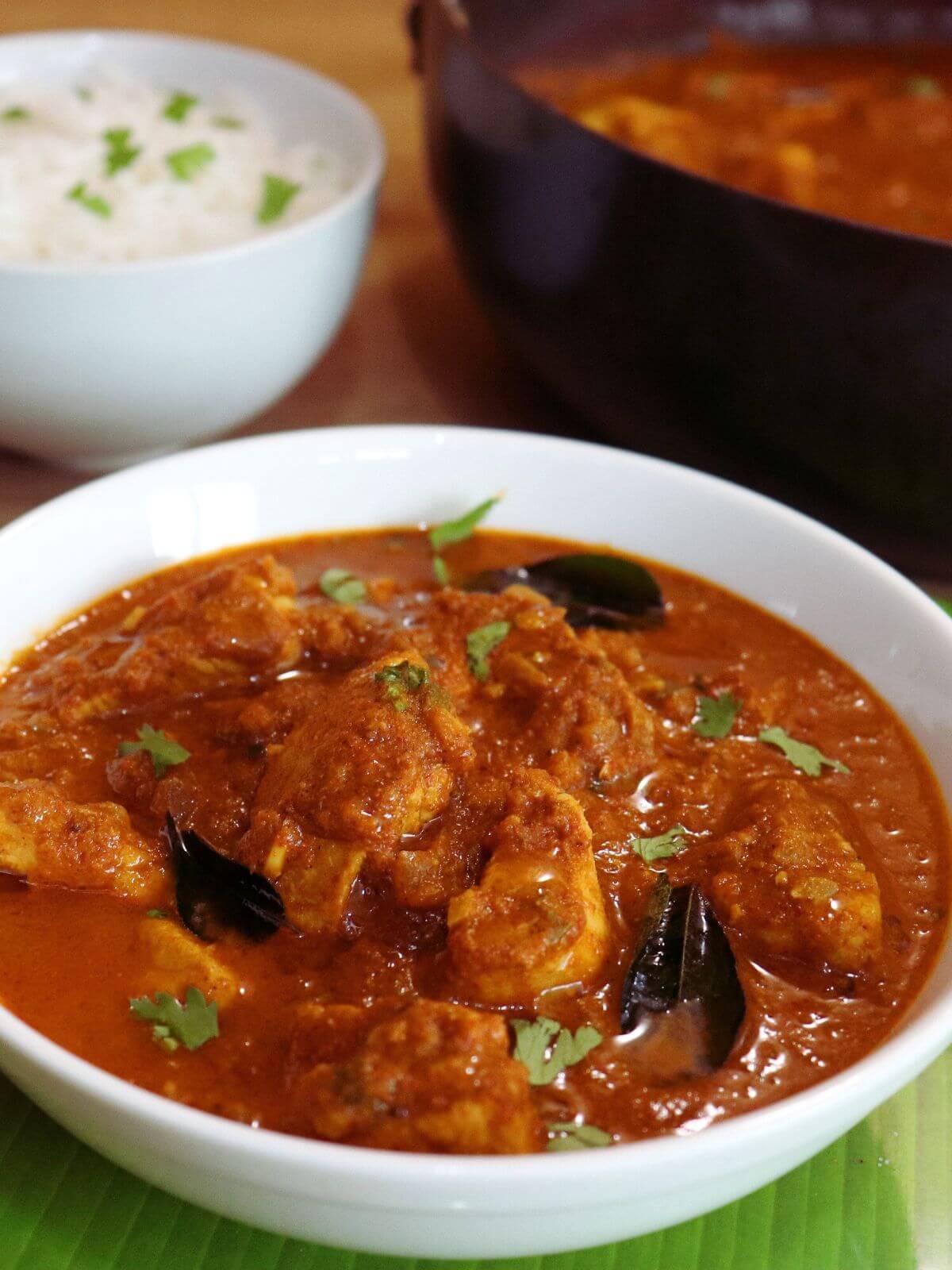
This curry house-style Chicken Madras uses tender chicken pieces cooked in a thick sauce made with Madras curry powder. It has a spicy and tangy flavour, with coconut milk adding a subtle sweetness to balance the heat.
I've been making this Madras Chicken curry at home for years, and this is my version of the curry-house-style recipe. I've tested the recipe with my homemade Madras curry powder and adjusted the ingredients to get the spicy and tangy flavors that my family enjoys.
This is a British Indian curry-house-style Chicken Madras, rather than a traditional chicken curry from Chennai, India. More British Indian restaurant favourite curry recipes that you may like are Chicken Pathia, Restaurant Style Chicken Jalfrezi, Goan Chicken Vindaloo, and Chicken Balti.
Quick Look: Madras Chicken Curry
- Prep Time: 10 minutes
- Cook Time: 20 minutes
- Key ingredients: Chicken, homemade Madras curry powder, tomatoes, tamarind, coconut milk, onions, ginger, and garlic
- Cooking Method: Sauté onions and aromatics → add chicken and spices → add tomato puree and tamarind → simmer with coconut milk until the chicken is cooked
- Spice Level: Medium to hot, depending on the curry powder and chilli used.
- Flavor Profile: Spicy, tangy, aromatic, with a mild sweetness from coconut milk
- Difficulty: Easy, suitable for a quick weeknight curry
Why You'll Love This Recipe
- Quick weeknight curry: This Madras chicken recipe takes about 20 minutes to cook and is ready in 30 minutes.
- One-pot recipe: Everything comes together in one pot, so there are fewer dishes to clean.
- Easy to customize: Adjust the spice level and use the ingredient substitutions suggested in the recipe.
- Make-ahead friendly: Prepare it in advance and store it in an airtight container in the refrigerator for up to 2 days.
Jump to:
Ingredients Notes
See the recipe card at the end of the post for full ingredients, quantities, and a printable version.
- Chicken: I have used boneless, skinless chicken breasts for this Madras curry, cut into bite-sized pieces. You can also use boneless chicken thighs if you prefer. Bone-in chicken can be used, but it will need a longer cooking time.
- Madras curry powder: Homemade Madras curry powder gives this chicken curry its main spicy flavour. You can use store-bought Madras curry powder if you do not have the homemade version. You can also use regular curry powder and add ground red chillies or cayenne pepper for more heat.
- Kashmiri red chilli powder: I use Kashmiri chilli powder mainly for colour and mild heat in chicken Madras curry. You can reduce it or skip it if your Madras curry powder is already spicy enough.
- Fresh tomato puree: I have pureed fresh tomatoes in a blender and used them. You can substitute it with tomato passata or canned tomatoes.
- Tamarind paste: Tamarind adds the characteristic sour note. Start with the recommended amount and adjust it according to the sourness of your tamarind paste. You can substitute it with lemon juice or lime and ½ teaspoon sugar. If you have a tamarind block, soak a small portion in warm water and squeeze to make the paste.
- Coconut milk (full fat): Full-fat canned coconut milk adds a mild sweetness and helps balance the heat and tanginess of the curry.
How to make Madras Chicken Curry (with step-by-step photos)
1) Heat 2 tablespoon of oil in a heavy-bottomed pot over medium heat. Add onion, ginger, garlic, green chillies, and curry leaves (optional). Sauté until the onions start to become slightly golden (images 1 & 2).
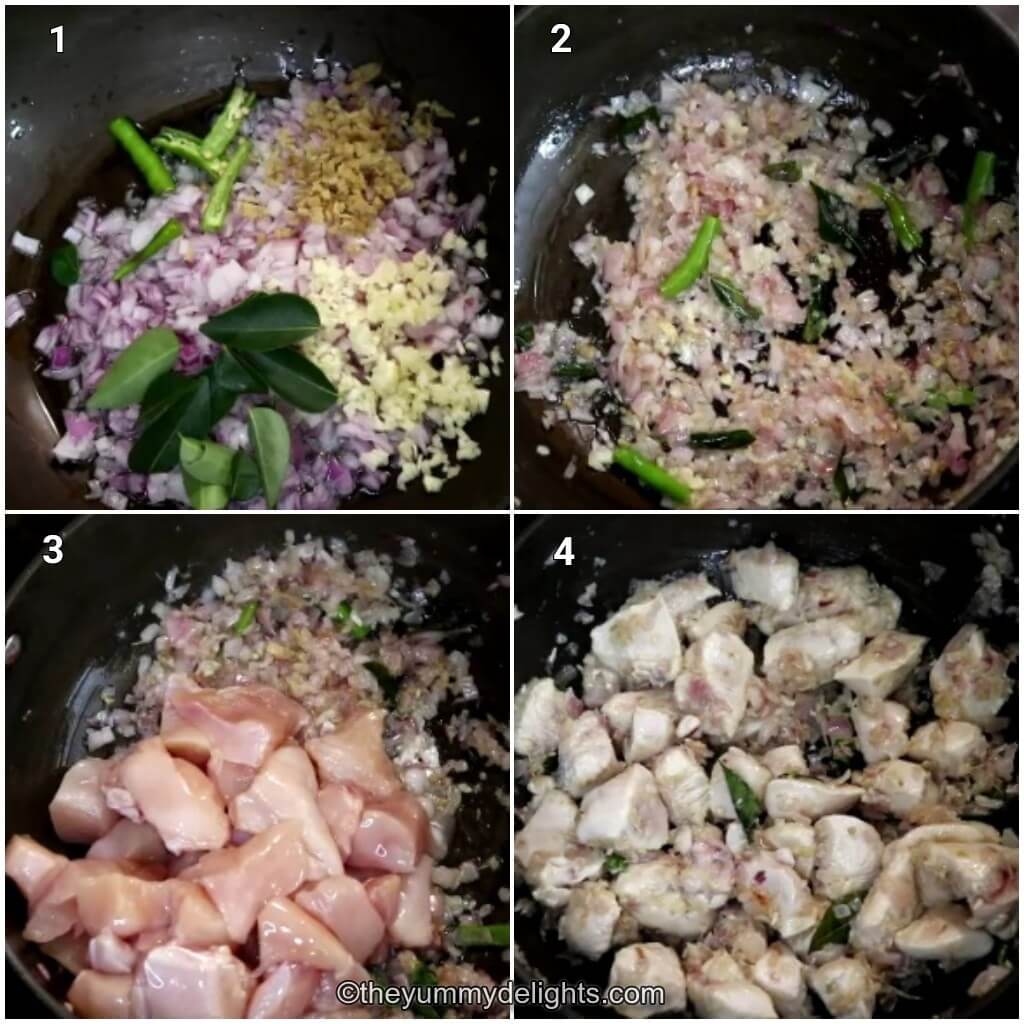
2) Add the chicken pieces and cook, stirring occasionally, until the outside of the chicken changes from pink to white. (images 3 & 4).
3) Add salt, Kashmiri red chilli powder, and Madras curry powder. Stir well so the chicken is evenly coated with the spices (images 5 & 6).
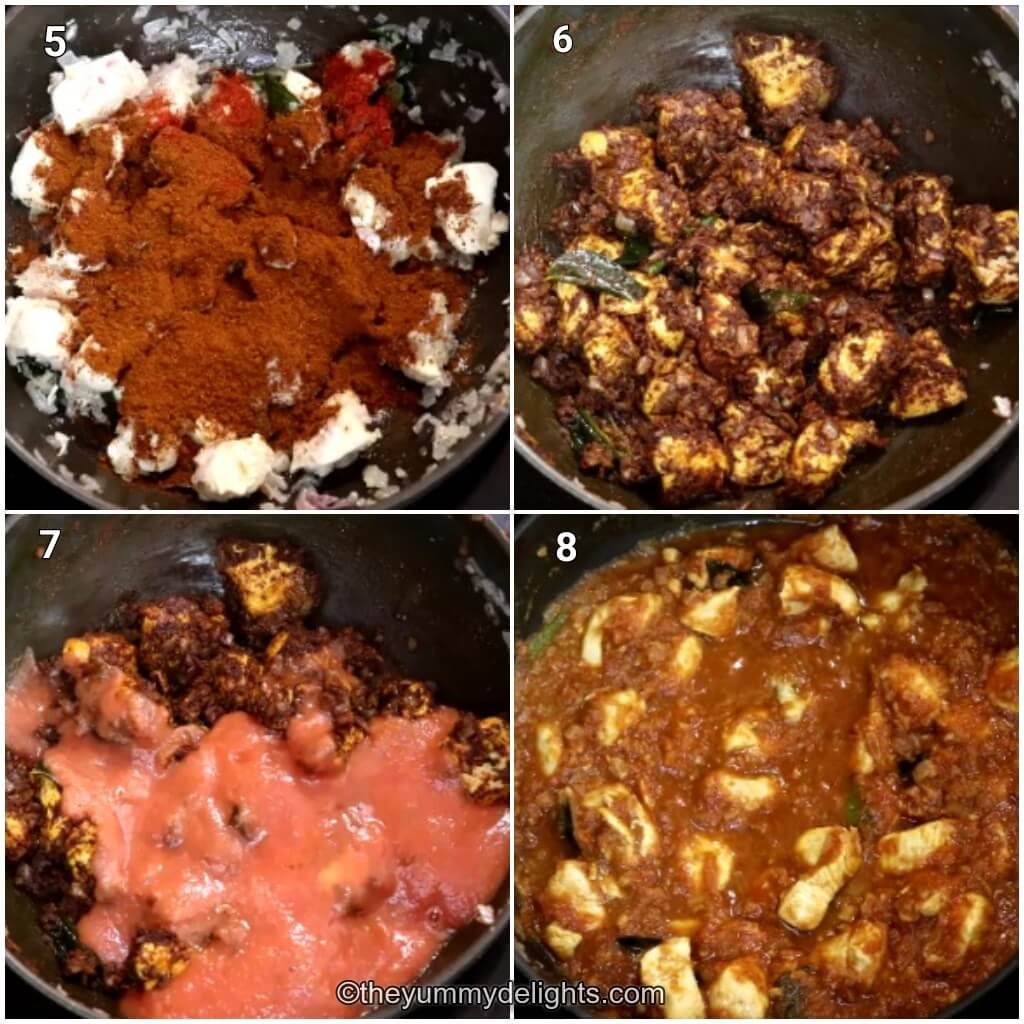
4) Add fresh tomato puree (or passata) and tamarind paste. Mix well and bring the curry to a boil (images 7 & 8).
5) Reduce the heat to low and add the coconut milk. Stir continuously until the curry comes to a gentle boil. Stirring is important here to prevent coconut milk from curdling (images 9 & 10).
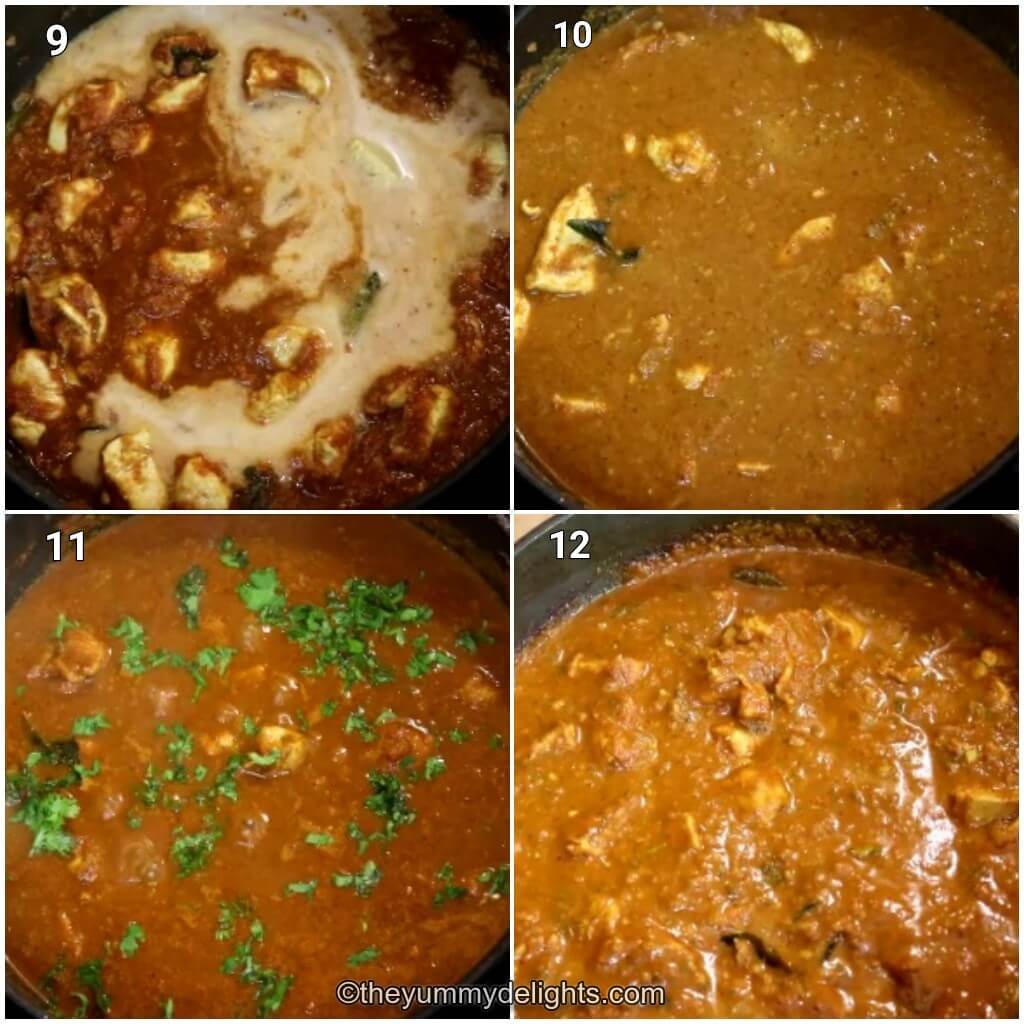
6) Cover the pan and simmer until the chicken is completely cooked and the curry reaches your preferred consistency (images 11 & 12). Turn off the heat and garnish with fresh coriander.
If the curry is too thick, add a little water. If it is too thin, cook uncovered for a few minutes to reduce it.
Serve the Chicken Madras hot with steamed rice, jeera rice, naan, roti, or your favourite Indian bread. I like to serve it with papadams or a little pickle on the side.
Tips to make the best Madras Chicken
- Madras curry powder: Start with less Madras curry powder if you are unsure about the heat. You can add more later.
- Tamarind: Tamarind pastes vary in sourness, so adjust the quantity to taste.
- Do not rush the coconut milk: Once it is added, stir continuously until the curry comes to a gentle boil.
Recipe FAQs
Chicken Madras is spicy, tangy, and aromatic, with heat from the Madras curry powder and chilli. Tamarind adds a sour note, while coconut milk gives the curry a mild sweetness that balances the heat.
Yes. Regular curry powder can be used, but it will give the curry a different flavour. For a closer Madras-style flavour, add ground red chilli, paprika, or cayenne pepper to increase the heat.
Yes, Chicken Madras is usually a spicy curry. The heat depends on the Madras curry powder and chillies used, so you can reduce them to make this recipe milder.
Yes, homemade coconut milk can be used. If using homemade coconut milk, add the second extract first and cook the chicken until done. Then add the first extract, bring it to a gentle boil, and immediately remove from heat. Do not boil or cook it further, as it may curdle.
While Madras curry powder and garam masala are both flavorful spice blends, they have distinct flavor profiles. Adding garam masala as a substitute for Madras curry powder may alter the taste and aroma of your chicken curry. It may not be the exact flavor of Madras curry, but it can still result in a delicious and satisfying chicken curry.
Recipe Card
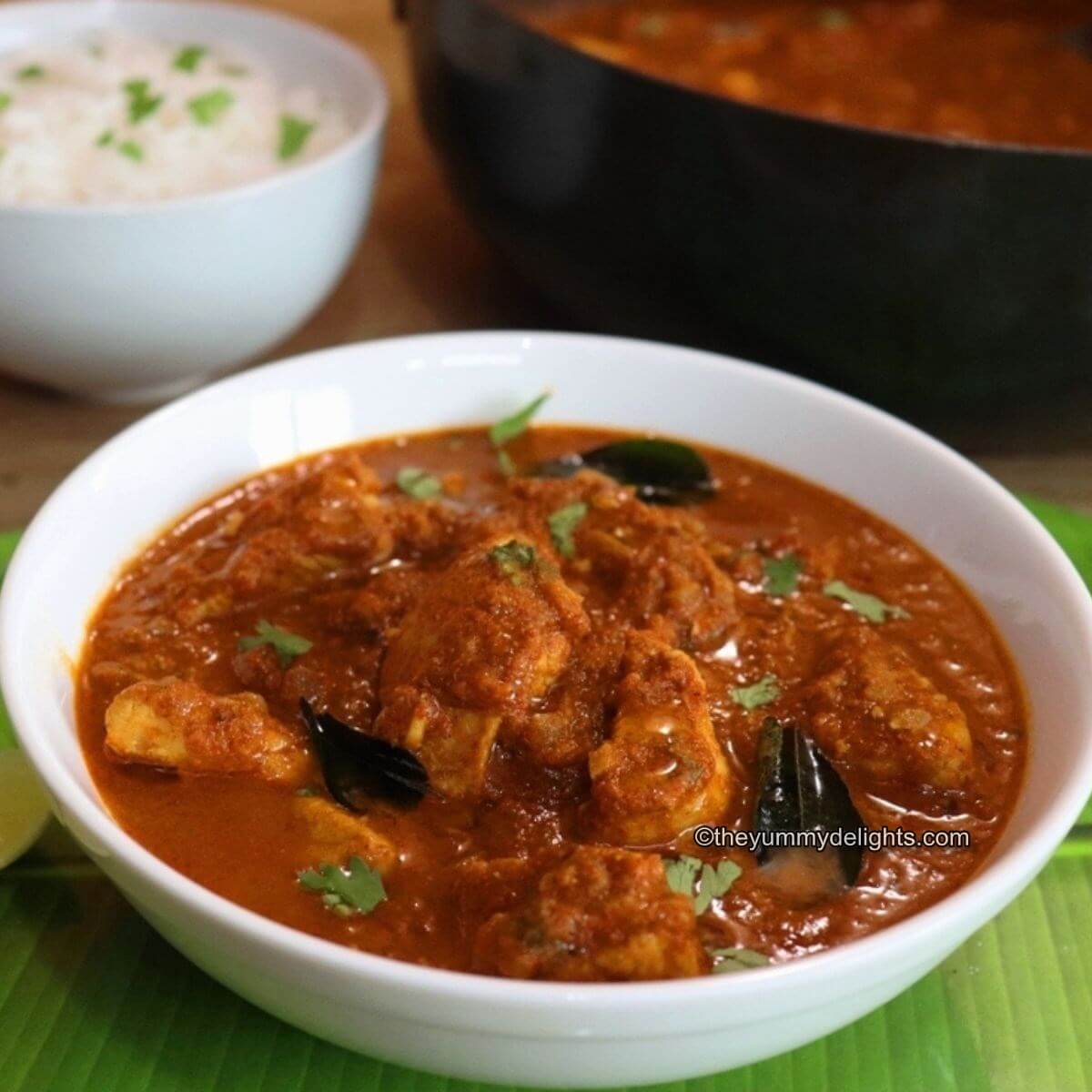
Madras Chicken Curry
Video
Equipment
- 1 Heavy bottom pot with a lid
Ingredients
- 1 onion peeled and finely chopped
- 2 teaspoon garlic finely chopped or minced
- 1 teaspoon ginger finely chopped or grated
- 1 green chilli slit
- 10 curry leaves optional
- 500 g boneless skinless chicken breasts cut into bite size pieces
- 1 teaspoon Kashmiri red chilli powder or paprika
- 2-3 tablespoon Madras Curry Powder It's homemade - recipe in description box
- 400 ml fresh tomato puree substitute tomato passata
- 1 teaspoon tamarind paste
- 200 ml canned coconut milk full fat
- salt to taste
- 2 tablespoon oil
- Fresh coriander leaves
Instructions
- Heat 2 tablespoon of oil in a heavy-bottomed pot over medium heat.
- Add onion, ginger, garlic, green chillies, and curry leaves (optional). Sauté until the onions start to turn slightly golden.
- Add the chicken pieces and cook, stirring occasionally, until the color of the chicken changes from pink to white.
- Add salt, Kashmiri red chilli powder, and Madras curry powder. Stir well so the chicken is evenly coated with the spices.
- Add fresh tomato puree (or passata) and tamarind paste. Mix well and bring the curry to a boil.
- Reduce the heat to low and add the coconut milk. Stir continuously until the curry comes to a gentle boil. Stirring is important here to prevent the coconut milk from curdling.
- Cover the pan and simmer until the chicken is completely cooked and the curry reaches your preferred consistency. If the curry is too thick, add a little water. If it is too thin, cook uncovered for a few minutes to reduce it.
- Turn off the heat and garnish with fresh coriander.
Notes
- Madras curry powder: Start with less Madras curry powder if you are unsure about the heat. You can add more later.
- Tamarind: Tamarind pastes vary in sourness, so adjust the quantity to taste.
- Do not rush the coconut milk: Once it is added, stir continuously until the curry comes to a gentle boil.
Nutrition
Nutrition information is automatically calculated, so should only be used as an approximation.
Storage & Reheating
- Refrigeration: Transfer the curry to an airtight container and refrigerate within 2 hours of cooking. It stays good for up to 2 days.
- Reheating: Reheat gently on the stovetop or in the microwave, adding a splash of water if needed.
- I don't recommend freezing this curry because the coconut milk may separate or curdle when reheated.



Preeti
This Madras Chicken Curry turns out so flavorful every single time, with just the right balance of heat and aroma. If you love rich and comforting curries, this one will easily become a favorite on your table.