

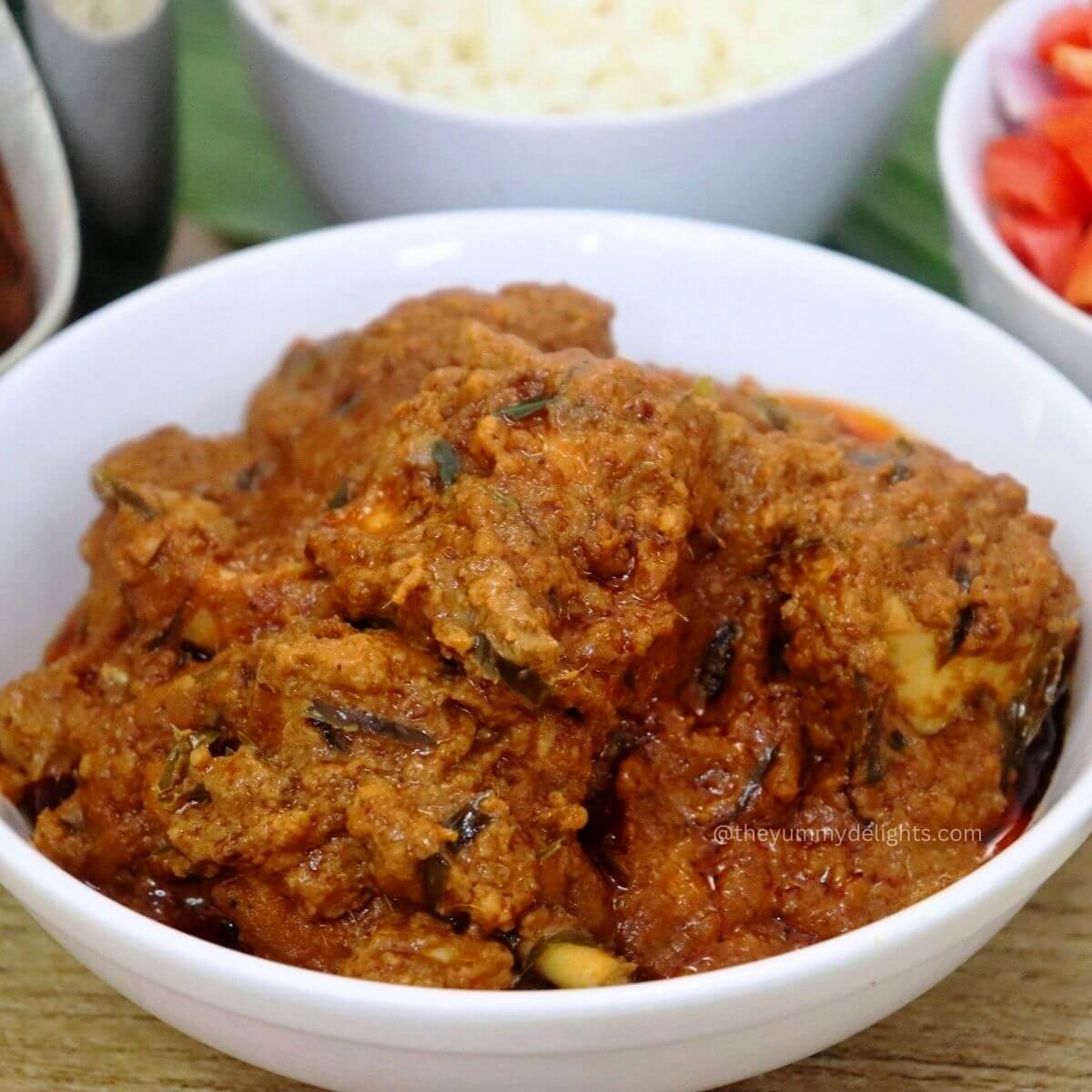
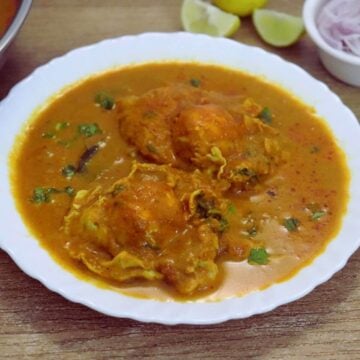
This Chicken Rendang recipe, also known as Rendang Ayam, is a Malaysian-style chicken curry made from scratch. The chicken is slow-cooked in coconut milk, homemade kerisik (toasted coconut paste), and aromatic spices until tender and coated in a thick, flavorful sauce.
Traditionally served with Nasi Lemak (fragrant coconut rice), this Malaysian chicken rendang is also delicious with steamed rice or naan. This is my tried-and-tested recipe with step-by-step photos and a quick video recipe.
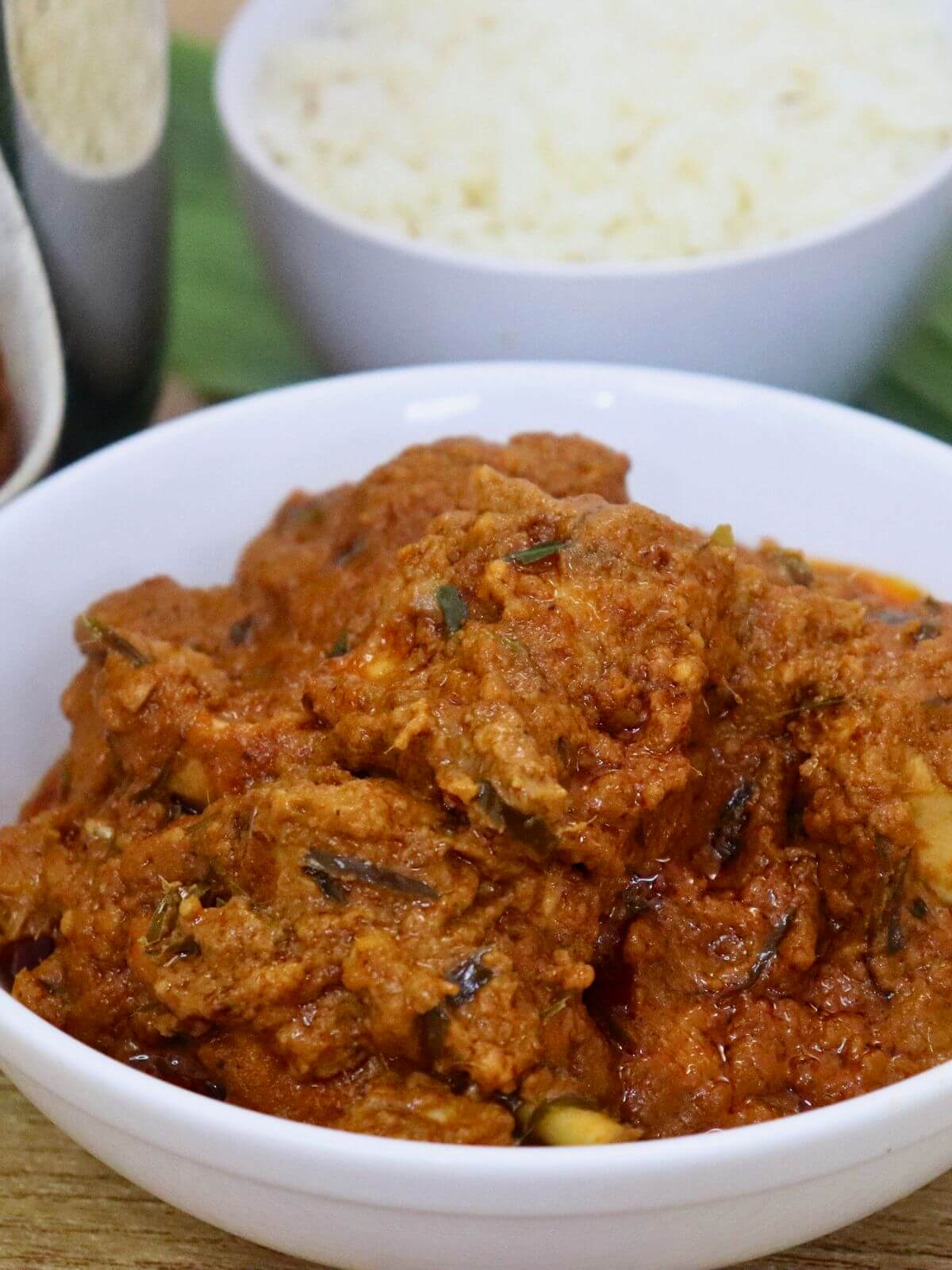
I first tried Rendang Ayam during a trip to Malaysia a few years ago. I loved how the chicken was coated in a thick, aromatic spice paste. When I made it at home, I wanted to recreate that same combination of coconut milk, spices, chilies, and kerisik.
My easy chicken rendang recipe is made from scratch with a homemade kerisik (toasted coconut paste), which gives the rendang its unique flavor and helps thicken the sauce. Rendang has a dry or semi-dry consistency, like this Restaurant-Style Chicken Jalfrezi, where tender chicken pieces are coated in a flavorful and spicy rendang sauce.
What Is Chicken Rendang?
Chicken Rendang, also known as Rendang Ayam, is a Malaysian-style chicken dish made with coconut milk, chilies, aromatics, and spices. "Ayam" means chicken in both Malay and Indonesian. It is cooked until the liquid reduces and coats the chicken, giving rendang its thick, flavorful sauce.
Chicken Rendang has a spicy, aromatic, slightly sweet, and tangy flavor. Kerisik, made from toasted coconut, adds a unique flavor and helps thicken the sauce. Unlike a regular chicken curry, rendang is cooked until most of the liquid reduces and the spice paste coats the chicken.
About This Rendang Ayam Recipe
Chicken Rendang, or Rendang Ayam, is traditionally associated with Indonesian cuisine and is also widely popular in Malaysia and other parts of Southeast Asia.
Cooking this Malaysian chicken rendang recipe requires patience. The meat is slow-cooked in coconut milk with spices until tender and coated with thick, rich gravy. This is not a 30-minute recipe. Don't rush the cooking process. The longer rendang simmers, the better it tastes.
If you enjoy coconut-based chicken curries, try my Chicken Xacuti, Mangalorean Chicken Curry, or Ceylon Chicken Curry next.
Jump to:
Ingredients for Chicken Rendang
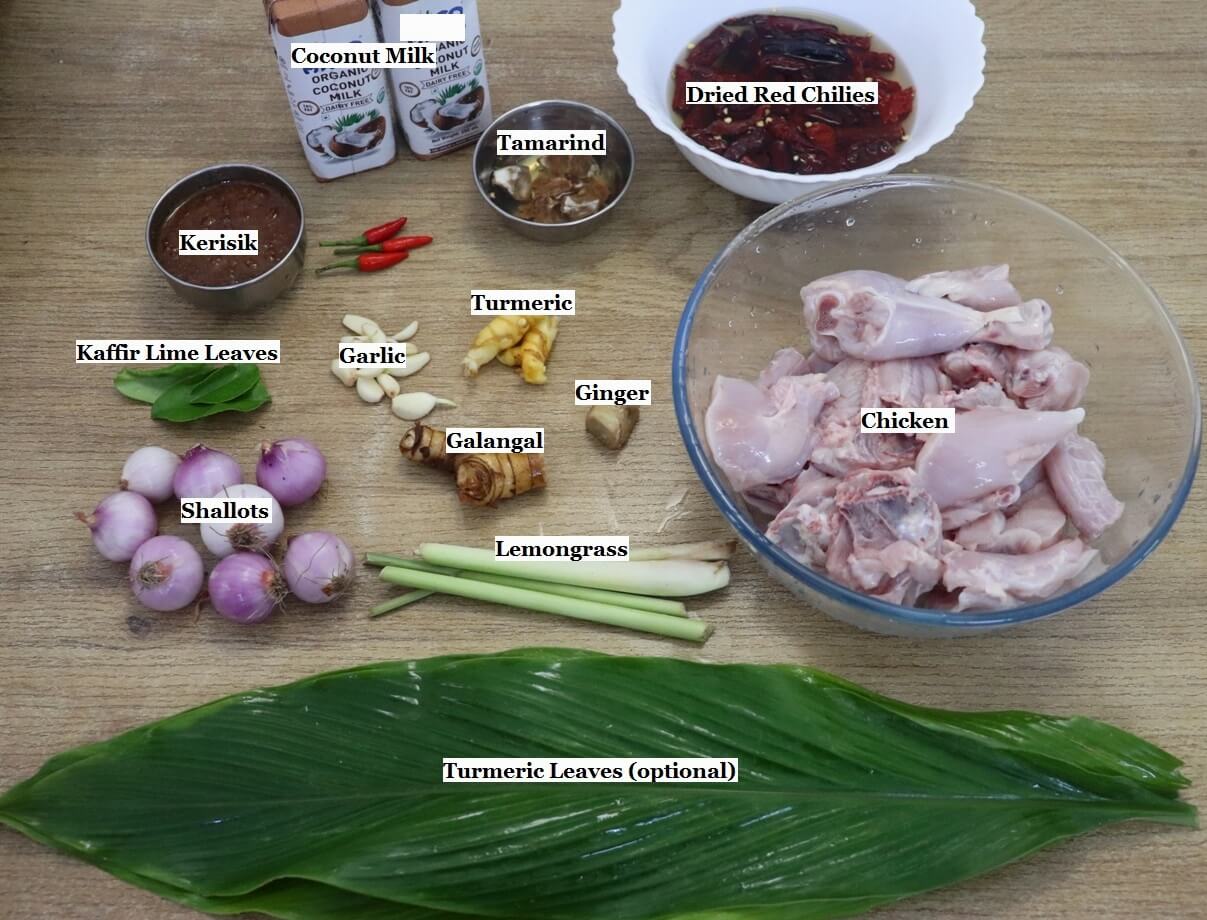
See the recipe card at the end of the post for full ingredients, quantities, and a printable version.
Rendang Spice Paste
The rendang spice paste is the base of this chicken rendang curry. It is made with dried red chilies, shallots, galangal, lemongrass, ginger, garlic, and turmeric.
- Red chilies: I used Kashmiri-dried red chilies for the rendang spice paste. I also added one spicy red chili for flavor. Add chilies as per your taste.
- Shallots: They are small onions used in many Asian curries. They add a subtle sweetness and depth to the curry. You can substitute them with 2 large onions.
- Galangal: This ginger-like root has a citrusy, slightly peppery flavor and is an important aromatic in a Malaysian rendang chicken recipe.
- Turmeric root: I used fresh turmeric root. Substitute with ¼ teaspoon turmeric powder.
- Ginger and Garlic: Commonly used in Asian cuisine.
- Lemongrass: Adds a fresh citrus aroma to the rendang spice paste.
For the Chicken Rendang
- Chicken: I use 1 kg of bone-in curry-cut chicken. Bone-in chicken works especially well for rendang because it stays tender while simmering and adds more flavor to the sauce.
- Kerisik: It is toasted grated coconut that is pounded into a coarse, oily paste. It is commonly used in Malaysian rendang to add a nutty flavor and help thicken the sauce.
- Oil: I used coconut oil. You can use any cooking oil with a high smoke point and neutral flavor.
- Whole Spices: I used green cardamom, cinnamon, star anise, and cloves. They enhanced the aroma and flavor of rendang curry.
- Kaffir Lime Leaves (makrut lime leaves): These leaves add a citrusy and fragrant aroma to the ayam rendang recipe.
- Turmeric Leaf: Traditionally, fresh turmeric leaves are used. Substitute them with Kaffir Lime Leaves.
- Coconut milk: Use full-fat coconut milk for this Malaysian Chicken Rendang. It gives the sauce a rich texture and helps create the thick coating that rendang is known for.
- Jaggery: Adds light sweetness to the curry. Substitute with sugar.
- Tamarind pulp: Provides a tangy and slightly sour taste, balancing the sweet and spicy flavor of the other ingredients.
How to make Chicken Rendang Recipe (with Step-by-Step Photos)
How to make Kerisik for Chicken Rendang
I make kerisik at home for this chicken rendang recipe, as it is not readily available in stores here. If you are using store-bought kerisik, skip this step.
1) Roast the coconut: Place freshly scraped coconut in a deep-bottomed pan or pot (image 1). Roast over medium heat, stirring continuously to prevent burning. Once it starts turning golden brown, reduce the heat to low and continue stirring until evenly golden brown (image 2). Be careful, as coconut can burn quickly. Transfer to a plate while still warm.
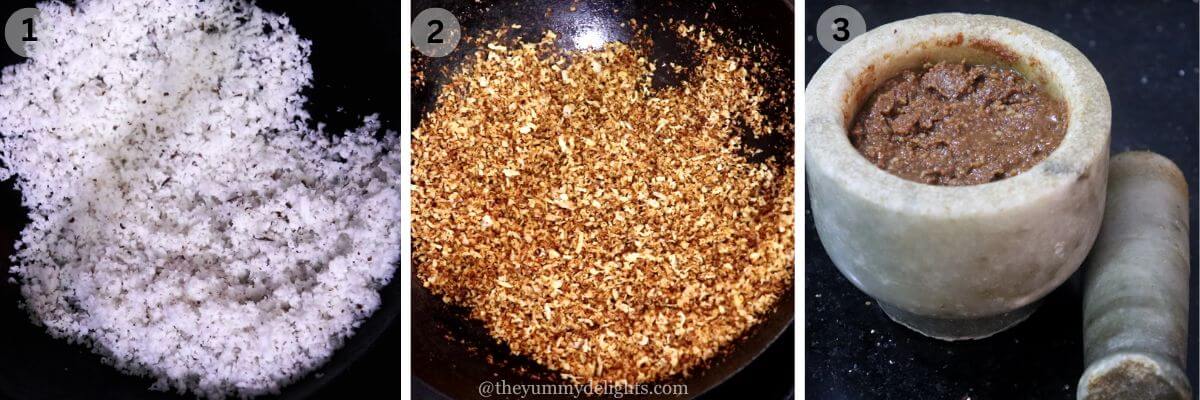
2) Pound the coconut: Pound the roasted coconut in a mortar and pestle until grainy and it starts releasing oil (image 3). I do not recommend using a mixer or blender, as it can make the coconut too smooth and oily. Store the kerisik in an airtight container in the refrigerator. For a detailed method, see how to make Kerisik.
Preparations
3) Soaking red chilies: To reduce the spiciness, deseed the dried red chilies and cut them into halves or quarters. Soak them in hot water for 15-30 minutes (image 4).
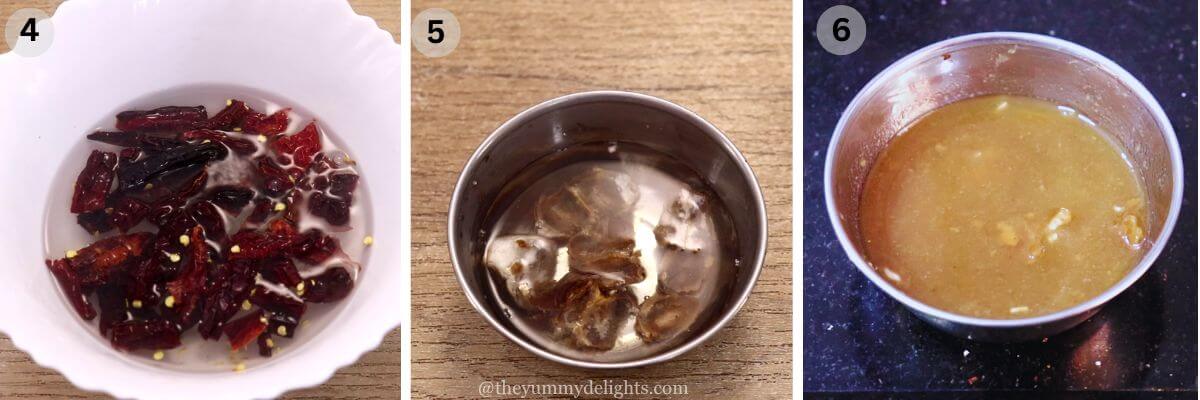
4) Soak tamarind: Soak tamarind in hot water for 15 minutes, using just enough water to immerse it (image 5). Gently squeeze the tamarind to extract the pulp (image 6). Discard any seeds, if present.
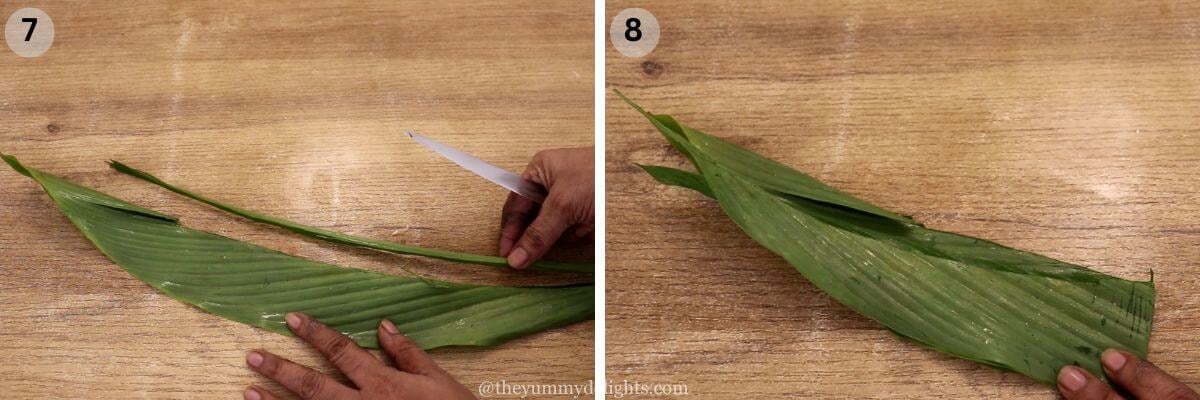
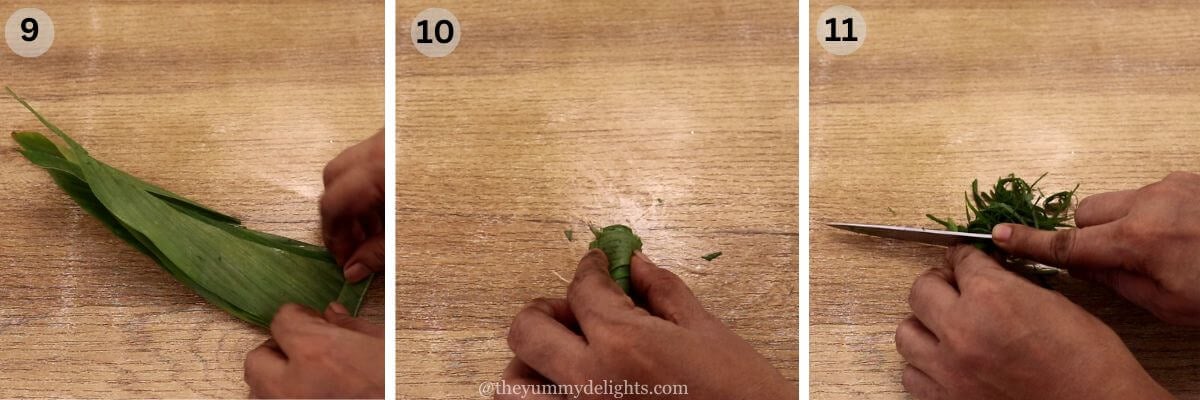
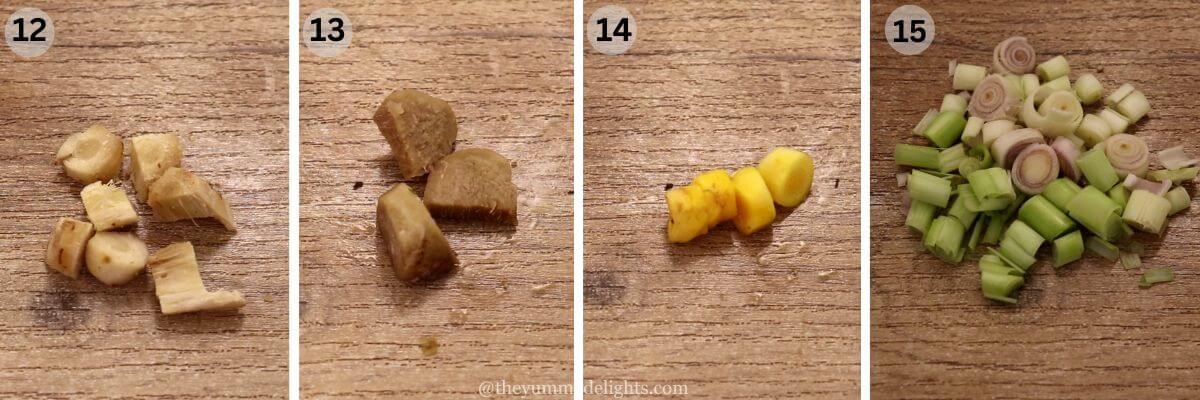
5) Chopping aromatics: Cut the turmeric root into small pieces and Kaffir lime leaves into thin strips (images 7-11). Quarter the shallots. Peel the galangal and ginger, then cut them into small pieces (images 12 & 13). Cut the turmeric root and lemongrass (images 14 & 15). (For a detailed visual guide, please watch the rendang video tutorial.)
Making spice paste
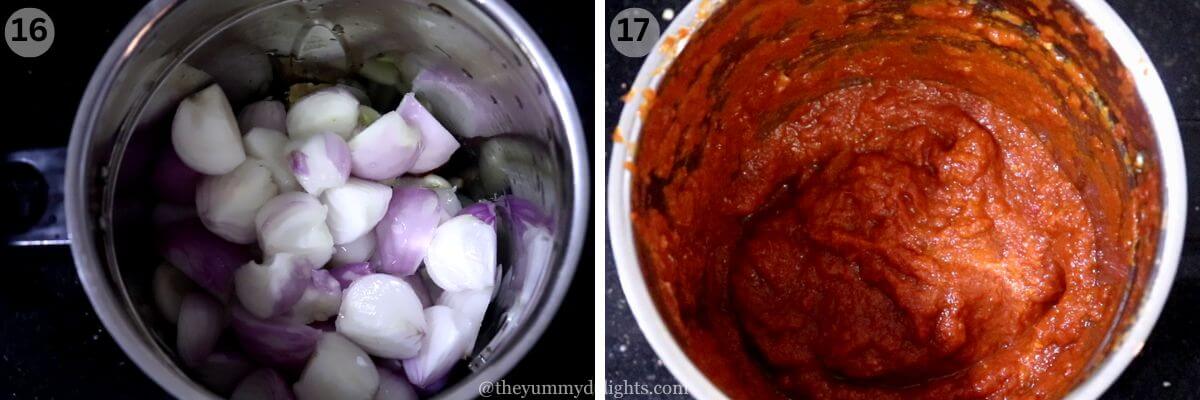
6) In a mixer/blender jar, add soaked red chilies, spicy red chili (optional, for flavor), galangal, lemongrass, ginger, garlic, turmeric, and shallots (image 16). Add a little water and grind to a fine paste (image 17).
Cooking the rendang spice paste
7) Heat ¼ cup of oil over medium heat. Add green cardamoms, cinnamon, cloves, and star anise (image 18). Sauté for a few seconds, then add the prepared rendang spice paste (image 19).
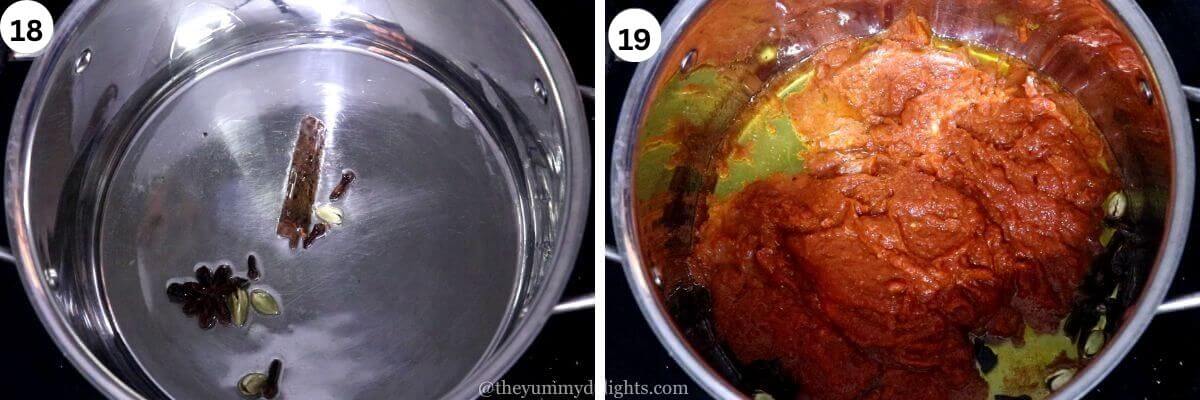
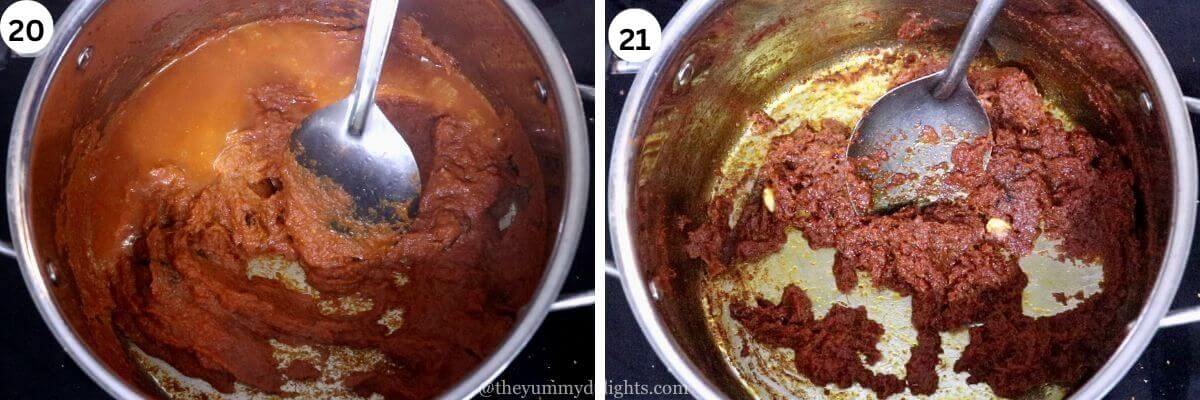
8) Cook the paste, stirring often, until it becomes aromatic and the oil starts to separate from the sides (images 20 & 21). This step is important because properly cooking the spice paste develops the flavor of the rendang.
Add the chicken
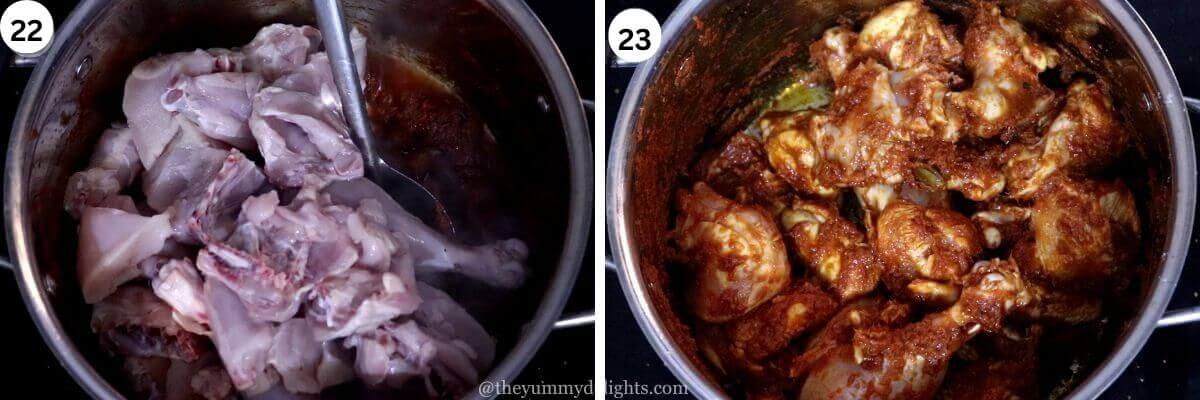
9) Add the bone-in chicken pieces and salt (image 22). Stir well so the chicken is evenly coated with the rendang spice paste. Cook for about 5 minutes (image 23).
Add the aromatics and coconut milk
10) Add the lemongrass, turmeric leaves, and kaffir lime leaves (image 24). Sauté for a minute.
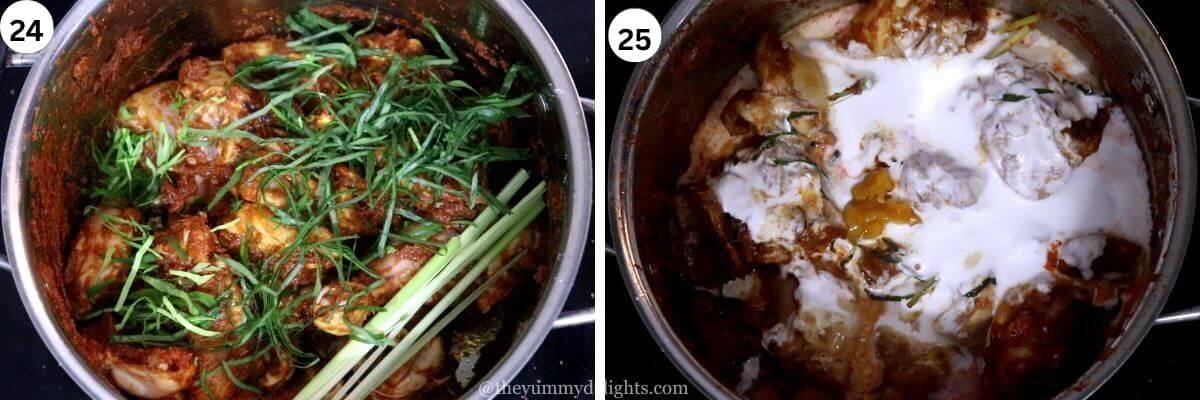
11) Pour in the coconut milk, jaggery, tamarind pulp, and kerisik (image 25). Stir well over medium-low heat.
Simmer the chicken
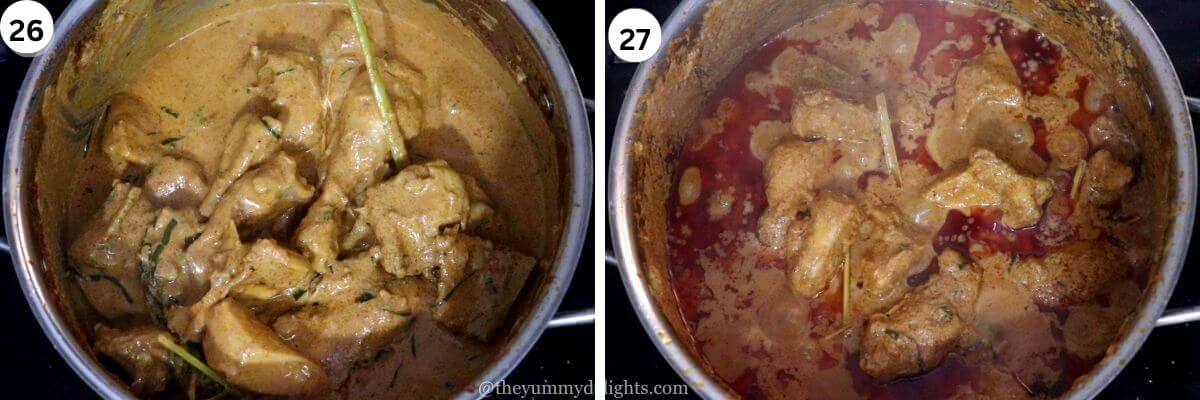
12) Cover and cook over medium-low heat until the chicken is tender (images 26 & 27). Stir occasionally so the coconut milk and spice paste do not stick to the bottom of the pan.
Reduce the rendang sauce
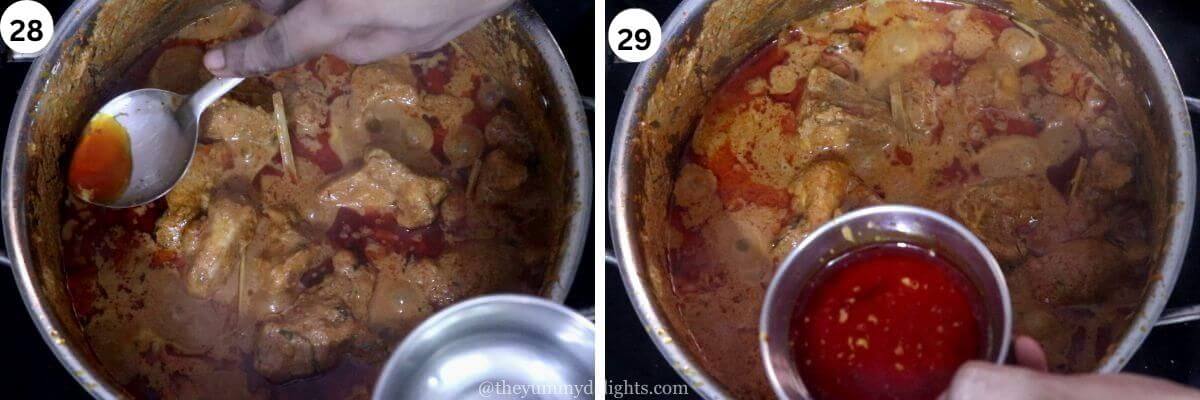
13) Remove the lid. Remove the excess oil floating on the top (images 28 & 29). Taste and adjust the seasoning. Add more salt, jaggery, or tamarind pulp as per your taste.
14) Continue cooking over low heat (uncovered) until the excess liquid evaporates and the sauce becomes thick enough to coat the chicken (images 30 & 31). Rendang Ayam is ready to serve.
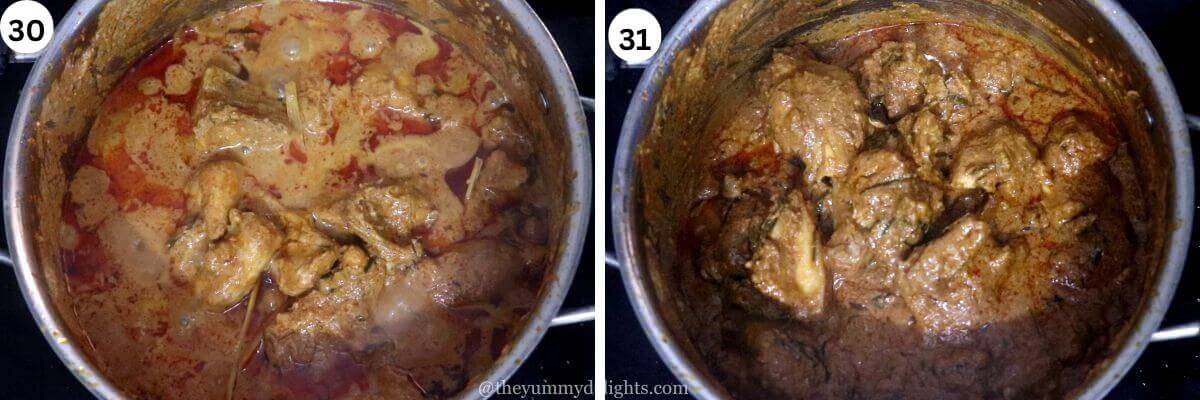
I prefer my chicken rendang slightly saucy rather than completely dry, so I stop cooking while a little sauce remains in the pan.
What to serve with Chicken Rendang?
Malaysian rendang ayam is traditionally served with rice. It is especially delicious with Nasi Lemak (fragrant coconut rice) or steamed white rice. You can also serve it with naan or other flatbreads.
Tips to make the Best Chicken Rendang
- Coconut milk: It is better to use full-fat coconut milk for a richer, creamier texture of rendang. Also, the chances of curdling the coconut milk are lower while cooking rendang.
- Slow cooking: Rendang ayam is a slow-cooked dish. Cook the chicken on low heat in coconut milk until the liquid reduces and coats the chicken, leaving a thick, rich rendang sauce with very little gravy. This slow cooking helps the chicken become tender and allows the flavors to develop.
- Stirring frequently: Stir the mixture frequently to prevent it from sticking to the bottom of the pan and ensure even cooking.
Recipe FAQs
Chicken rendang is ready when the chicken is tender, and the coconut milk has reduced to a thick sauce that coats the chicken. You should see some oil separating around the edges and very little watery gravy remaining. If you prefer a drier rendang, continue cooking uncovered until more of the liquid evaporates.
Yes. You can use boneless chicken thighs, but reduce the cooking time because they cook faster than bone-in chicken. I prefer bone-in curry-cut chicken for this recipe because it stays tender during simmering and gives the rendang more flavor.
Kerisik adds a nutty flavor and helps thicken the rendang sauce, so I recommend using it if possible. If you cannot find it, you can make homemade kerisik using grated coconut as shown in this recipe.
The main difference is the cooking method and consistency. A chicken curry usually has more liquid gravy, while rendang is cooked longer so the coconut milk and spice paste reduce and coat the chicken.
Rendang also commonly uses kerisik (toasted coconut), which gives the dish a nutty flavor and helps thicken the sauce. Depending on how long you cook it, chicken rendang can be semi-dry or very dry.
Recipe Card
Chicken Rendang Recipe (Rendang Ayam)
Video

Equipment
- 1 heavy bottom pot/pan
- 1 Blender Jar
Ingredients
For Kerisik
- 2 cups of freshly grated coconut or desiccated coconut
For the Rendang Spice Paste
- 12 dried red chilies I used Kashmiri red chilies
- 1 cup shallots. or 2 large onions
- 20 gm or 1-inch galangal
- a small piece of Turmeric ½ teaspoon turmeric powder
- 1- inch ginger
- 2 stalks of lemongrass, chopped
- Spicy red chilies optional, add as per taste
- 5-6 garlic cloves
For Chicken Rendang
- ¼ cup of oil
- 4 green cardamoms slightly open them
- 1- inch cinnamon
- 1 star anise
- 4 cloves
- 1 kg chicken curry cut
- 1 teaspoon salt
- 5 Kaffir Lime Leaves
- 1 stalk lemongrass, sliced lengthwise
- 1 Turmeric Leaf Substitute: Kaffir Lime Leaves
- 300 ml coconut milk
- 1 teaspoon jaggery
- 2 teaspoon Tamarind pulp 1 tablespoon tightly packed tamarind. Soak it in little hot water. Mash it in water to remove pulp.
- 2-3 tablespoon kerisik recipe given in this post
Instructions
Preparations for Rendang Ayam
- Soaking red chilies: To reduce their spiciness, deseed the red chilies. Cut them into halves or quarters. Soak dried red chilies in hot water for 15-30 minutes.
- Soak tamarind: Soak tamarind in hot water for 15 minutes. Avoid adding excessive water; the water should be sufficient to immerse the tamarind. Now gently squeeze the tamarind to extract its pulp. If seeds are present in the tamarind, discard them.
- Cut the turmeric root into small pieces and Kaffir lime leaves into thin strips. Quarter the shallots. Peel the galangal and ginger, then cut them into small pieces. Cut the lemongrass. (For a detailed visual guide, please watch the video tutorial.)
Making Kerisik
- Roast the coconut: Place freshly scraped coconut in a deep-bottomed pan or pot. Roast over medium heat, stirring continuously until golden brown. Transfer the roasted coconut to a plate.
- Pound the coconut: Pound the roasted coconut in a mortar and pestle until grainy and it starts releasing oil. I do not recommend using a mixer or blender, as it can make the coconut too oily. Store the kerisik in an airtight container in the refrigerator.
Making Rendang Spice Paste
- In a mixer/blender jar, add soaked red chilies, spicy red chili (optional, for flavor), galangal, lemongrass, ginger, garlic, turmeric and shallots. Add a little water and grind to a fine paste.
Cooking Malaysian chicken rendang
- Heat ¼ cup of oil over medium heat. Add green cardamom, cinnamon, cloves, and star anise. Sauté for a minute. Add the prepared spice paste. Cook until it begins to release oil from the sides. Stir continuously to prevent the spice paste from burning.
- Add chicken. Stir to coat the chicken with the masala. Add salt. Stir-fry and cook the chicken for 5 minutes.
- Add lemongrass stalk, turmeric leaves and kaffir lime leaves. Sauté for a minute.
- Add coconut milk, jaggery, tamarind pulp, and kerisik paste. Stir well. Cover and cook over medium-low heat until the chicken is tender.
- Stir occasionally so the coconut milk and spice paste do not stick to the bottom of the pan.
- Remove the excess oil floating on the top. Taste and adjust the seasoning. Add more salt, jaggery, or tamarind pulp to taste. Cook uncovered for 5 minutes on low heat or until the excess moisture evaporates and the rendang curry is thick. Chicken Rendang is ready to serve.
Notes
-
- Coconut Milk: It is better to use full-fat coconut milk for a richer, creamier texture of rendang. Also, the chances of curdling the coconut milk are less while cooking.
- Slow Cooking: Rendang is a slow-cooked dish. Cook it on low heat. Allow ample time for the flavors to meld and the chicken to become tender.
- Simmering: Simmer the chicken in the coconut milk until the liquid has reduced significantly, leaving a thick, rich rendang sauce. This is a curry with less gravy/sauce.
- Stirring Frequently: Stir the mixture frequently to prevent sticking it to the bottom of the pan and ensure even cooking.
Nutrition
Nutrition information is automatically calculated, so should only be used as an approximation.
You may also like these other popular chicken recipes from this website:



Preeti
This chicken rendang is packed with flavors. The tender chicken is simmered in a rich, aromatic blend of spices until it's melt-in-your-mouth, so delicious. You've got to try this one. It's a recipe you'll be making again and again.