

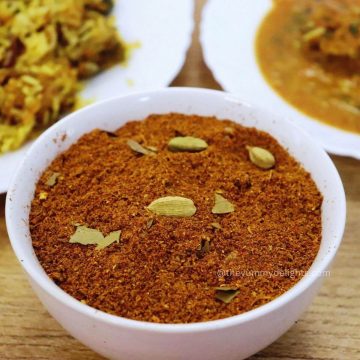
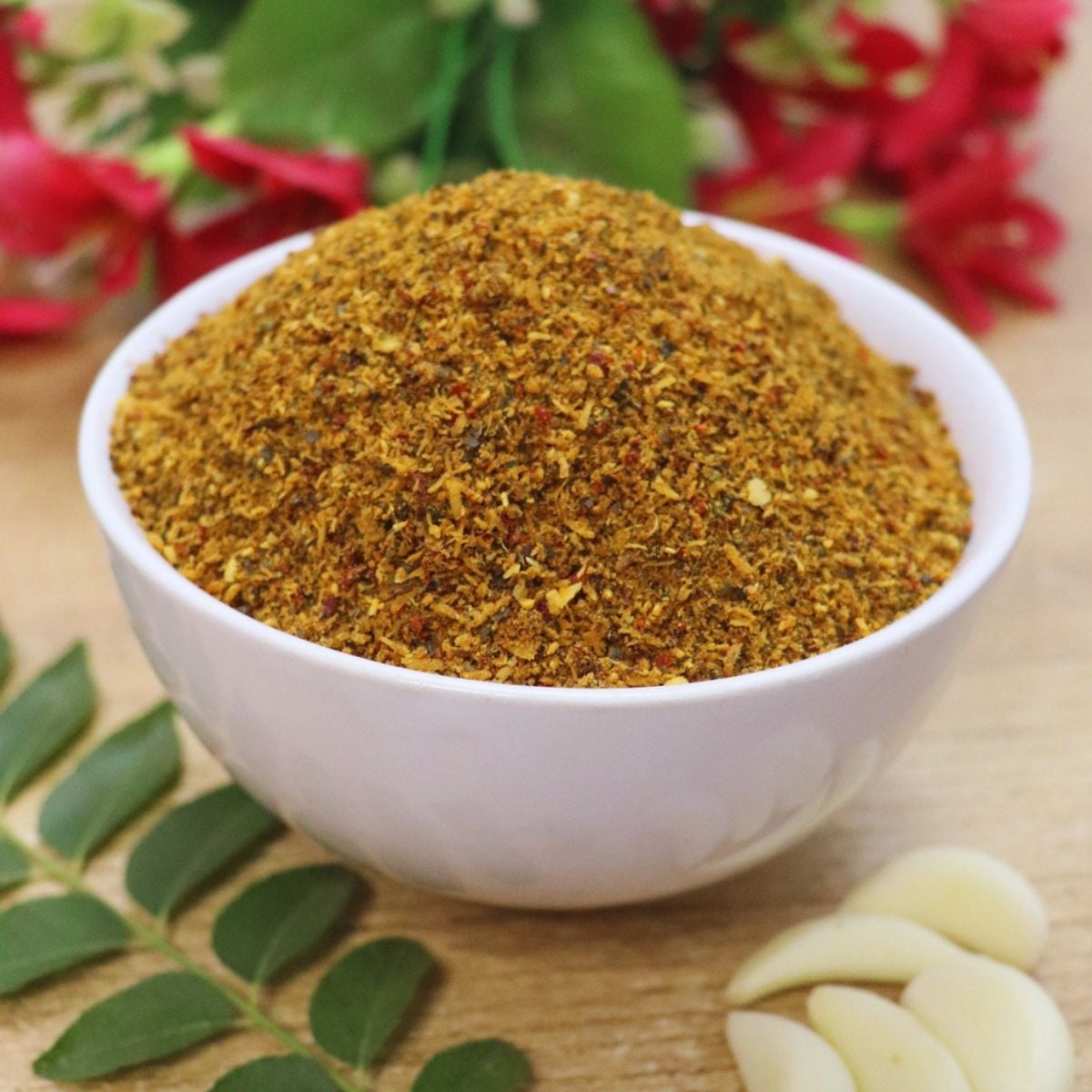
This garlic chutney pudi is a simple and flavorful Karnataka-style chutney powder made with garlic, roasted chana, red chilies, tamarind, and a lot of curry leaves. It is perfect when you don't want to make fresh chutney and works as a quick side for neer dosa, idli, paratha, or rice, and adds instant flavour.
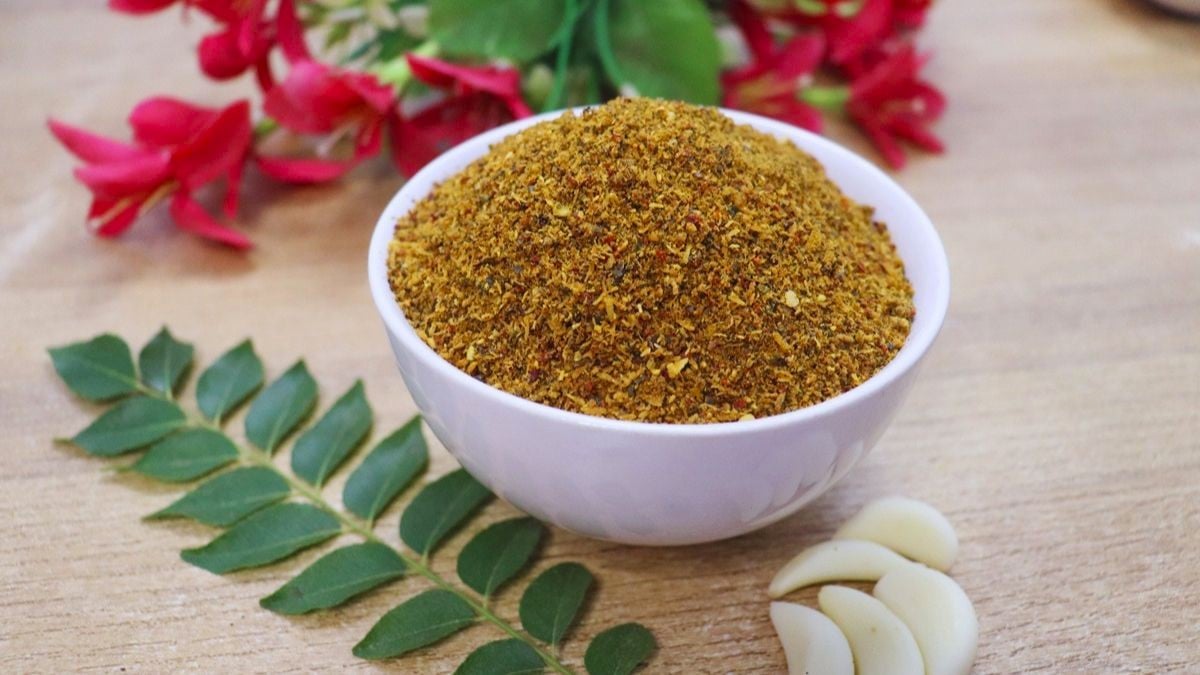
This garlic chutney powder is very handy on busy mornings or when you need a quick lunch. I grew up eating this chutney pitto at home, and my mother always stored it in a steel dabba. We enjoyed it almost daily with Neer dosa, curd rice, or vegetable pulao.
You can make this chutney powder once and store it for up to a month. It comes in handy when there is no time to prepare fresh chutney or sabzi. Even my kids love it. If you enjoy making homemade spice powders, you can also try my homemade curry powder, madras curry powder, or biryani masala powder for everyday cooking.
Jump to:
About this chutney powder recipe
This Karnataka-style chutney pudi is made with simple ingredients like curry leaves, roasted chana, and garlic. Each ingredient adds its own flavour. I have added more curry leaves, which give a nice aroma and make the chutney more balanced.
Chutney powder is made by roasting the ingredients well until there is no moisture left, then grinding them to a fine or coarse powder. I always make it in small batches and store it in the refrigerator. Here's how I make it at home
Why you'll love it
- Easy to make with simple pantry ingredients.
- Stays fresh for up to a month when stored properly.
- Full of flavour from garlic and lots of curry leaves.
- Goes well with dosa, idli, or chapati.
- Perfect for busy days when you need a quick side.
Ingredients Needed
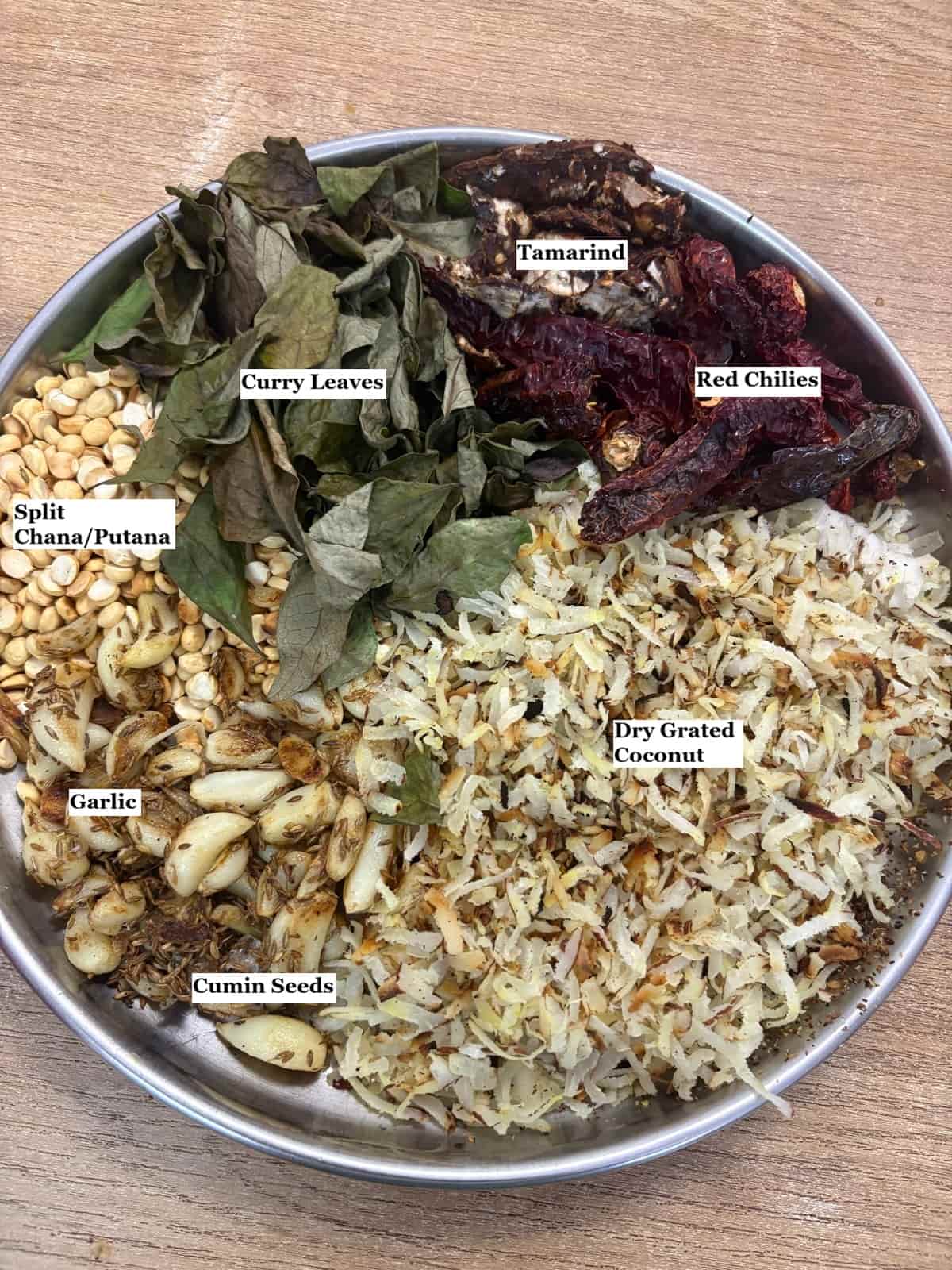
- Dry red chillies: I used byadgi red chillies for color and flavor. You can substitute them with Kashmiri red chilies. You can also add Kashmiri red chili powder while grinding.
- Dry grated coconut: Never use fresh coconut to make chutney powder. Dry coconut (khobre) increases the shelf life of chutney powder.
- Curry leaves: You can use fresh curry leaves. I always wash and dry the curry leaves for a day before roasting them in this chutney powder recipe.
- I have used more curry leaves in this recipe, as they add great aroma and make the chutney more wholesome. You can adjust the quantity as per your taste.
How to make chutney powder
Roasting the chutney powder ingredients
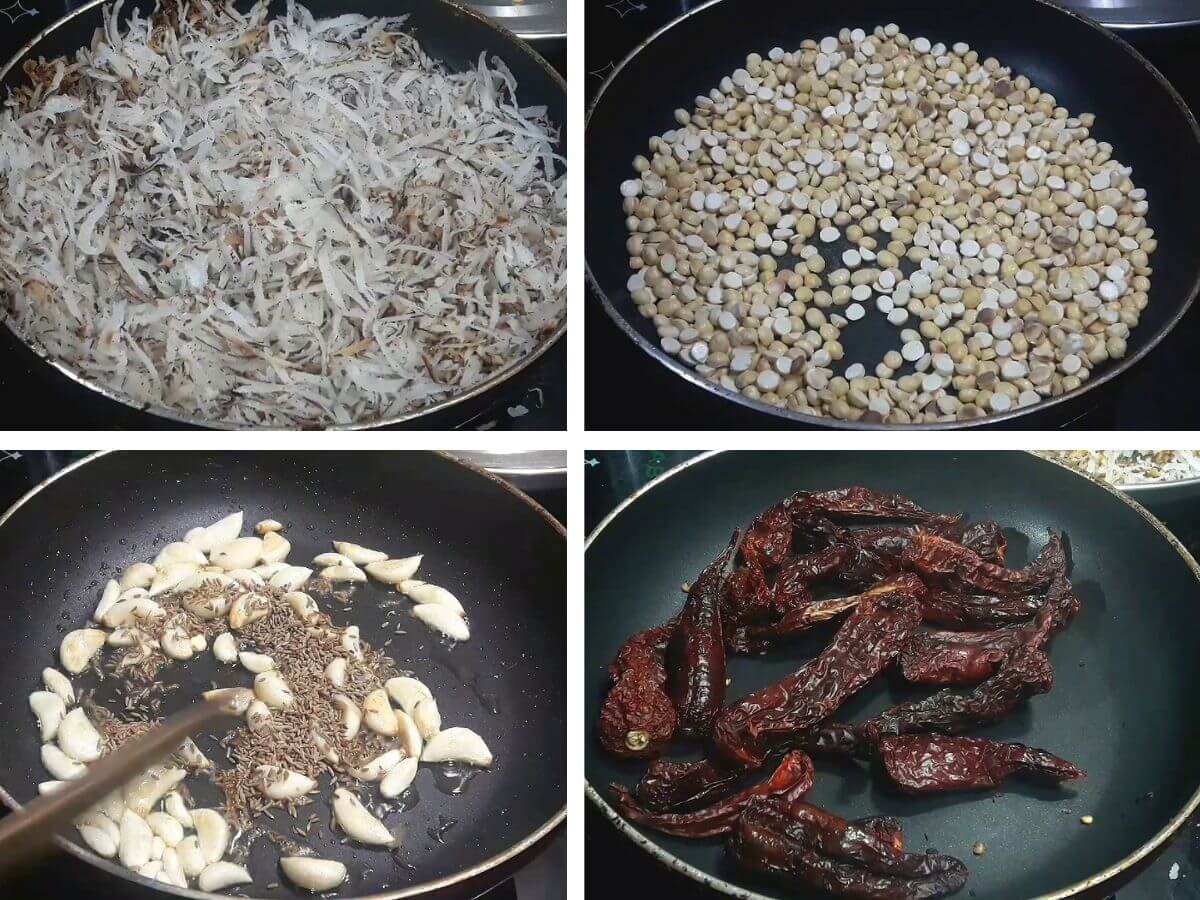
1. Dry roast coconut on low heat until golden. Do not burn. Remove and keep aside.
2. In the same pan, dry roast split chana (putane) until golden on low heat. Do not burn, or it may taste bitter. Remove and keep aside.
3. Heat 2 teaspoons of oil in the pan. Add garlic and roast until golden. Add cumin and roast for 30 seconds. Remove and keep them aside.
4. Dry roast red chilies until crisp and aromatic. Remove and keep aside.
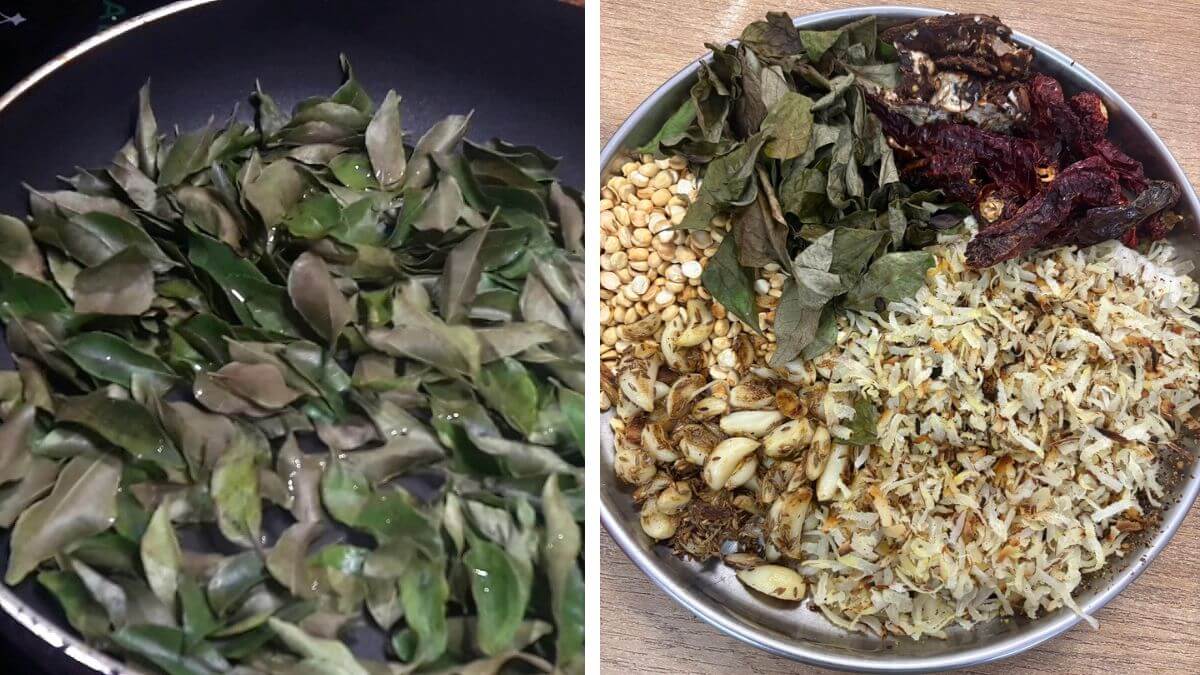
5. Dry roast curry leaves on a low heat until crispy. Remove and keep aside.
6. Roast tamarind for a few seconds to remove moisture (optional). You can also add it directly while grinding.
7. Let all the ingredients cool completely. Do not grind while hot, or the chutney powder may turn oily.
Grinding chutney powder
8. First, grind all the ingredients except roasted chana. The mixture may be slightly sticky due to the moisture from the garlic. Remove and keep aside.
9. Next, grind the roasted chana to a fine powder.
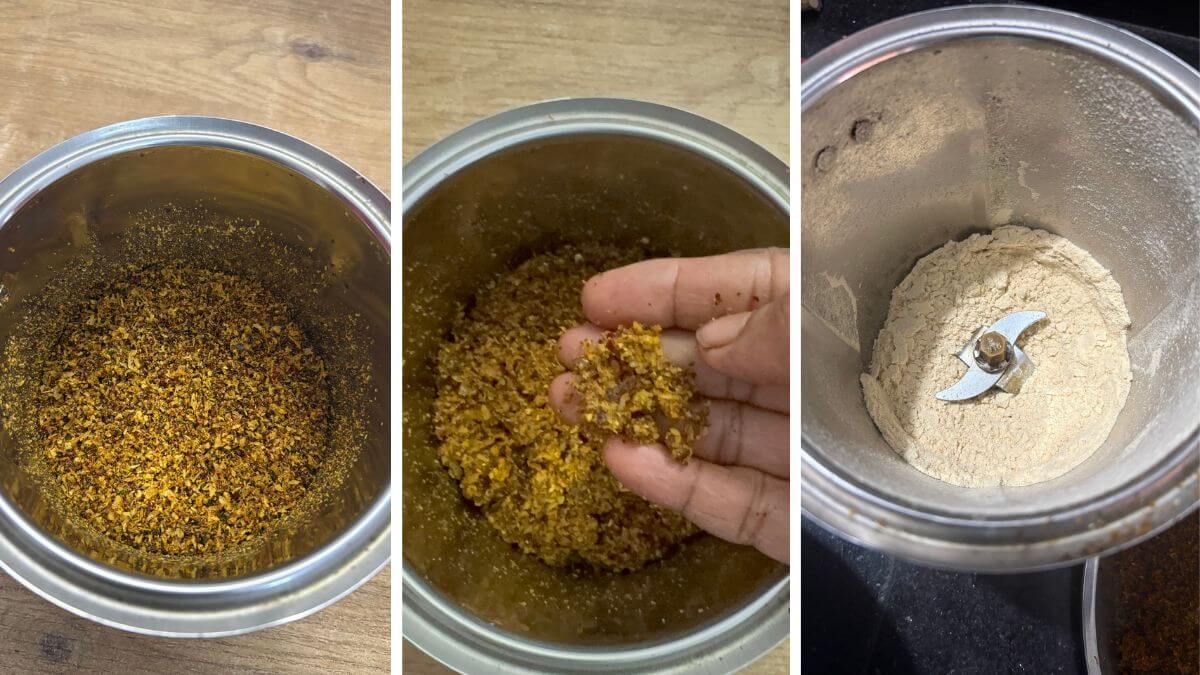
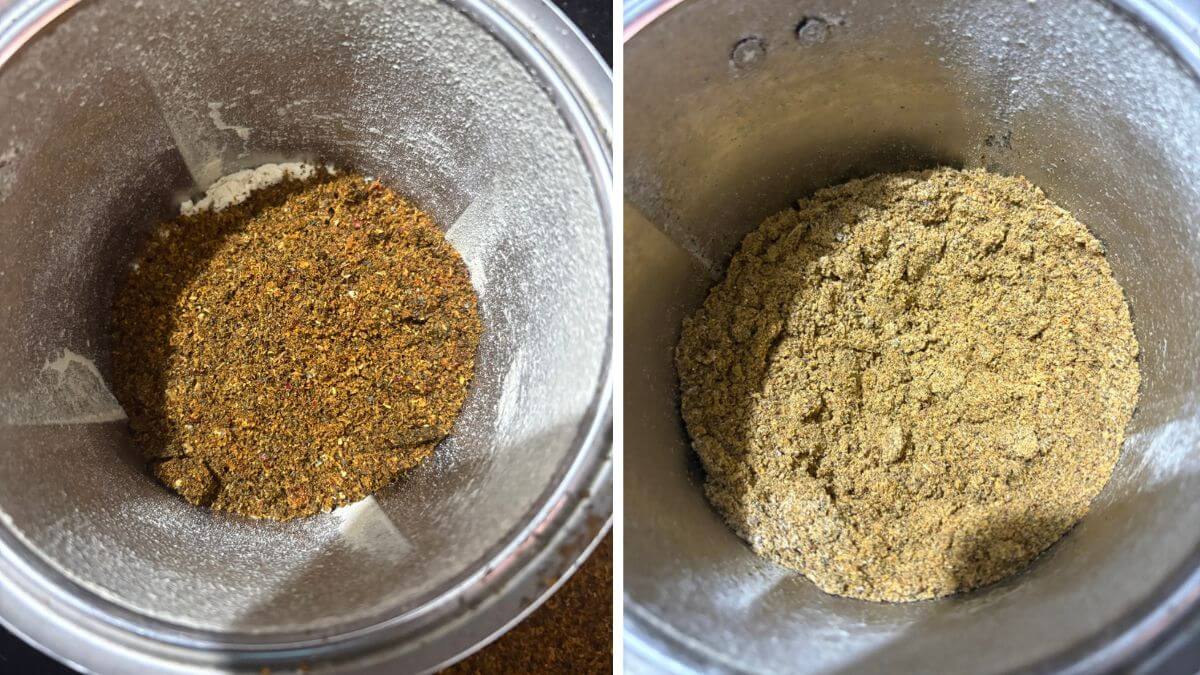
10. Add the ground mixture (from Step 8) back in small batches to the chana powder and grind again to combine well. The chana absorbs the excess moisture from garlic, helping you get a dry, non-sticky chutney powder with a fine texture.
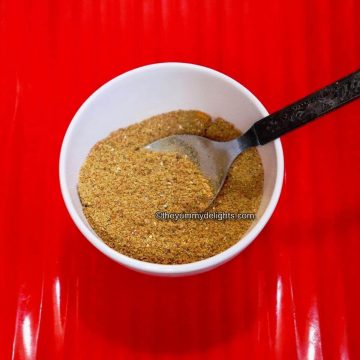
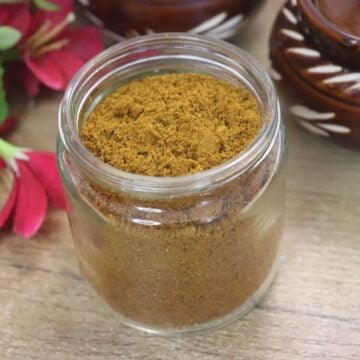
11. Let the chutney powder cool completely after grinding, as it heats up during grinding. Spread it on a plate to cool faster. Once cooled, store it in an airtight container and refrigerate for a longer shelf life. Enjoy it with dosa, idli, or chapati.
Cooking Tips
- Roast on low heat: Roast each ingredient separately on low heat. This helps the ingredients cook evenly without burning and gives better flavour.
- No moisture: Roasting the ingredients reduces moisture and increases the shelf life of chutney powder. Even a little moisture can spoil the chutney powder faster.
- Cool before grinding: If you grind hot ingredients, the coconut releases oil, and the powder turns oily.
- Grind in pulses: Grinding in short pulses keeps the texture perfect and prevents overheating.
- Always use a dry spoon to keep it fresh and avoid spoilage. I store it in an airtight container in the refrigerator to increase the shelf life.
Recipe Card
Garlic Chutney Pudi | Karnataka Style Chutney Powder
Video
Equipment
- 1 Heavy-bottomed pan
- 1 mixer/grinder
Ingredients
- 2 cup grated dry coconut, sukha nariyal, Khobre
- 1 cup split chana/putane/puffed chickpea/dalia (not chana dal)
- 2 teaspoon cumin, jeera
- ½ cup garlic cloves, lasan
- 2 cup curry leaves, kari patta
- 10 dry red chilies, sukhi lal mirch
- a small marble sized tamarind, Imli
- salt to taste
- 2 teaspoon oil
Instructions
- Dry roast coconut on low heat until golden. Do not burn. Remove and keep aside.
- In the same pan, dry roast split chana (putane) until golden on low heat. Do not burn, or it may taste bitter. Remove and keep aside.
- Heat 2 teaspoons of oil in the pan. Add garlic and roast until golden. Add cumin and roast for 30 seconds. Remove and keep them aside.
- Dry roast red chilies until crisp and aromatic. Remove and keep aside.
- Dry roast curry leaves on a low heat until crispy. Remove and keep aside.
- Roast tamarind for a few seconds to remove moisture (optional). You can also add it directly while grinding.
- Let all the ingredients cool completely. Do not grind while hot, or the chutney powder may turn oily. First, grind all the ingredients except roasted chana. The mixture may be slightly sticky due to the moisture from the garlic. Remove and keep aside.
- Next, grind the roasted chana to a fine powder. Add the ground mixture (from the previous step) back in small batches to the chana powder and grind again to combine well. The chana absorbs the excess moisture from garlic, helping you get a dry, non-sticky chutney powder with a fine texture.
- Let the chutney powder cool completely after grinding, as it heats up during grinding. Spread it on a plate to cool faster. Once cooled, store it in an airtight container and refrigerate for a longer shelf life.
Notes
- Roast each ingredient separately on low heat. This helps the ingredients cook evenly without burning and gives better flavour.
- Roasting the ingredients reduces moisture and increases the shelf life of chutney powder. Even a little moisture can spoil the chutney powder faster.
- If you grind hot ingredients, the coconut releases oil, and the powder turns oily.
- Grinding in short pulses keeps the texture perfect and prevents overheating.
- Always use a dry spoon to keep it fresh and avoid spoilage. I store it in an airtight container in the refrigerator to increase the shelf life.
Nutrition
Nutrition information is automatically calculated, so should only be used as an approximation.

Shanaya
Wonderful! Keep Sharing more such recipes