

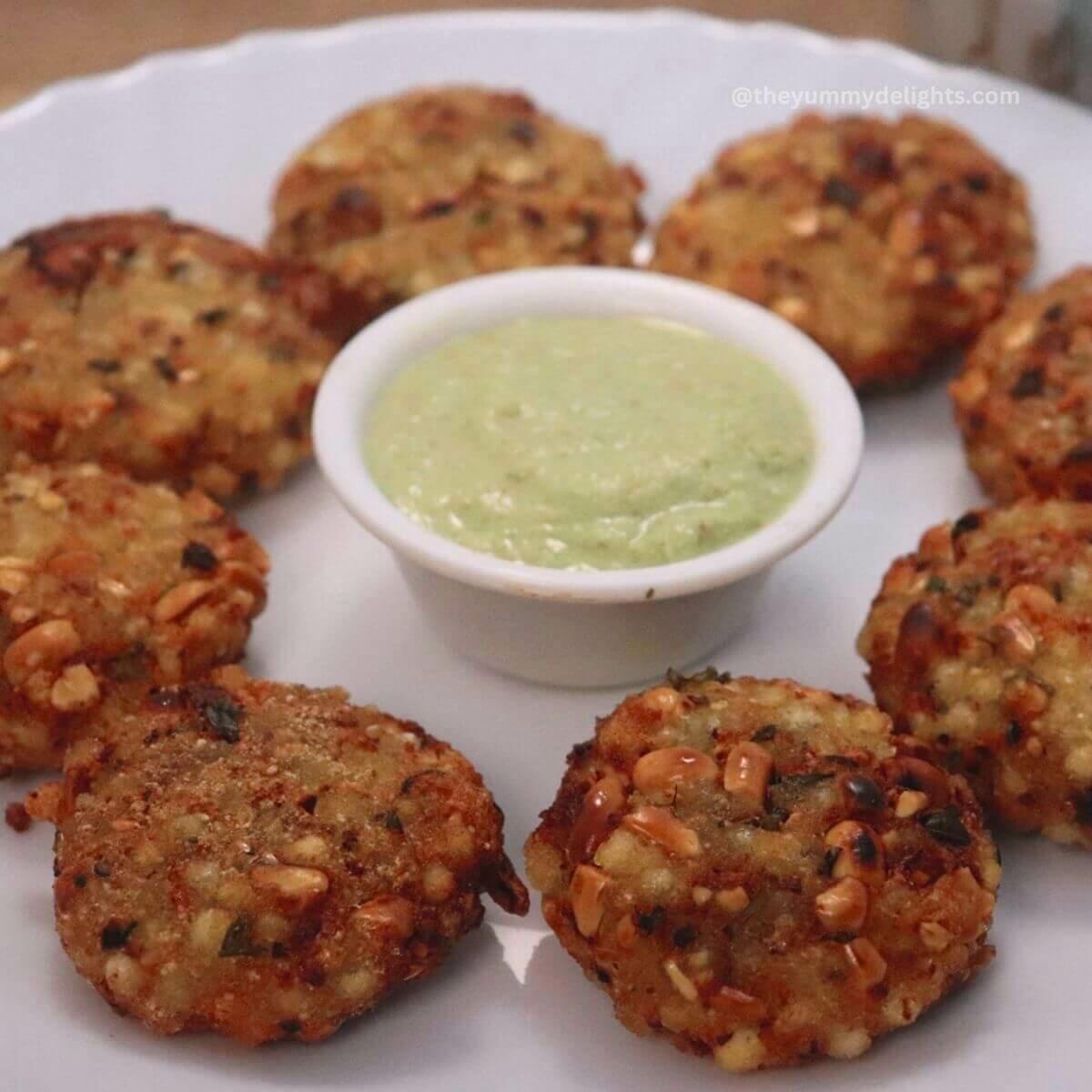
This Maharashtrian sabudana vada is crispy on the outside, soft inside, and made with sabudana, potatoes, roasted peanuts, green chilies, ginger, and cumin. Also known as sago vada, it is a popular Maharashtrian snack served with chutney and is a favourite during fasting days such as Navratri and Mahashivratri.
The key to making crispy sabudana vada is getting the soaking right and keeping the mixture dry. In this recipe, I have shared all the tips I use to prevent the sago vadas from becoming soggy, breaking apart, or bursting while frying.
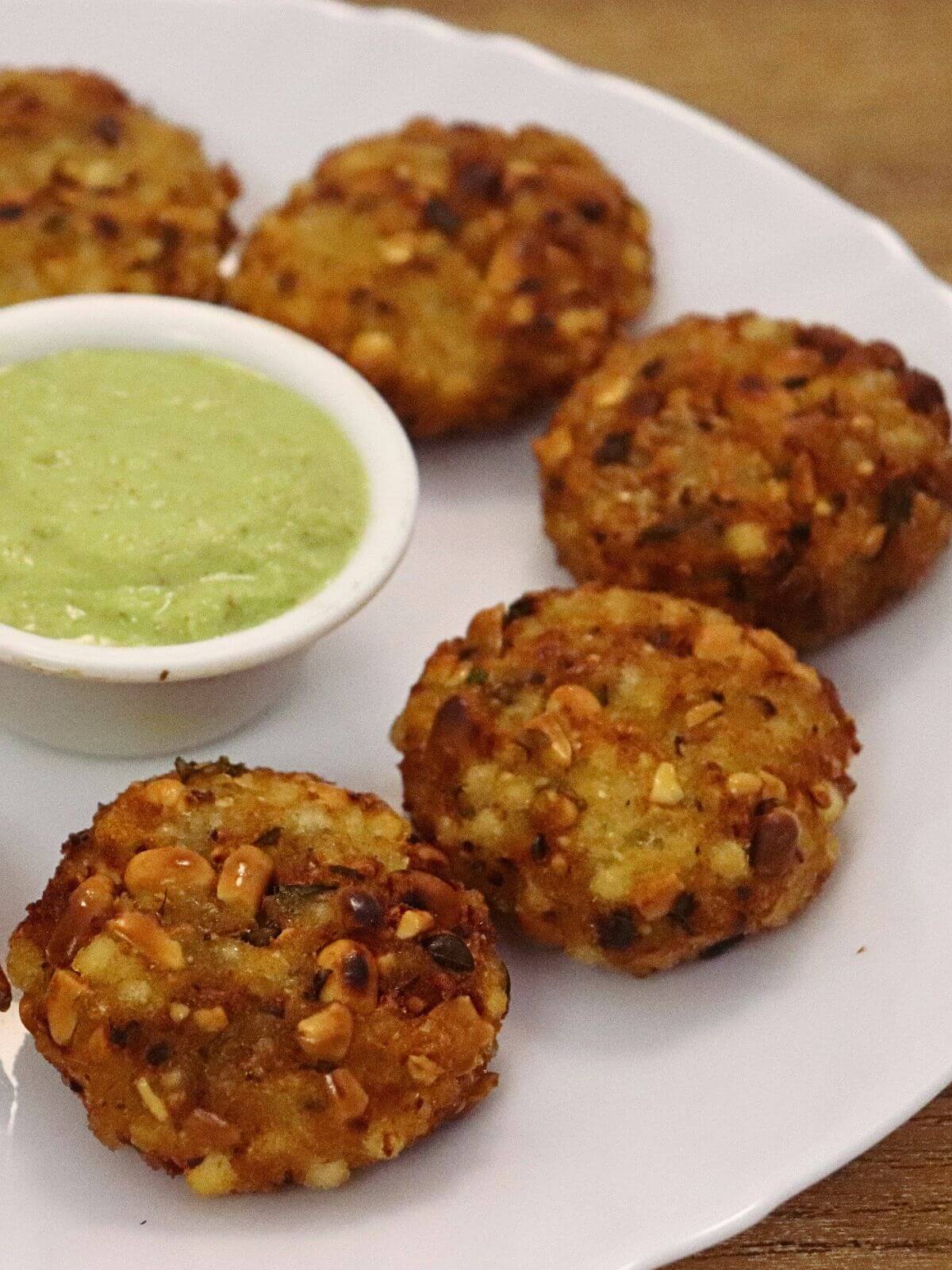
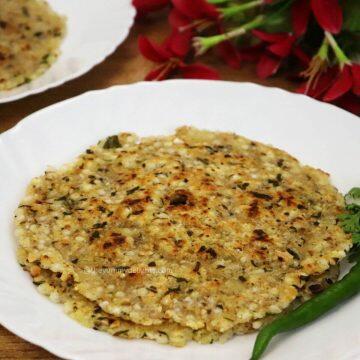
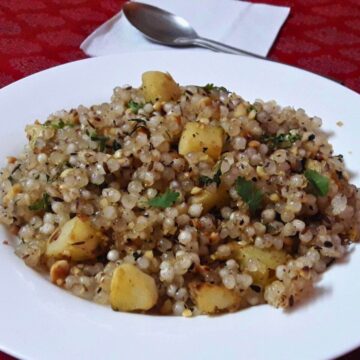
Sabudana vada is a classic Maharashtrian snack made with soaked sabudana, potatoes, and roasted peanuts. The same ingredients are used to make other fasting recipes like Maharashtrian Sabudana Khichdi and Sabudana Thalipeeth.
You can find crispy sabudana vada on almost every street corner in Mumbai, especially during breakfast or evening tea time. It is served hot with coconut chutney, peanut chutney, or yogurt.
About this Sabudana Vada
My mom always made sabudana vada for fasting on Sankashti and served them hot with coconut chutney. They have been a family favourite for years. I am sharing her recipe here.
This Maharashtrian street food can be deep-fried or shallow-fried. You can shallow-fry sabudana vada in any heavy-bottomed pan or in an Appe pan. I prefer the deep-fried version when I want that proper crisp, golden outside.
Other popular Maharashtrian recipes
Jump to:
Ingredients Notes
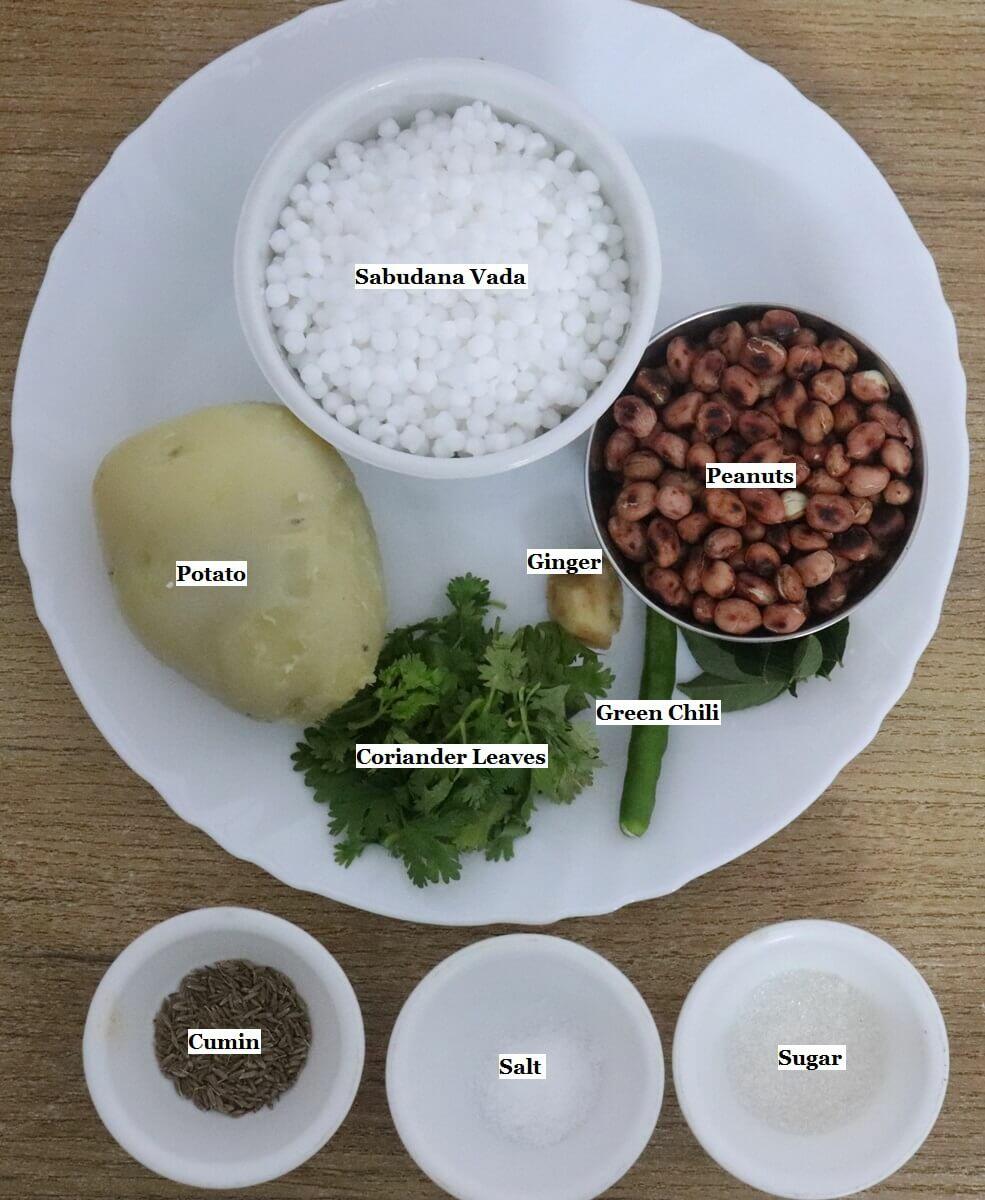
See the recipe card at the end of the post for full ingredients, quantities, and a printable version.
- Sabudana: Use medium-sized sabudana, also called tapioca pearls/sago pearls. Soak until the pearls are soft enough to mash between your fingers but still hold their shape.
- Potatoes: Use boiled potatoes that are cooked through but not watery or overcooked. They help bind the sabudana vada mixture.
- Peanuts: Roast the peanuts and crush them coarsely. Do not grind them into a fine powder. The coarse peanuts give these sago vadas a unique crunch.
- Green chili, ginger and cumin: These give the vada its simple, traditional flavour.
- Salt: For fasting, use sendha namak (rock salt) if it is part of your fasting recipe.
- Coriander and curry leaves: Coriander adds freshness. Curry leaves are optional.
- Oil: Use a neutral-flavoured cooking oil with a high smoke point for deep frying sabudana vada.
How to make Maharashtrian Sabudana Vada with Step by Step Photos
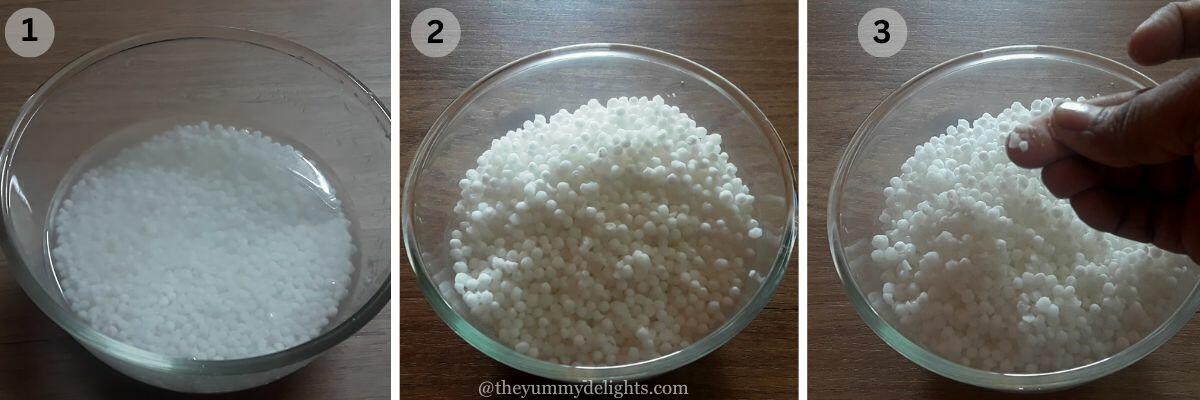
Step 1: Soaking the sabudana: Rinse the sabudana 2-3 times until the water is mostly clear. Drain well. Add just enough water to cover the sabudana. Cover and soak for 6 hours or overnight.
Pro Tip: The soaking time can vary depending on the type of sabudana. To check, press a pearl between your fingers. It should mash easily without a hard centre. If the sabudana is still hard, sprinkle a little more water and let it rest for another 1-2 hours.
Step 2: Cooking the potatoes: Boil or pressure cook the potatoes for 4 whistles or until just cooked through. Cool completely, peel, and mash.
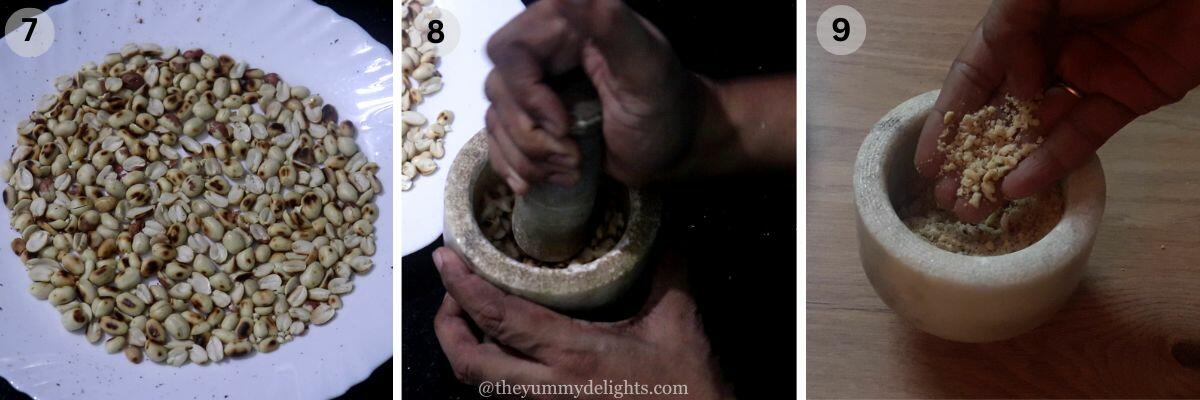
Step 3: Roast the peanuts: Dry roast the peanuts in a pan over medium heat until golden and fragrant. Cool completely and remove the skins if desired.
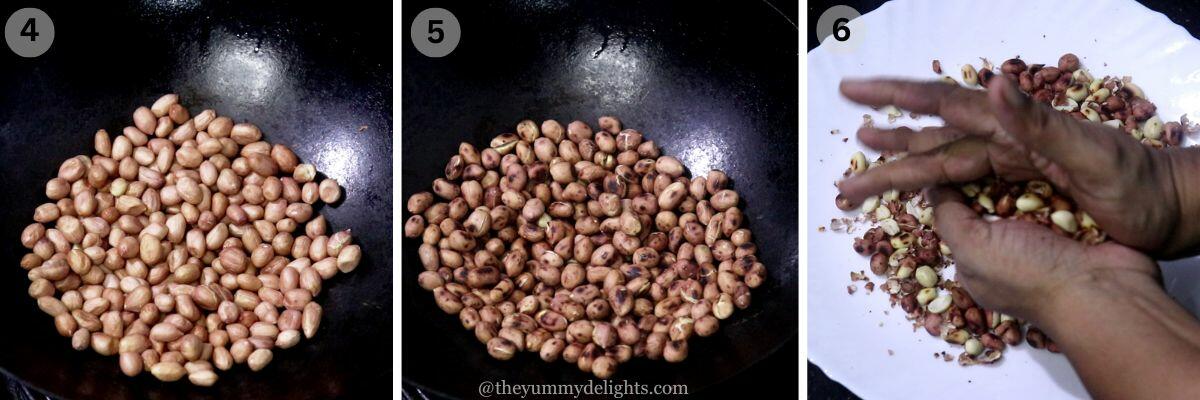
Step 4: Crush the peanuts: I prefer to use a mortar and pestle to crush the roasted peanuts into a coarse powder. You can also pulse them 1-2 times in a grinder. Do not make a fine powder.
Step 5: Making sabudana vada dough: In a mixing bowl, combine the mashed potato, soaked sabudana, coarse peanut powder, green chili, ginger, cumin, coriander, curry leaves, sugar, lemon juice, and salt.
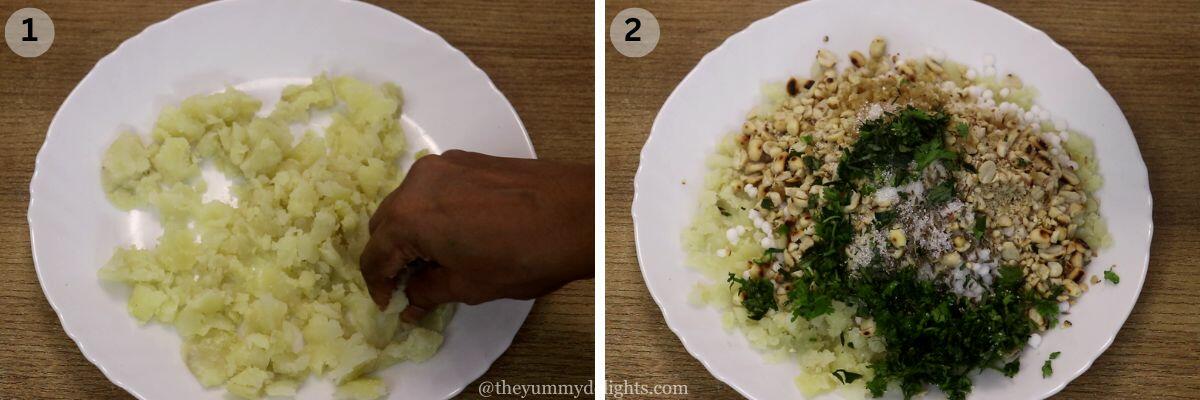
Lightly mash the sago vada mixture while mixing to help it bind, but avoid crushing the sabudana pearls completely. The mixture should be firm and dry enough to shape into patties.
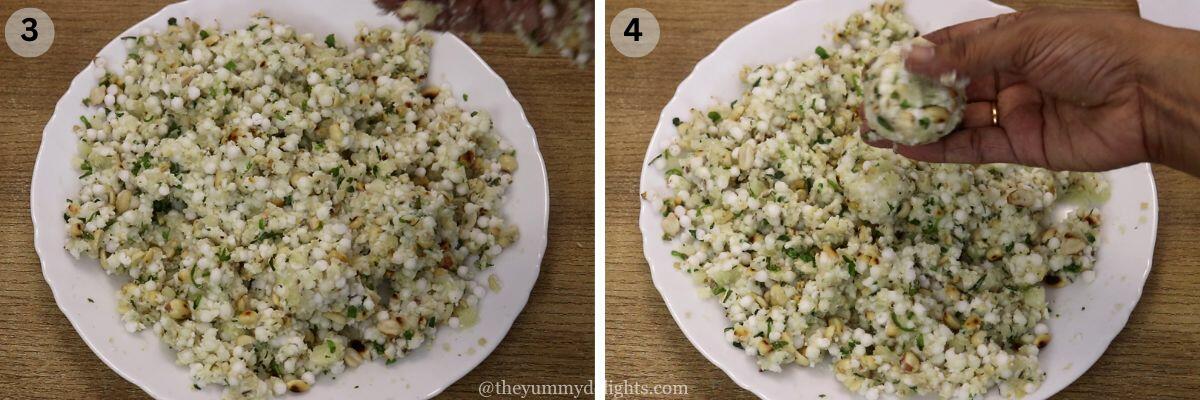
Step 6: Shaping sabudana vada patties: Grease your palms lightly with oil or wet them with water. Take a small portion of the sabudana vada mixture, roll it into a ball, and gently flatten it into a round patty.
Keep the vadas small and evenly thick so they cook properly. Smooth and seal any cracks around the edges before frying.
Step 7: Frying the sabudana vada: Heat oil in a deep pan over medium heat. The oil should be hot before adding the sago vadas, but not smoking hot.
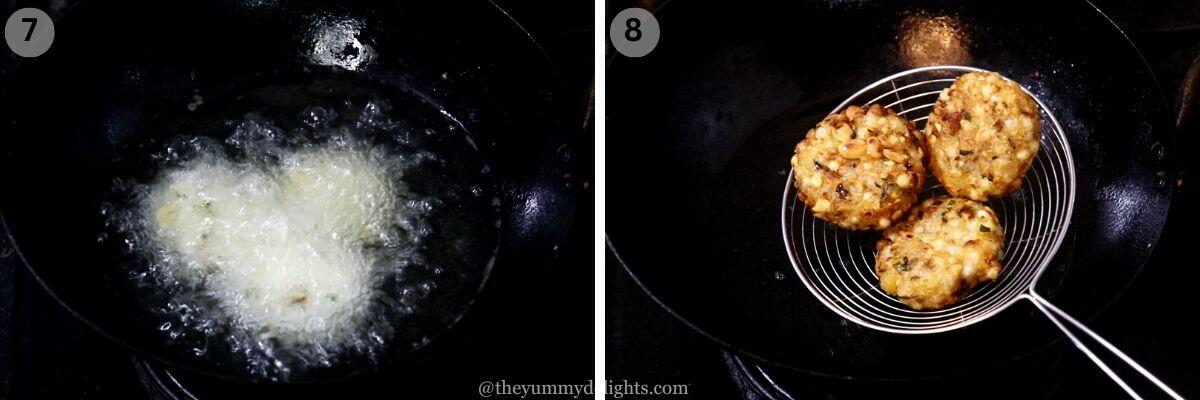
Carefully slide 3-4 vadas into the oil without overcrowding the pan. Let them fry undisturbed for a few minutes until the bottom is golden and firm. Gently flip and fry until both sides are deep golden brown and crisp. Drain on a paper towel or wire rack. Serve hot.
Tips to make the Best Sabudana Vada Recipe
- Soaking sabudana (tapioca/sago pearls): Do not add too much water while soaking. Excess water makes the sabudana vada mixture wet and can cause the vadas to become soggy or break while frying.
- Don't overcook the potatoes. It will add moisture to the sabudana mixture.
- Sabudana vada mixture consistency: The secret to crispy sabudana vadas is keeping the mixture dry. Too much moisture can make the vadas soggy.
- Frying your sabudana vada: Make sure your oil is hot before dropping sabudana vadas in it.
- Don't overcrowd the pan, or they won't cook evenly. If you prefer a lighter version, you can always shallow fry them.
Recipe FAQs
Sabudana vada can burst if the mixture has too much moisture. This can happen when the sabudana is soaked with too much water or the potatoes are too soft or watery. Keep the mixture dry and firm, seal any cracks while shaping the vada, and fry in medium-hot oil.
The most common reason is excess moisture. Using too much water while soaking the sabudana, not draining it well, or using watery potatoes can make the mixture wet. Also, avoid overcrowding the pan while frying.
Maharashtrian sago vada tastes delicious when combined with coconut chutney & a cup of hot ginger tea. You can also serve it with green coriander chutney, peanut chutney, or plain yogurt.
If not making it for fasting, pair it with tomato ketchup. Kids love this combination.
To make crispy sabudana vada, keep the sabudana mixture dry.
1) Do not over-boil the potatoes. Overcooked potatoes can release more moisture and make the sabudana mixture soft.
2) Soak the sabudana properly. If the pearls become too soft or soggy because you add too much water while soaking, they can make the mixture too moist.
3) Fry the vadas in medium-hot oil. The oil should be neither too hot nor too cold. Flip the vadas once or twice while frying so they become crispy on the outside and cook well on the inside.
Recipe Card
Sabudana Vada Recipe (Sago Vada)
Video

Equipment
- Heavy bottom pan
Ingredients
- 1 cup sabudana (sago pearls/tapioca pearls)
- ¾ cup peanuts (groundnuts)
- 1 big potato (boiled and peeled) ½ cup mashed potatoes
- salt
- 1 green chili, finely chopped finely chopped
- 1- inch ginger, finely chopped
- 1 teaspoon cumin
- 1 teaspoon sugar
- 8-10 curry leaves (optional)
- 1 teaspoon lemon juice
- 2 tablespoon finely chopped coriander leaves
- oil for deep-frying
Instructions
Soaking The Sabudana
- Rinse the sabudana thoroughly 2-3 times to remove excess starch. Soak it in water for 6 hours or overnight. The water level should be just one-fourth inch above it. Once the sabudana is soaked, keep it aside.
- Boil or pressure cook the potatoes for 4 whistles or until just cooked through. Cool completely, peel, and mash.
Roasting the Peanuts
- First, let's roast those peanuts. Toss them into a heavy-bottomed pan over medium heat. Keep stirring until they turn a golden brown and you hear a few pops. Once they've cooled down completely, peel off their skin.
- I prefer to use a mortar and pestle to crush the roasted peanuts into a coarse powder. You can also pulse them 1-2 times in a grinder. Do not make a fine powder.
Making Sabudana Vada Dough
- In a mixing bowl, combine the mashed potato, soaked sabudana, coarse peanut powder, green chili, ginger, cumin, coriander, curry leaves, sugar, lemon juice, and salt.
- Lightly mash the sago vada mixture while mixing to help it bind, but avoid crushing the sabudana pearls completely. The mixture should be firm and dry enough to shape into patties.
Shaping and Frying Sago Vada
- Grease your palms lightly with oil or wet them with water. Take a small portion of the sabudana vada mixture, roll it into a ball, and gently flatten it into a round patty.
- Keep the vadas small and evenly thick so they cook properly. Smooth and seal any cracks around the edges before frying.
Frying the Sabudana Vada
- Heat oil in a deep pan over medium heat. The oil should be hot before adding the sago vadas, but not smoking hot.
- Carefully slide 3-4 vadas into the oil without overcrowding the pan. Let them fry undisturbed for a few minutes until the bottom is golden and firm. Gently flip and fry until both sides are deep golden brown and crisp. Drain on a paper towel or wire rack. Serve hot.
Notes
- Soak the sabudana properly: Use just enough water to cover the sago pearls. They should be soft enough to mash between your fingers but still hold their shape.
- Keep the mixture dry: Excess moisture can make the sago vadas soggy or cause them to break while frying.
- Do not overcook the potatoes: Watery or overcooked potatoes can make the mixture soft and difficult to shape.
- Crush the peanuts coarsely: Avoid making a fine peanut powder for the best texture.
- Frying: Fry the vadas in medium-hot oil without overcrowding the pan. Let them fry undisturbed initially so they don't break.
Nutrition
Nutrition information is automatically calculated, so should only be used as an approximation.





Preeti
If you've struggled with soggy sabudana vadas that are too oily, trust me, this method gives you perfectly crisp vadas that are light and crispy, and they soak less oil than any other recipe. Try this recipe once, and you won't be disappointed.